Pet/Animals

Squirrels Remember Where They Bury Their Nuts Better Than You Think, Research Shows

Oluwaseyi Ojo
By Oluwaseyi Ojo 5 min read

This post: Squirrels Remember Where They Bury Their Nuts Better Than You Think, Research Shows first appeared on Crafting Your Home.


Watching a squirrel bury a nut can look almost random. It digs quickly, pushes the food into the ground, covers the spot, and rushes away. Given how many nuts a squirrel may hide, it is easy to assume the animal forgets most of them and later finds a few by luck or smell.

Research suggests something much more impressive. Squirrels appear to possess strong spatial memories that help them relocate many of their hidden food stores. Some species may even organize their caches in ways that resemble human memory strategies.

Squirrels Don’t Rely Only on Smell

A charming squirrel explores potted plants during a rainy day, showcasing nature's curiosity.
Image credit:Ellen de Ruiter/pexels

For many years, people assumed squirrels mainly rediscovered buried food by detecting its scent. Smell certainly plays a role, but experiments show that memory is also important.

In a classic study of grey squirrels, researchers allowed each animal to bury ten hazelnuts in an outdoor area. The squirrels returned after delays of two, four, or twelve days and were given access to both their own hiding places and locations used by other squirrels.

The animals recovered significantly more nuts from their own cache locations than from the places where other squirrels had buried food. This strongly suggested they remembered where they hid their own nuts rather than simply following their noses.

Their Memories Can Last for Weeks

A squirrel’s spatial memory may last longer than many people expect.

Later field experiments found that grey squirrels could relocate precise locations after around 20 days. Researchers reported that the animals reached within five centimeters of the target location in 62.5 percent of attempts after that period.

Researchers also found evidence of memory after 43 and 62 days. This suggests that at least some squirrels can retain information about important food locations for weeks.

That ability makes sense from an evolutionary perspective. For animals that depend heavily on stored food, forgetting every hiding place would be a serious disadvantage.

Squirrels Use Landmarks to Find Their Food

Grey squirrel (Sciurus carolinensis) foraging on bright green grass in a serene park setting.
Image credit:Jay Brand/pexels
Squirrels appear to rely on features in their surroundings to guide them back to buried food.

Trees, rocks, logs, pathways, and other visual landmarks can provide clues about a cache’s position. Rather than remembering a hiding place as a simple coordinate, a squirrel may remember its location in relation to familiar objects around it.

Research examining squirrel spatial memory found that grey squirrels could use short-range visual cues to relocate buried food accurately.
This may explain why their frantic movements around parks and gardens are more organized than they first appear.

They May Organize Their Nuts Like We Organize Information

One of the most fascinating discoveries about squirrel behavior involves something researchers call “spatial chunking.”

Chunking is a memory strategy humans use when we group similar information. Instead of remembering many unrelated items separately, we organize them into categories.

Researchers studying wild fox squirrels offered them different types of nuts and tracked where the animals buried them. Under certain conditions, squirrels tended to separate their caches according to nut type, effectively organizing similar foods into different areas.

Scientists suggest this type of organization could make large numbers of caches easier to manage mentally.

Not Every Nut Is Treated the Same

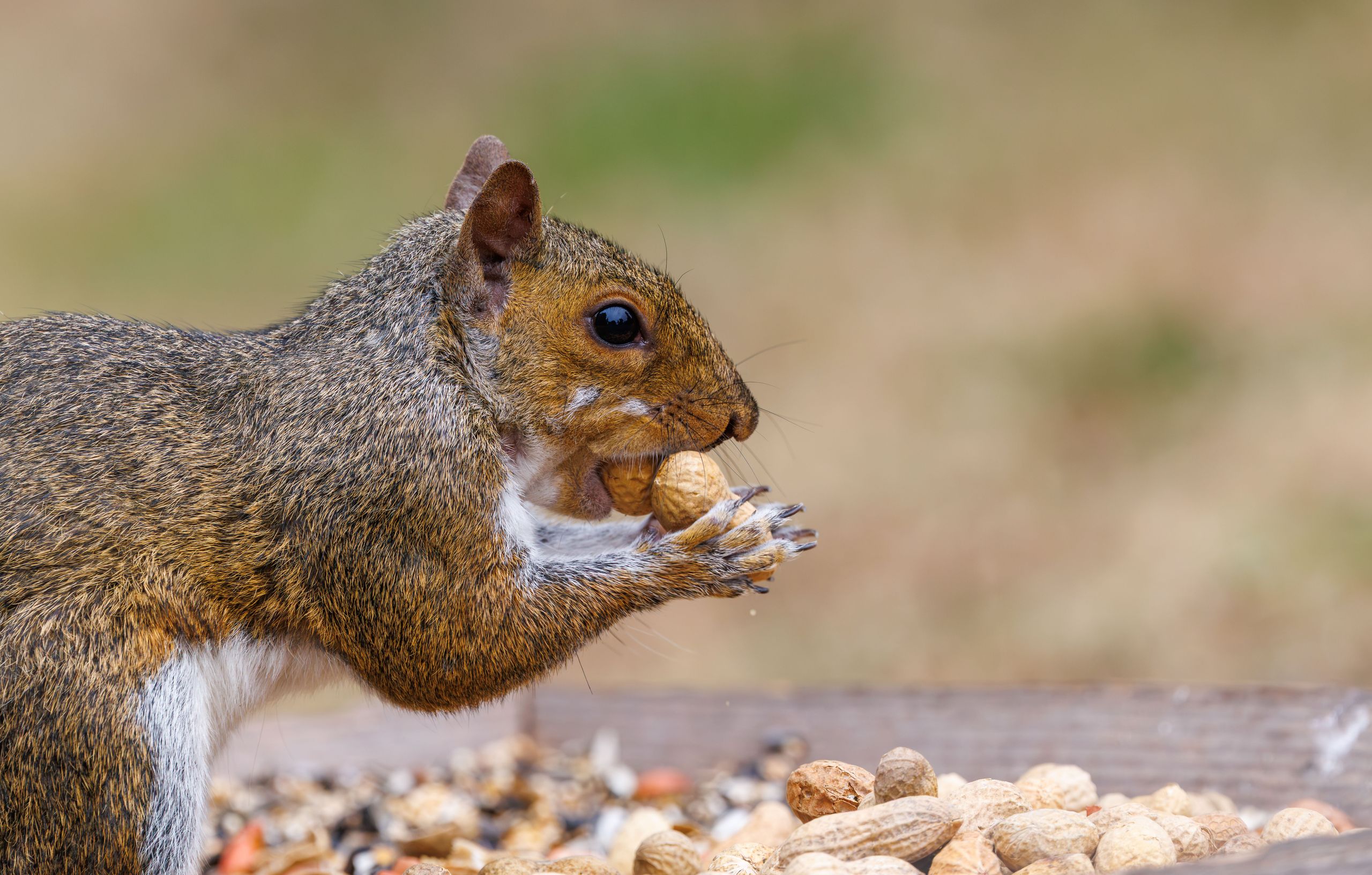
Close-up of a squirrel eating peanuts, showcasing wildlife behavior and natural habitat.
Image credit:Veronika Andrews/pexels
Squirrels also appear to decide where and how to store different foods.

Research shows they can distinguish between nuts based on characteristics such as type, weight, and perishability.

More valuable food may receive greater attention. Observations described by squirrel researcher Lucia Jacobs indicate that squirrels may carry higher-value nuts farther before burying them, apparently reducing the chance that another animal will steal them.

Caching, therefore, is not simply a matter of burying the first nut in the first available patch of soil.

Why Do Squirrels Still Lose Some Nuts?

Despite their impressive memories, squirrels do not recover everything they bury.

Other animals may steal some caches. Environmental changes may make familiar landmarks harder to recognize, and squirrels may forget certain locations.

Those forgotten nuts can have an important ecological consequence. Seeds that remain underground may germinate and eventually grow into plants or trees.
So even a squirrel’s memory failures can contribute to the environment.

Squirrel Memory Is More Sophisticated Than It Looks
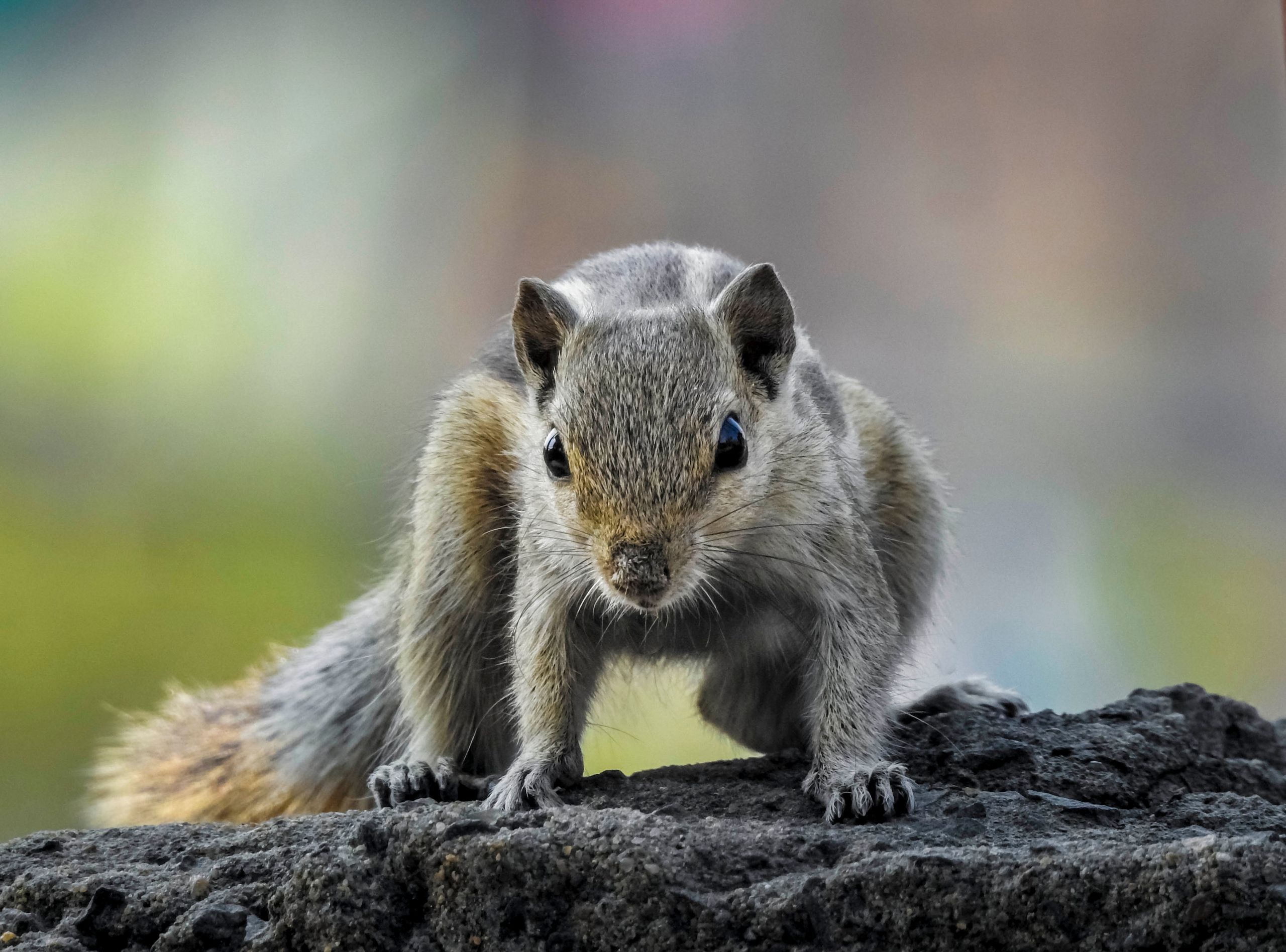
Charming close-up of an Indian palm squirrel on a rock. Captured during daylight, highlighting the texture of its fur.
Image credit:Kumar Munna/pexels
The next time you see a squirrel racing across a lawn with a nut in its mouth, its behavior may not be nearly as chaotic as it appears.

Studies show that squirrels can remember individual cache locations, retain some spatial information for weeks, use environmental cues, and even organize caches according to the type of food they contain.

Their brains may be small, but their survival depends on solving a remarkably complicated memory problem: hiding food across many different locations and finding enough of it again when it matters most.
What looks like forgetful digging from a human perspective may actually be an impressive example of animal intelligence.
Other Post You Might Also Like

If you like what you just read, then subscribe to our newsletter and follow us on social media.

Author
Oluwaseyi Ojo

Oluwaseyi Ojo is a Canadian entrepreneur, writer, and publisher based in Richmond, Texas, in the United States. He has explored countries across Europe, East Africa, and Asia, bringing those experiences into the stories he writes for Crafting Your Home.

Olu is in his sixth year of writing, creating, and publishing content. His work has appeared on MSN, Yahoo US, AOL, Business Insider, and NewsBreak. He holds a Doctor of Veterinary Medicine degree and a second degree in Applied Accounting from Oxford Brookes University in the UK. He is also a Fellow of the Association of Chartered Certified Accountants (FCCA) and a Chartered Professional Accountant (CPA) in North America. Outside of publishing and his business ventures, he enjoys trading stocks, commodities, and cryptocurrencies.

Leave a Reply

Your email address will not be published. Required fields are marked *