


The post “Why Dogs Love Squeaky Toys So Much, According to Research” first appeared on Crafting Your Home.
For some dogs, the sound of a squeaky toy is almost impossible to ignore. One squeeze can send a dog racing across the room. Within seconds, the toy may be pinned between two paws, bitten repeatedly, shaken from side to side, and subjected to what looks like a determined search for the little plastic squeaker hidden inside.
It is tempting to explain the behavior with one simple answer: The squeak sounds like prey. Research suggests the real explanation is more complicated. Studies support the idea that many dogs are attracted to toys that are easy to manipulate, chew, and make noise.
Dogs also appear sensitive to connections between sound and object size, and their interest in toys can change with novelty, breed-related play tendencies, and individual preferences. But scientists have not established that dogs hear a commercial squeaker and literally interpret it as an injured mouse or other animal.
Instead, the appeal may come from several things happening at once: biting, movement, sound, novelty, and the satisfying experience of making a toy react immediately.
The Squeak Gives Dogs Something Their Actions Can Control
One of the simplest explanations for squeaky-toy obsession is also one of the strongest: The toy responds. A dog bites down, and something happens immediately. That makes a squeaky toy different from an object that simply sits on the floor.
A ball rolls or bounces. A tug toy provides resistance. A food puzzle releases treats. A squeaky toy makes a sound almost exactly when the dog squeezes it.
In other words, the toy “answers back.” Research involving kennel-housed dogs found greater interaction with toys that were less robust and easier to manipulate, including plush and squeaky toys. The researchers suggested that interest may increase when an object can be chewed easily or produces noise.
That does not prove the squeak alone causes the attraction. Softness, texture, shape, and destructibility may all contribute. A 2025 study involving 29 puppies adds another interesting clue. The puppies spent an average of 122.2 seconds with a peanut-butter-scented squeaker toy compared with 95.8 seconds with a non-scented comparison toy.
However, the researchers could not separate the effects of scent from those of the squeaker because the toys differed in both respects. Only one puppy actually activated the squeaker during the observed sessions. That result reminds us that dogs may enjoy the entire sensory package rather than one magical feature.
Behavioral reinforcement may also help explain repeated biting. If biting produces an immediate, stimulating consequence, a dog that enjoys that response has a reason to bite again. The result can be a loop familiar to dog owners: bite, squeak, bite again.
Does a Squeaky Toy Really Trigger a Dog’s Prey Drive?
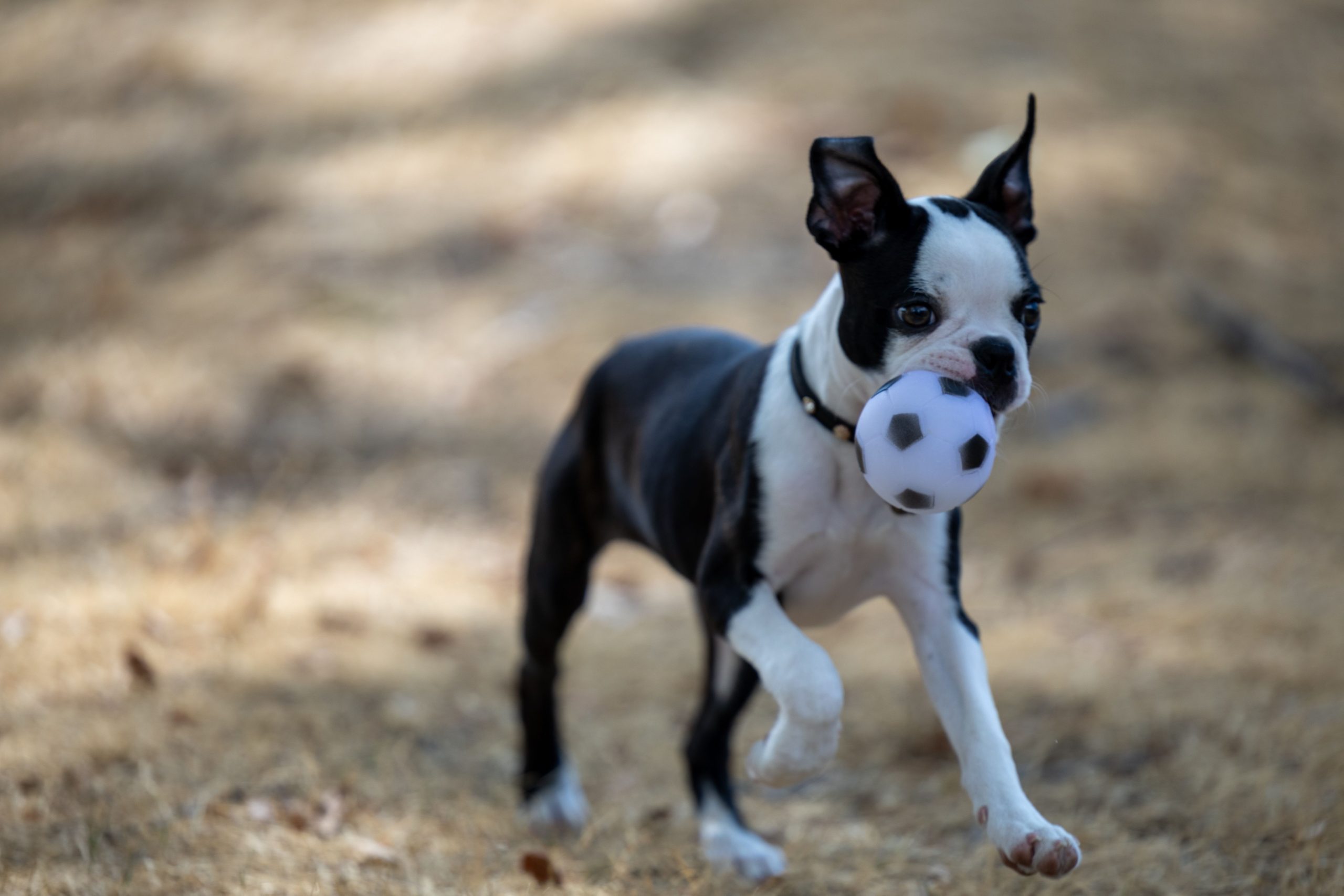
The prey-drive theory is not baseless. It just needs to be stated carefully. Dog play can include actions that resemble components of predatory behavior, including orienting, chasing, grabbing, carrying, biting, shaking, and tearing apart objects.
Research reviews have suggested that solitary object play in adult dogs may have roots in predatory behavior. That makes a soft squeaking toy an interesting combination. It can be grabbed easily.
It can be carried. It can be shaken. It may be torn apart. And when compressed, it makes a high-pitched noise.
Researchers have also found that dogs can connect pitch with apparent object size. In one controlled study, dogs responded more quickly when a high-pitched tone came from a small object or a low-pitched tone came from a larger one. On trials where sound and size matched, dogs identified the sound-producing object at above-chance levels.
That finding makes it biologically plausible that a high squeak paired with a small toy could be especially attention-grabbing. But it does not prove that the dog