
The post 7 Eerie Small-Town Legends and Traditions Americans Still Celebrate, Fear, or Debate first appeared on Crafting Your Home.
Across America, some of the most memorable small-town stories are not found in history books alone. They live through festivals, statues, local museums, family stories, and traditions passed from one generation to another. These legends often mix documented events with mystery, imagination, and community identity.
Folklore does not always mean a story is proven true. The Library of Congress describes legends as extraordinary-event stories that invite people to believe, question, or debate their truth. That distinction matters because many famous small-town tales are valuable not because they prove the existence of mysterious creatures, but because they reveal how communities preserve memories and traditions.
From a winged creature reported in West Virginia to a Halloween celebration that has lasted for generations, these stories show how unusual events and local beliefs can become part of a town’s character.
The Mothman became West Virginia’s most famous mystery
The Mothman legend of Point Pleasant, West Virginia
In November 1966, reports began circulating around Point Pleasant, West Virginia, about a large winged creature with glowing red eyes. The reports were particularly linked to an area known locally as the TNT site, a former munitions location. The West Virginia Encyclopedia records 26 reported sightings over roughly the following year.
The story remains a legend rather than a confirmed discovery. Skeptics have suggested explanations such as a sandhill crane or another ordinary animal. Today, Point Pleasant has embraced the story with a Mothman statue, museum, and annual festival.
The Mothman story also became connected with another major event in local history: the Silver Bridge collapse in 1967. However, investigators attributed the bridge disaster to an engineering failure caused by a fracture related to stress corrosion and corrosion fatigue, not paranormal activity. The connection between Mothman sightings and the tragedy belongs to later folklore.
Virginia’s Bunny Man story grew from a real report into a famous legend
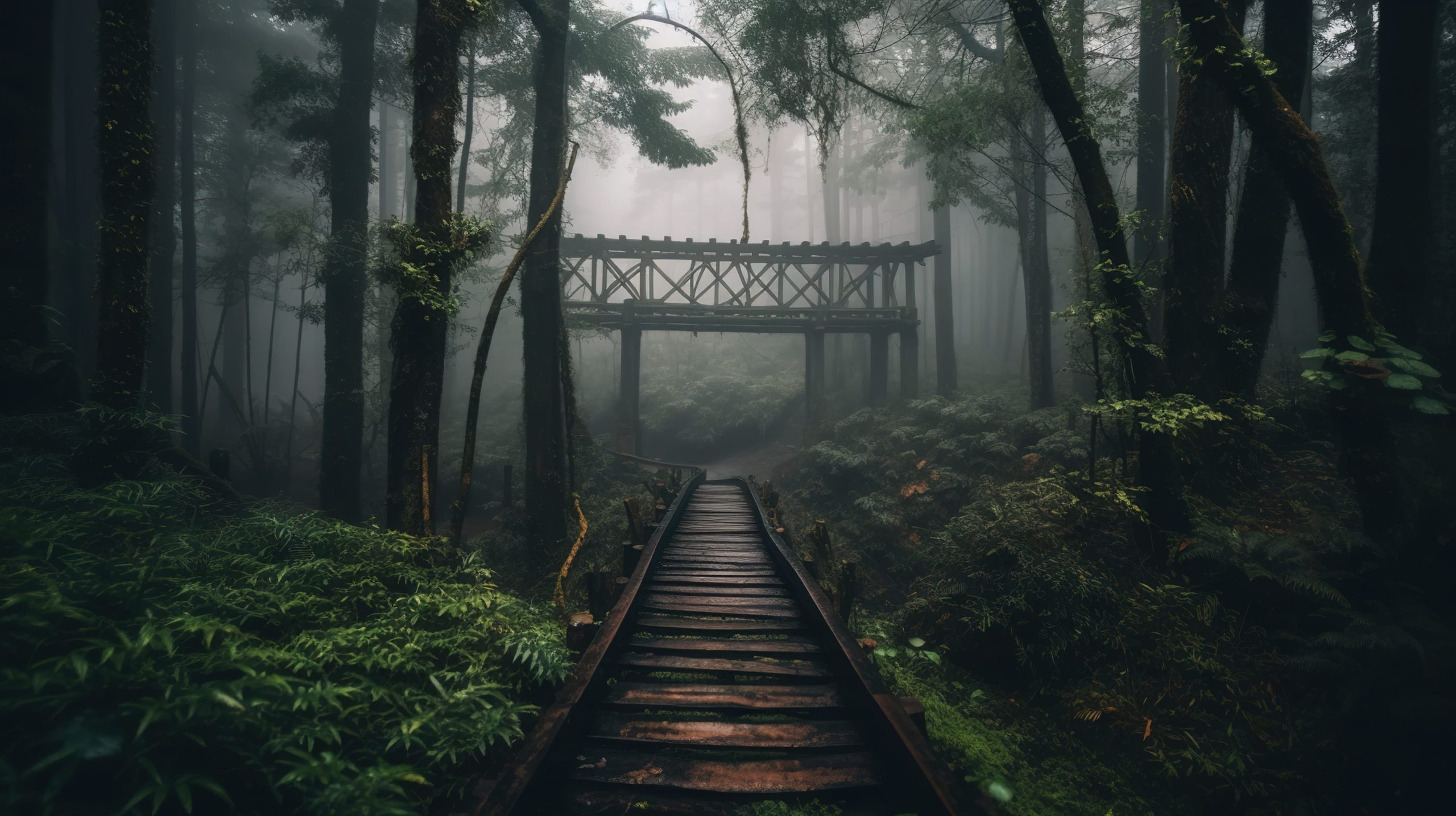
The Bunny Man of Fairfax Station, Virginia
The Bunny Man legend centers around a railroad overpass near Fairfax Station and Clifton, Virginia. Popular versions describe a person in a rabbit costume carrying an ax and frightening people near the bridge. Over time, the story expanded into claims involving murders, an escaped asylum patient, and other dramatic details.
Historical research from Fairfax County Library found that many of those details are false. The county did not have the alleged asylum, the named individuals do not appear in court records, and the supposed Clifton Town Library mentioned in some versions never existed.
However, one part of the story does have a documented connection to reality. A 1970 police report recorded a vandalism call involving a person described as being dressed as a rabbit with an ax. That report does not prove the later ghost-story versions, but it helped fuel the legend’s growth.
The Jersey Devil turned the Pine Barrens into a place of mystery
The Jersey Devil of southern New Jersey
The Jersey Devil is one of America’s most recognizable folklore creatures. Popular legend says that a child born to “Mother Leeds” was transformed into a winged creature and later disappeared into the Pine Barrens.
The Pine Barrens themselves are very real. The National Park Service describes the region as more than one million acres of forests, wetlands, farms, and communities across South Jersey counties.
The creature’s existence remains part of legend rather than established fact. The landscape, however, has helped keep the story alive by providing a dramatic setting for generations of retellings.
Wisconsin’s Hodag became a town symbol
The Hodag of Rhinelander, Wisconsin
Unlike some frightening legends, the Hodag has become closely connected with community pride. The creature emerged from Wisconsin lumberjack tales and is often described as a horned, reptilian, or bulldog-like beast.
The Wisconsin Historical Society notes that the legend may have drawn inspiration from stories involving water panthers and other spirit beings. Rhinelander later embraced the Hodag as a local symbol, with the creature appearing in statues, artwork, and souvenirs.
The Hodag shows how a frightening story can eventually become a positive part of a town’s identity. What began as a lumber-camp tale became a recognizable piece of local culture.
Related: How Secular Societies Keep Traditions Alive Without Traditional Religion
La Llorona continues through generations of storytelling
La Llorona traditions in New Mexico communities
La Llorona, or the Weeping Woman, is a long-standing Latin American and New Mexican folklore figure. Many versions describe a grieving woman who wanders near rivers, lakes, ditches, or acequias while mourning lost children.
The story has often served as a warning to keep children away from dangerous water after dark. The University of New Mexico emphasizes that there are many versions of the legend rather than one single agreed-upon origin story.
Because of its cultural history, La Llorona is best understood as a living tradition with many interpretations rather than simply a ghost story.
Hiawatha’s Halloween Frolic became a century-old tradition
The Halloween Frolic of Hiawatha, Kansas
Not every eerie tradition involves monsters or ghosts. Hiawatha’s Halloween Frolic is a community celebration held annually around October 31 since 1914.
The city says Mrs. John Krebs began the event as a children’s costume party. Over time, children decorated tricycles and wagons as early floats, and the celebration grew into a townwide event featuring parades, contests, prizes, and a Halloween Queen competition.
The tradition shows another side of small-town folklore: stories and celebrations can become lasting community connections.
Related: 10 Holiday Traditions Born from Poverty: A Glimpse into the Origins of Festive Customs
Salem’s witch-trial history remains a powerful reminder of the past
The Salem witch-trial legacy of Salem, Massachusetts
Unlike creature legends, Salem’s witch-trial history is a documented historical event. In 1692, more than 200 people in Salem and surrounding communities were accused of witchcraft, and 19 people were executed by hanging, while one man died after refusing to enter a plea.
Massachusetts officials note that spectral evidence, including visions and dreams presented as proof, contributed to convictions during the trials.
Modern Salem has incorporated this history into its identity, becoming a major Halloween destination. However, the accusations and executions should be understood as part of a period of fear and flawed legal processes, not proof of actual witchcraft.
Small-town legends survive because communities keep telling them
From Mothman festivals to centuries-old folklore, these stories continue because they become part of local identity. Some are connected to real historical events, while others remain mysteries shaped by imagination and tradition.
Small-town legends reveal something important about American communities: people do not only preserve buildings and landmarks. They also preserve stories. Whether believed, debated, or simply enjoyed as folklore, these tales continue to connect generations through shared memories and local culture.
Other posts you might like
If you like what you just read, then subscribe to our newsletter and follow us on social media.