This article was originally published on Crafting Your Home. A human contributor also wrote and edited the post.
At Yellowstone National Park in Wyoming, a quiet campground moment transformed into a terrifying reminder of nature’s power when a massive bull bison charged a visitor and sent him flying through the air in an attack captured on video.
The visitor had been walking through the Bridge Bay Campground area with his grandson when the enormous animal suddenly moved toward them. Within seconds, what appeared to be an ordinary wildlife encounter became a dangerous confrontation between a human and one of North America’s most powerful land animals.
The dramatic footage spread quickly online, shocking viewers who watched the bison lift the man off the ground with a force that seemed impossible for an animal that had moments earlier appeared calm.
But wildlife experts say the incident represents a misunderstanding that happens repeatedly in America’s national parks.
The bison was not acting like a movie villain.
It was acting like a wild animal.
And that distinction is the difference between a memorable wildlife sighting and a life-threatening emergency.
The attack has renewed a warning that Yellowstone officials have repeated for years:
The closer visitors get to wildlife, the less control they have over what happens next.
The 10-Second Decision That Turned a Wildlife Encounter Into a Survival Moment
The most important part of the Yellowstone incident was not the charge itself.
It was everything that happened before it.
Wildlife encounters often appear sudden because humans only notice the final moments.
But animals communicate through signals long before they react.
A change in posture.
A shift in direction.
A movement toward a person.
A warning sign that a visitor may not recognize.
For a massive bull bison, a human standing too close may not look like a tourist searching for a photograph.
It may look like an unpredictable presence entering its space.
That is why wildlife officials emphasize distance.
The goal is not to avoid seeing animals.
The goal is to allow animals to behave naturally without feeling pressured.
At Yellowstone, the safest wildlife encounter is usually the one where the animal barely notices humans are nearby.
The Animal That Represents Yellowstone’s Beauty Is Also One of Its Biggest Dangers
For many visitors, bison represent the spirit of Yellowstone.
They appear in photographs standing against mountain landscapes.
They walk calmly through valleys.
They become the highlight of family vacations.
But behind that peaceful image is an animal with incredible strength.
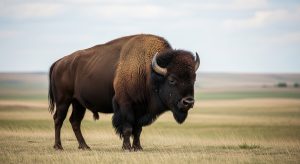
A mature bull bison can weigh around 2,000 pounds and can move much faster than many people expect.
Their size creates a dangerous illusion.
Because they look slow, some visitors assume they are harmless.
But experts warn that bison are among the most unpredictable large animals in the park.
Unlike predators that many people naturally fear, bison are often underestimated.
A visitor may see a bison grazing and think:
“It looks calm.”
The animal may simply be focused on grazing.
But calm does not mean safe.
A wild animal can change behavior instantly if it feels threatened.
Why Bison Are Responsible for More Yellowstone Injuries Than Many Predators
When people imagine dangerous Yellowstone animals, they often think of bears or wolves.
But bison create a different type of risk.
They are:
- frequently encountered near roads and trails
- comfortable moving through visitor areas
- often mistaken as gentle because they eat plants
- powerful enough to seriously injure people within seconds
The National Park Service has repeatedly warned visitors that bison can run faster than humans and should always be given significant space.
Officials recommend staying at least 25 yards away from bison and other large animals.
The rule exists because distance is the only reliable advantage humans have.
A person standing too close may not have enough time to react if the animal charges.
The Grandfather and Grandson Moment That Changed an Ordinary Day Forever
The emotional weight of the incident stems from the fact that no experienced wildlife researcher or photographer was involved.
It was a family visit.
A grandfather and his grandson were experiencing Yellowstone the same way millions of visitors do every year:
Walking through one of America’s most beautiful landscapes.
Watching wildlife.
Creating memories.
Then, in a matter of seconds, the experience changed completely.
For families visiting national parks, these moments carry a powerful lesson.
Wildlife memories do not have to come from getting closer.
They often come from understanding when to stay back.
The best photograph is not always the closest one.
The best memory is the one where everyone returns home safely.
The Wildlife Selfie Problem: How Smartphones Changed the Way People See Nature
One of the biggest challenges facing national parks today is not a lack of information.
It is the way technology has changed visitor behavior.
Smartphones have transformed wildlife encounters.
A visitor no longer sees an animal only as something to observe.
The animal can become:
- a social media post
- a viral video opportunity
- a once-in-a-lifetime photograph
This creates pressure to move closer.
To capture the perfect angle.
To get a picture nobody else has.
But wildlife does not understand social media goals.
A bison does not know someone wants a memorable vacation photo.
It only understands space, movement, and potential threats.
The modern wildlife challenge is not just keeping animals away from people.
It is teaching people not to treat wild animals like photo opportunities.
Humans Often Forget They Are Guests in Yellowstone
Yellowstone is one of America’s most famous destinations because it offers something increasingly rare:
A place where nature still operates without human control.
The park existed long before:
- highways
- campgrounds
- visitor centers
- smartphones
- social media
The animals are not entering a human environment.
Humans are entering theirs.
That creates a responsibility.
Visitors are guests inside an ecosystem that has its own rules.
The mistake many people make is expecting nature to behave like a controlled attraction.
But Yellowstone is not a zoo.
There are no fences separating every animal from every visitor.
There are no guarantees that wildlife will follow human expectations.
The unpredictability is exactly what makes the park special.
Why the Bison Was Not the Villain: Understanding Wildlife Behavior