A fragile diplomatic window has opened in the Gulf as U.S. and Iranian officials engage in high-level discussions in Doha, Qatar, against a backdrop of rising regional tension and renewed anxiety over the Strait of Hormuz.
The talks come at a moment when military posturing, energy security fears, and long-standing mistrust are colliding once again, forcing both sides back into indirect negotiations that could shape the next phase of Middle East stability.
While no breakthrough has been announced, the very fact that dialogue is underway signals a cautious shift toward managing escalation rather than allowing confrontation to spiral unchecked. The stakes extend far beyond Washington and Tehran, touching global oil markets, maritime security, and the strategic balance of power in the Gulf.
Doha Becomes the Diplomatic Stage for U.S.–Iran Backchannel Engagement
Qatar has once again positioned itself as a central mediator in one of the world’s most complex geopolitical rivalries. In Doha, U.S. and Iranian representatives are reportedly engaging through indirect or semi-direct channels, reflecting the persistent lack of formal diplomatic relations between the two governments.
The structure of the talks remains deliberately constrained. Rather than public negotiations, the discussions are being facilitated through intermediaries, a format designed to reduce political exposure while still allowing both sides to test proposals and signal intentions.
At the core of the current dialogue is an attempt to stabilize escalating tensions linked to maritime security in the Gulf and the strategic chokepoint of the Strait of Hormuz, through which a significant portion of the world’s oil supply flows. Even minor disruptions in this corridor can send shockwaves through global energy markets, making the talks economically as well as politically significant.
Qatar’s role is not accidental. The Gulf state has repeatedly served as a bridge between Washington and Tehran, leveraging its balanced regional relationships and hosting capacity to maintain communication channels when direct diplomacy breaks down.
Strait of Hormuz Emerges as the Flashpoint Driving Urgency
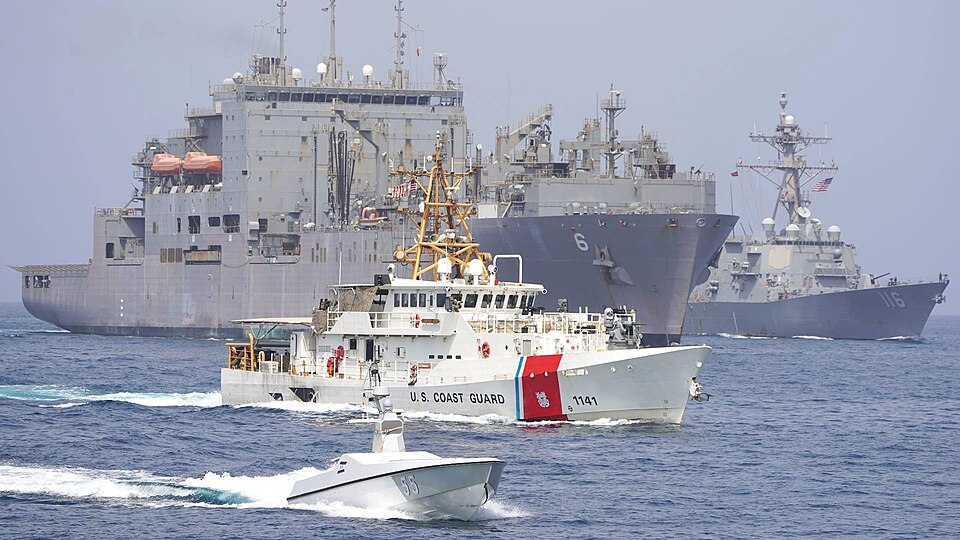
The Strait of Hormuz remains the critical pressure point shaping the tone of the Doha discussions. As one of the most strategically important waterways in the world, it connects the oil-rich Gulf states to global markets, making it a constant focal point in any U.S.–Iran confrontation.
In recent months, heightened military activity and maritime incidents in and around the Gulf have revived fears of disruption. Any escalation involving commercial shipping lanes or naval forces risks triggering broader instability, especially given the dependence of global energy supply chains on uninterrupted passage through the strait.
Iran has long maintained that its regional security posture is defensive, tied to deterrence and sovereignty. The United States and its allies, however, have consistently raised concerns about the safety of commercial vessels and the potential for escalation during periods of heightened political tension.
The current talks appear to reflect a mutual recognition of the risks involved. Even without formal agreements, maintaining communication channels may be seen as a way to prevent miscalculation at sea, where a single incident could quickly escalate into a wider confrontation.
Nuclear Tensions and Sanctions Still Shape the Negotiation Landscape
Although the immediate focus in Doha appears to be regional stability and maritime security, the broader U.S.–Iran dispute remains anchored in longstanding issues, particularly Iran’s nuclear program and the web of economic sanctions imposed by Washington.
For years, negotiations have moved in cycles, periods of engagement followed by breakdowns, often tied to shifts in domestic politics in either country or regional military developments. The absence of a comprehensive nuclear agreement since the collapse of earlier frameworks has left a vacuum filled by partial understandings, indirect messaging, and periodic escalation.
In this context, the Doha discussions are less about a single agreement and more about managing a fragile equilibrium. Both sides appear to be testing whether limited understandings can reduce immediate risks without requiring full diplomatic normalization.
Sanctions remain a central point of pressure. For Iran, economic restrictions continue to weigh heavily on trade, energy exports, and financial access. For the United States, sanctions remain a primary leverage tool aimed at shaping Iranian behavior across multiple regional fronts.
This dynamic creates a negotiation environment defined less by trust and more by calculated restraint.
Regional Players Quietly Influence the Direction of Talks
While the U.S. and Iran are the primary actors, the wider Middle East is deeply invested in the outcome. Gulf states, particularly those located near key shipping routes, have a direct interest in preventing escalation that could threaten maritime security and economic stability.
Qatar’s mediating role reflects a broader regional strategy of balancing relationships with both Western powers and Iran. By hosting talks, Doha positions itself as an indispensable diplomatic channel while also reinforcing its role as a stabilizing force in regional diplomacy.
Other regional stakeholders are also watching closely. Energy-exporting nations are particularly sensitive to any potential disruption in shipping lanes or sanctions-driven volatility that could impact oil prices. Even rumors of escalation in the Strait of Hormuz can lead to immediate fluctuations in global energy markets.
Oil Markets and Global Supply Chain Sensitivity

Beyond geopolitics, the Doha talks carry significant implications for global markets. The Strait of Hormuz is a critical artery for oil and liquefied natural gas exports, and any perceived threat to its stability can quickly affect energy prices worldwide.
Markets typically react not only to actual disruptions but also to expectations of risk. This makes diplomatic developments as influential as military ones. Even incremental progress in talks can ease price pressures, while stalled negotiations often contribute to volatility.
Energy analysts frequently emphasize that global supply chains remain highly sensitive to geopolitical shocks in the Gulf. Shipping insurance costs, freight rates, and commodity pricing are all influenced by perceived stability in the region.
In this context, the Doha discussions function as a form of economic risk management as much as political negotiation. Preventing escalation is not only a diplomatic objective but also a market stabilizer.
Why Indirect Diplomacy Still Matters Between Washington and Tehran
Despite decades of mistrust and intermittent confrontation, indirect diplomacy between the United States and Iran continues because it serves a practical purpose: preventing uncontrolled escalation in a region where military miscalculation could have global consequences.
The absence of formal diplomatic relations does not eliminate the need for communication. Instead, it channels dialogue into mediated formats involving third-party states like Qatar, which can transmit messages, clarify positions, and reduce misunderstanding.
This type of diplomacy is inherently fragile. It lacks transparency, operates under political constraints, and is vulnerable to disruption from external events such as regional conflicts, domestic political shifts, or military incidents.