

The post The 2026 Nobel Prize in Physics, Explained Simply first appeared on Crafting Your Home.
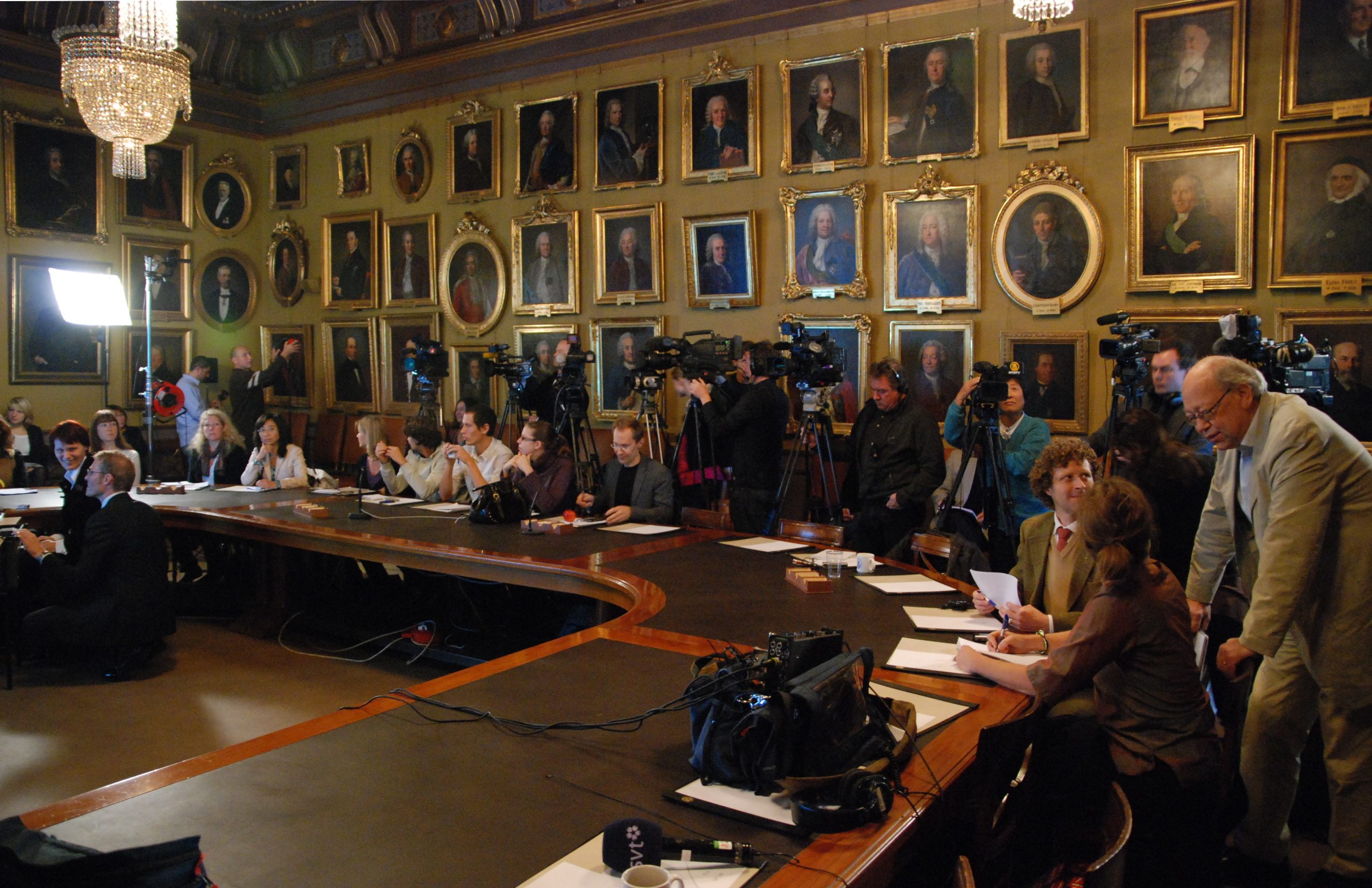
The Royal Swedish Academy of Sciences will announce the physics laureates on Tuesday, 6 October 2026, at 11:45 CEST at the earliest. For American audiences, that lands around 5:45 a.m. Eastern, early enough that the winners will be trending before most people finish their first coffee.
Nobody outside the committee room knows the outcome. Plenty of people are guessing anyway.
The list everybody treats as a forecast
Clarivate published its 2026 Citation Laureates this month, and physics headlines quickly turned it into a prediction market. Clarivate itself says otherwise. The list identifies researchers whose work is Nobel-class and is not a forecast for any specific prize year.
The physics names are Chihaya Adachi of Kyushu University, Stephen Forrest of the University of Michigan and Mark Thompson of the University of Southern California, cited for pioneering research on phosphorescent and thermally activated delayed fluorescence organic light-emitting diodes. Nicola Spaldin of ETH Zurich is cited for theoretical work leading to room-temperature magnetoelectric multiferroics. Qikun Xue is cited for experimentally observing the quantum anomalous Hall effect.
Two of the five work at American universities. If the OLED trio wins, the screen in your pocket becomes a Nobel story, and the prize is sitting inside a product with a billion daily users.
How the filter works
Clarivate’s method rewards sheer influence at scale. Of roughly 67 million papers published since 1970, only around 12,000 have been cited more than 2,000 times, under 0.02% of output. Clearing that bar is rare, and clearing the Nobel bar is rarer still.
The track record is mixed. In 2024, the chemistry list correctly named John Jumper, Demis Hassabis and David Baker weeks before they won. Physics has been less kind to the citation approach, as the next section shows.
Related Post: 6 Icons Who Prove It’s Never Too Late to Achieve Greatness After 60
Three seats, endless deserving candidates
Nobel statutes cap any single prize at three laureates, a rule written for a era of small laboratories. Modern experiments involve thousands of authors, and the cap forces the committee to leave people out.
Paul Corkum of the University of Ottawa appears on Clarivate’s hall of laureates for contributions to attosecond physics. The 2023 physics prize for attosecond light pulses went to Pierre Agostini, Ferenc Krausz and Anne L’Huillier, and Corkum was not among them. The arithmetic of three seats, not the quality of his work, decided that outcome.
The same problem hangs over this year’s shortlist. Adachi, Forrest and Thompson fit the limit exactly, while Spaldin and Xue would each need a partner the field has not obviously agreed on.
The dead do not get a phone call
Clarivate’s own list includes Deborah Jin, whose work on ultra-cold atomic gases created the first fermionic condensate, and Vera Rubin, whose research indicated the existence of dark matter. Both died in 2016 without a Nobel, and the foundation does not award the prize posthumously.
That rule turns patience into a gamble. Physics winners are typically recognized decades after the discovery, and the Nobel website itself notes that Rudolph Marcus, the 1992 chemistry laureate, died on 16 July 2026 at age 102. Marcus lived long enough to collect. Plenty of deserving physicists do not.
Where the women are
Five women have won the physics prize since 1901: Marie Curie, Maria Goeppert Mayer, Donna Strickland, Andrea Ghez and Anne L’Huillier. Among this year’s five physics names, Spaldin is the only woman.
She was born in Sunderland in 1969 and won the L’Oreal-UNESCO For Women in Science Award in 2017 and the Europhysics Prize in 2022. A committee that wants to change the prize’s demographic record has an obvious moment available. Whether it acts on that is a different matter, and the Academy has never explained its reasoning in advance.
The prize keeps drifting toward things you can hold
The 2024 award went to work underpinning machine learning, and Clarivate’s David Pendlebury described the committees’ physics and chemistry choices that year as bold, calling the back-to-back recognition of AI unprecedented. Adachi, Forrest and Thompson would extend that drift, since organic LEDs are device engineering with a measurable place in kitchens, cars and living rooms.
Chemistry World noted that some of this year’s physics laureates on the list sit close to the chemical sciences, which blurs the line between the two prizes. Purists will grumble whichever way the Academy goes, and the committee has shown before that it is willing to take that heat.
What the morning will decide
The 2025 physics prize honored John Clarke, Michel Devoret and John Martinis for macroscopic quantum tunneling, work that took decades to reach recognition. Any of the current names could face the same wait, and the announcement in Stockholm may move none of them.
On 6 October, the committee will either follow the citation data or ignore it. History says the smart bet is to expect a surprise.
Other Posts You May Like
- Hunter Biden Publicly Nominated Trump for A Nobel Peace Prize and It Is Deeply Sarcastic
- 9 myths people still believe even though science disapproved them
If you like what you just read, then subscribe to our newsletter and follow us on social media.


