
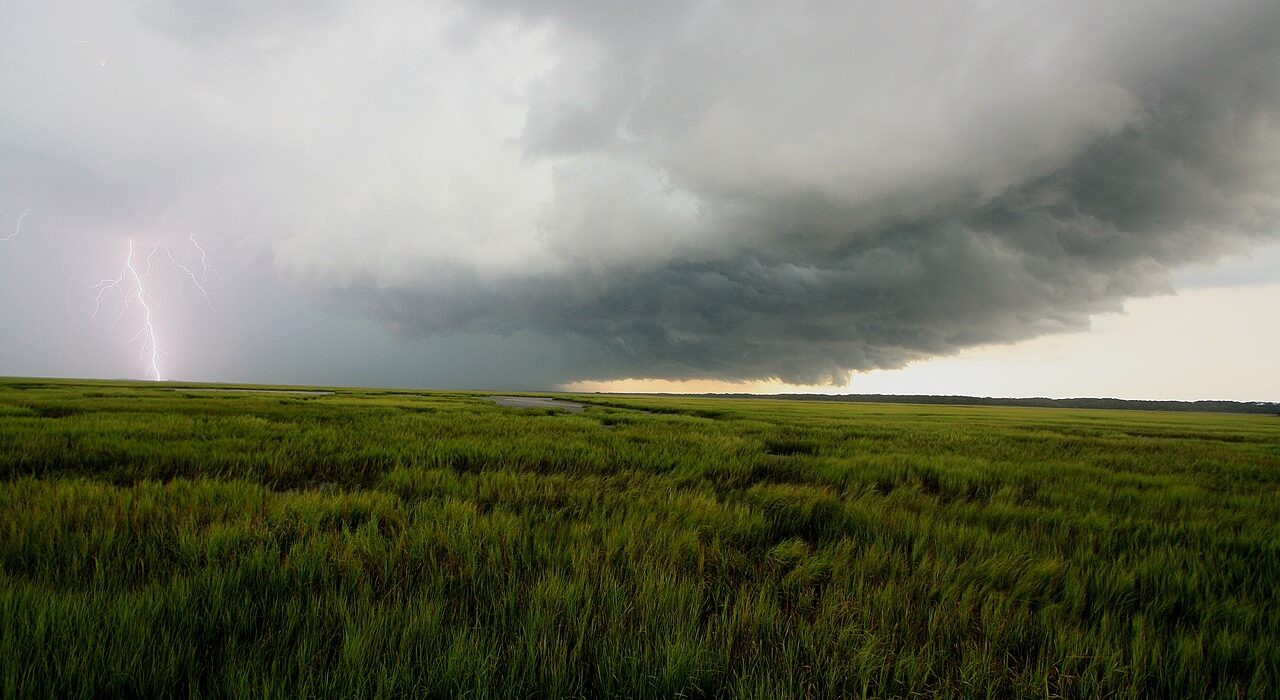

The Southeast is getting two very different winter outlooks. The Farmers’ Almanac says the region will be wetter than normal, with frequent storm systems, while the Old Farmer’s Almanac says temperatures will run above normal, with normal snowfall across the Southeast.
The two are not exactly contradicting each other, since one leads with moisture and the other with temperature. Even so, the details point toward different kinds of winter days, and the gaps between them are worth sorting out for anyone planning around the Carolinas, Georgia, the Gulf states or Florida.
The Farmers’ Almanac: Wet and Stormy

In its 2026-2027 winter forecast, the Farmers’ Almanac describes a very active southern storm track bringing heavier-than-normal precipitation from California and the Southwest eastward through the Southeast. The Almanac says areas along that track should watch for frequent storm systems, muddy fields and occasional surges of cold air.
The cold surges are where the winter-weather mix comes in. When cold air meets that moisture, the forecast says storms could produce sleet, freezing rain or heavy, wet snow. The Almanac favors wetter-than-normal conditions across much of the southern United States, though it does not give temperature figures. The wet pattern echoes the earlier look at how the Farmers’ Almanac sees a wet and stormy South, and anyone sitting through a gray afternoon could pass the time with a list of things women who know their worth do that others mistake for rudeness.
Its regional outlook puts Tennessee, Virginia, West Virginia, the Carolinas, Georgia, Alabama, Mississippi and Florida in one zone and sums it up as cool, wet and stormy. Snow is not described as the main threat there, and Florida is expected to trend cooler and wetter than usual. A Newsweek rundown of the outlook likewise places the Southeast in an active storm corridor that runs through Texas and the Gulf Coast, and lists the region among the wettest areas. The federal view points the same way, since the report on NOAA’s winter outlook says it favors a wetter South, and a list of places so terrible that travelers vowed never to return is a reminder that bad weather is rarely the worst part of a trip.
The Old Farmer’s Almanac: Warmer Than Normal
The Old Farmer’s Almanac regional table lists the Southeast as above normal for temperature, with normal snowfall. Precipitation is above normal in the north and below normal in the south. Florida is also listed as above normal for temperature, with rainfall above normal in the north and below normal in the south.
The Almanac’s winter overview describes southern areas as having a milder, drier winter. In the northern part of the Southeast, the snowiest periods are listed as early January and late February. The earlier piece on the Appalachian winter forecast covers the mountain end of the region, and a look at breakfast classics that deserve a comeback makes a decent plan for a rainy morning.
That still leaves room for cold. The table lists the Southeast’s coldest periods as mid-November, early and mid-December, early January and late February. For Florida, the coldest periods are early and mid-December and early January. The report on when the Old Farmer’s Almanac expects the coldest periods covers the same windows for other regions, and a list of hardest truths to accept in life, according to baby boomers offers a reflective read for the cooler days.
Where the Two Forecasts Part Ways
The clearest difference is temperature. The Old Farmer’s Almanac says above normal for the Southeast and Florida, while the Farmers’ Almanac describes the Southeast zone as cool and says Florida trends cooler. On moisture, the Farmers’ Almanac leans wetter across the board, while the Old Farmer’s Almanac splits the region, with a wetter north and a drier south.
The two agree on one thing: snow is not the main event. The Old Farmer’s Almanac lists normal snowfall, and the Farmers’ Almanac says snow is not the main threat, with sleet, freezing rain or the occasional heavy, wet snow possible when cold air arrives.
How to Read Almanac Forecasts
Both almanacs set their outlooks months ahead of winter. The Old Farmer’s Almanac regional table carries an Oct. 8, 2026 byline, and the Newsweek report on the Farmers’ Almanac ran Aug. 10. These are long-range outlooks built on broad patterns, not official National Weather Service forecasts, so they fit best as a general sense of the season rather than a prediction for a specific day or town.
The winter solstice arrives on Dec. 21, and both almanacs describe the stretch that follows. For timing a real storm, a freeze or a Gulf Coast soaking, the local National Weather Service forecast is the tool to check in the days before. Meanwhile, the almanac split makes a handy conversation starter: one says milder, the other says wetter, and the Southeast may end up proving both right in different weeks.
Get stories like this by email. Sign up for Crafting Your Home.
This article was produced with AI assistance and edited for accuracy against the sources linked above.
Image: Alan Cressler – CC BY-SA 2.0/Wikimedia Commons
