


A lower Manhattan courthouse is now the center of one of the most closely watched criminal cases in the United States, as Sean “Diddy” Combs faces a federal prosecution in the Southern District of New York.
The case has entered a crucial phase that rarely gets public attention but often determines how major trials are decided. Attorneys on both sides are now in a pretrial struggle over evidence, witness testimony, and the structure of a case that faces nationwide scrutiny.
No verdict has been reached, and no trial has begun, but the proceedings have already become a defining legal battle in New York’s federal system. The case has drawn attention because of the defendant’s global profile and the seriousness of the charges. It involves allegations of sex trafficking and related offenses prosecuted by federal authorities in New York.
A courtroom battle unfolding before the jury ever enters the room
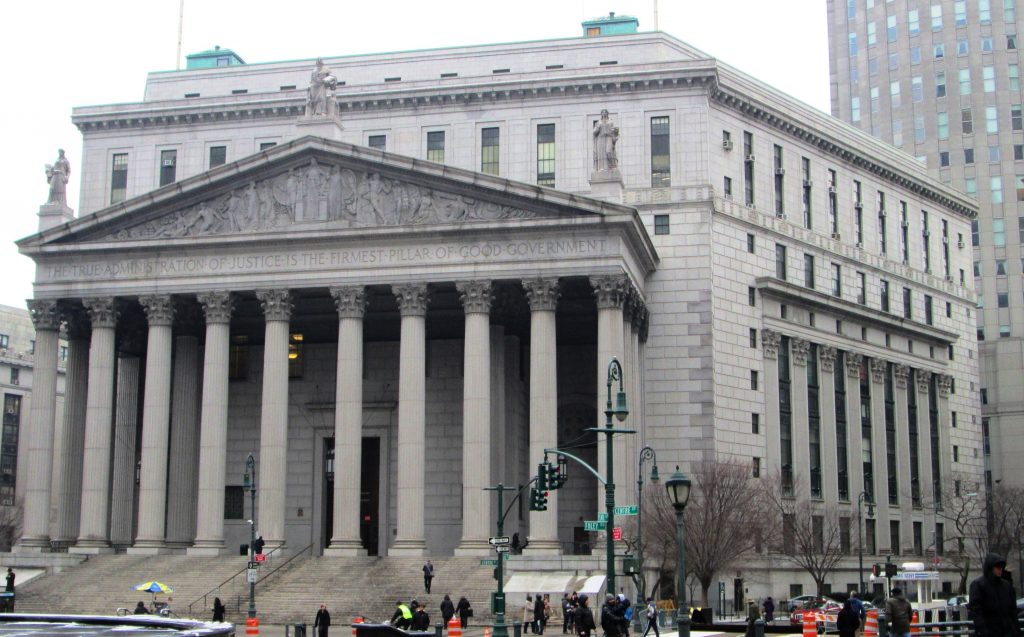
Inside the federal courthouse, the most important arguments are not yet being made to jurors. Instead, they are being debated between lawyers and judges in pretrial hearings that will decide what evidence can be presented if the case proceeds to trial.
This stage is mostly hidden from the public but forms the foundation of the case.
Currently, both the prosecution and defense are focused on core trial issues. Prosecutors aim to establish admissible evidence and witness testimony, while the defense challenges the scope of the case and seeks to exclude prejudicial or improperly obtained evidence.
These disputes include legal arguments over electronic communications, witness statements, and the interpretation of events that prosecutors say form part of a broader pattern of conduct. Defense attorneys, meanwhile, argue that each piece of evidence must be carefully tested and viewed within its proper legal context before it can be introduced in court.
These rulings will directly shape what a future jury may or may not hear.
A federal case built on scale, scrutiny, and legal complexity
The case against Combs is being handled at the federal level, which means it involves prosecutors from the U.S. Attorney’s Office for the Southern District of New York.
Federal cases of this nature are often built differently from state trials. Instead of focusing on a single event, prosecutors frequently present broader narratives supported by multiple sources of evidence, including communications records, witness accounts, and documentary materials.
In this case, the government is working to present a structured argument that connects various allegations into a unified legal theory. The defense, however, is seeking to separate those claims and challenge whether they can legally be tied together in a single trial.
That tension is now playing out in pretrial hearings, where judges are being asked to make decisions that could narrow or reshape the case before it reaches a jury.
Why this Manhattan courtroom is now under national spotlight
The Southern District of New York courthouse has hosted many high-profile federal cases, from financial crimes to terrorism-related prosecutions. This case draws special attention due to the defendant’s cultural prominence.
Sean Combs is a defendant, but his career in music, fashion, and entertainment amplifies public interest, even as the legal process remains tightly controlled.
Despite the media attention, the judge overseeing the case has maintained strict procedural boundaries, keeping arguments in court rather than in public commentary.
Defense strategy focuses on narrowing the government’s case.
In federal criminal trials, one of the most critical early strategies involves shaping what evidence the jury will ultimately see. In this case, the defense has been challenging the prosecution’s approach, arguing that certain materials should be excluded or limited in scope.
Defense arguments focus on the reliability of evidence and prosecutorial interpretation. The legal team insists that allegations be tested individually and not grouped without judicial review.
This approach is common in complex federal cases, where the defense often seeks to reduce the scale of the government’s narrative before it reaches a jury.
Prosecutors push to establish a broader narrative framework.
On the other side, federal prosecutors are working to maintain the structure of a case they believe reflects a larger pattern of alleged conduct. Their strategy relies on connecting multiple strands of evidence into a cohesive argument that can be presented in court.
In federal prosecutions of this scale, the government typically relies on layered evidence, including witness accounts and corroborating documentation, to support its claims. The challenge at this stage is ensuring that all of that material is admitted under federal evidentiary standards.
The judge’s rulings on these issues will determine how expansive or limited the prosecution’s presentation can be if the case proceeds to trial.
The legal process is now shaping the public narrative.
Although no jury has been seated, the courtroom process already shapes public perception. Each motion, ruling, and hearing adds to public understanding.
But legal experts often emphasize that this stage is not about determining guilt or innocence. Instead, it is about defining the boundaries of the trial itself.
That distinction is especially important in high-profile federal cases, where public attention can sometimes outpace the formal legal process.
What happens next inside the federal system
The case is expected to continue through additional pretrial hearings in Manhattan, where both sides will further argue over evidence and trial procedures. These proceedings will likely determine whether the case proceeds in its current form or is narrowed before a jury trial begins.
No trial date has been finalized at this stage, and the timeline remains dependent on how quickly the court resolves these foundational disputes.
For now, the case remains in a critical legal phase, one that rarely makes headlines but often decides the trajectory of major federal prosecutions.
In the Southern District of New York, the courtroom battle involving Sean “Diddy” Combs is currently centered on structure, evidence, and the legal limits on what can be presented in a federal trial.
And while the public may be waiting for a dramatic courtroom conclusion, the most important decisions are already being made quietly, one motion, one ruling, and one argument at a time.


