
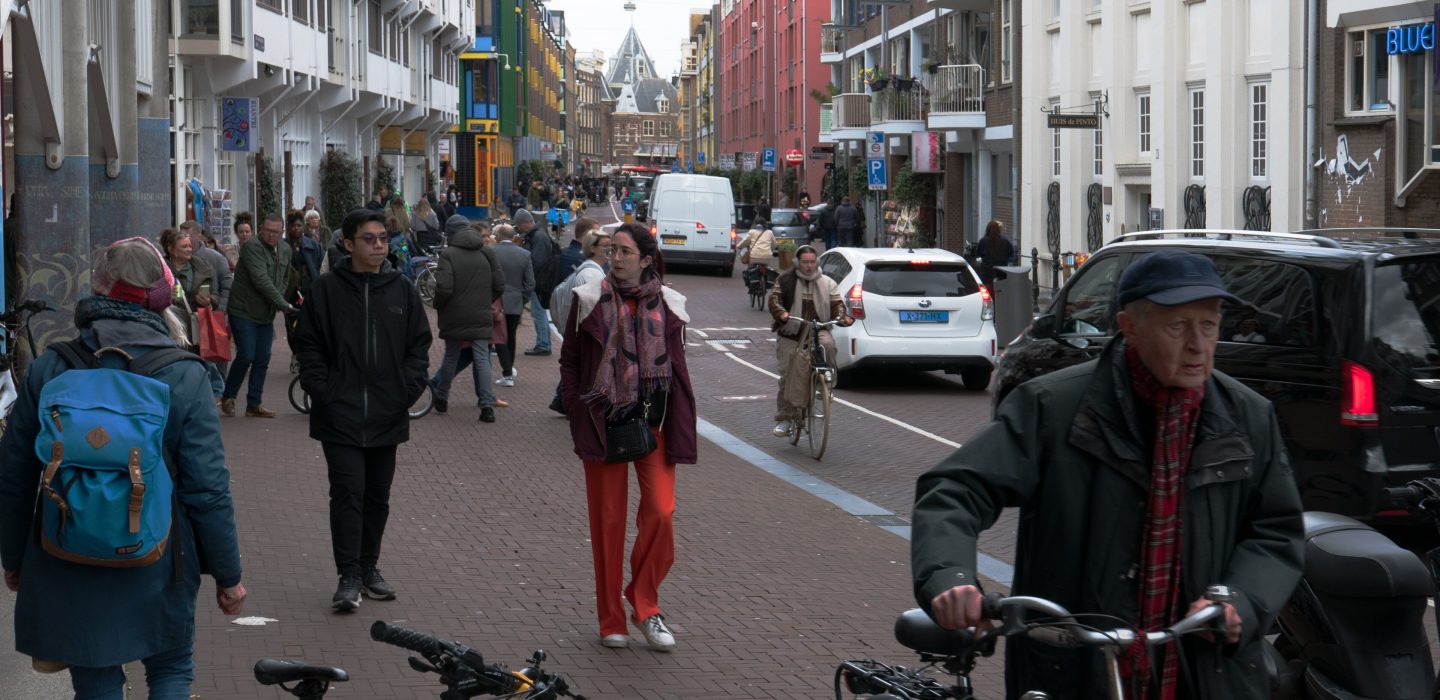

Every sidewalk has one: the person who overtakes the whole block without seeming to try, eyes forward, no sign of a stroll. Licensed clinical psychologist Dr. Holly Schiff, Psy.D., described what that pace can say about a person in Parade, and her list runs to seven traits.
None of the seven is a flaw or a diagnosis. They are tendencies that tend to travel with a quick stride, and a faster walker may have some of them, all of them or none.
Purpose and Energy Set the Pace

1. Goal-oriented. Fast walkers move with purpose, Dr. Schiff said, and “the act of walking quickly mirrors a general drive to reach their goals efficiently.” Getting somewhere is the point, and the shortest route to it is the preferred one. Plenty of Americans have swapped the treadmill for the sidewalk, a shift covered in why more Americans are walking instead of going to the gym.
2. High energy. A brisk pace may simply come from having a lot of energy, according to Dr. Schiff, who tied it to a body that is primed for movement and action throughout the day. That kind of get-up-and-go also fuels the crowd described in the surge in local run clubs and walking groups. Holiday travel is where a quick stride gets its workout, and a roundup of carry-on suitcases worth packing for Thanksgiving trips fits the spirit.
Impatience, Confidence and Quick Decisions
3. Impatient. According to Dr. Schiff, these walkers “prefer to move quickly rather than linger and take their time,” which can mean a lower tolerance for waiting. Slow crosswalk signals and meandering grocery aisles are the usual tests. Rushing has its price on vacation too, as in travel blunders that turn a vacation into an unnecessary stress-fest. Impatience also has a close cousin in lateness, which has its own explanations in a piece on people who are always late.
4. Confident. A brisk pace can reflect confidence and self-assurance, Dr. Schiff said, and it “signals comfort in navigating space and environment.” Someone who knows the route and trusts the plan tends not to hesitate at corners, and the same preparedness shows up in a list of the best travel accessories.
5. Quick decision makers. “Fast walkers are decisive, make quick choices and commit to action,” Dr. Schiff said, adding that the trait can extend into walking pace as a physical reflection of decisiveness. Family trips call for a different kind of quick decision, as in a roundup of 3-piece luggage sets for holiday trips.
Punctuality and Independence Round Out the List
6. Punctual. People who keep to schedules may walk faster to stay on time, Dr. Schiff said, because they are time-conscious and trying to maximize efficiency and ensure punctuality. The same type is profiled in a look at people who are always early.
7. Self-reliant. Dr. Schiff linked fast walking to independence: “Moving quickly can also reflect self-reliance and comfort in forging one’s own path without being slowed by others’ pace.” In other words, the person striding ahead is not waiting for a group to catch up.
What Research on Walking Speed Found
The Parade piece points to a 2017 study in Social Psychological and Personality Science covering about 15,000 adults. Faster walkers were more likely to be extroverted, open to new experiences and conscientious, according to the article, while slower walkers were described as generally more uptight.
A write-up of the same research on PsyBlog said participants ranged from age 25 to 100 and completed personality tests. It also reported that people with neurotic personalities tended to walk more slowly, and that extraversion and conscientiousness were the most consistent personality correlates of walking speed. The study’s own conclusion, as quoted there, was that walking speed in adulthood “reflects, in part, the individual’s personality.”
The same write-up added a twist about aging: extraverted, conscientious and open people also declined less in walking speed over time than others did. That fits the broader picture of pace as one small piece of how personality plays out in daily life, rather than a test that sorts people into types.
The key words there are “in part.” Pace also depends on height, shoes, crowds, errands and whether a bus is pulling away. A person who walks slowly may be perfectly decisive, and a hurried one may just be late.
Get stories like this by email. Sign up for Crafting Your Home.
This article was produced with AI assistance and edited for accuracy against the sources linked above.
