


This article was originally published on Crafting Your Home. A human contributor also wrote and edited the post.
Ireland has elected Catherine Connolly as its next president, delivering a decisive victory to an independent candidate whose outspoken views on international issues, especially the war in Gaza, made her one of the most discussed figures in the campaign.
Connolly won the presidency with about 63% of first-preference votes, defeating her main rival Heather Humphreys of Fine Gael, who received about 29%. The result marked a major political moment for Ireland, as Connolly became the country’s 10th president and one of the strongest-performing independent candidates in recent presidential elections.
Her victory has drawn global attention because of her strong criticism of Israel’s actions in Gaza. During the campaign, Connolly described Israel as a “terrorist state” and accused it of committing genocide in Gaza, statements that generated both support and criticism internationally.
The Irish presidency is largely ceremonial, but the role carries significant symbolic influence. Connolly’s election represents a powerful statement from voters about the issues they wanted highlighted, including peace, neutrality, social justice, and Ireland’s role on the world stage.
A Presidential Victory Built Around a Message of Change
Connolly, a longtime independent politician from Galway, entered the race with decades of experience in Irish public life.
Before politics, she worked as a clinical psychologist and later became a barrister. She was elected to the Irish parliament, the Dáil, in 2016 and later served as deputy speaker, becoming the first woman to hold that position.
Her campaign focused on themes including equality, peace, social issues, and maintaining Ireland’s tradition of military neutrality.
Unlike candidates from Ireland’s traditional political parties, Connolly presented herself as an independent voice outside the usual party structure. Her campaign received support from several left-wing parties, including Sinn Féin, the Labor Party, and the Social Democrats.
The election outcome reflected a desire among many voters for a different style of leadership.
Although the president does not control government policy in the same way as a prime minister, the office allows its holder to influence national conversations and represent Ireland internationally.
Connolly’s supporters argued that her willingness to speak openly about global conflicts was exactly what they wanted from the country’s symbolic leader.
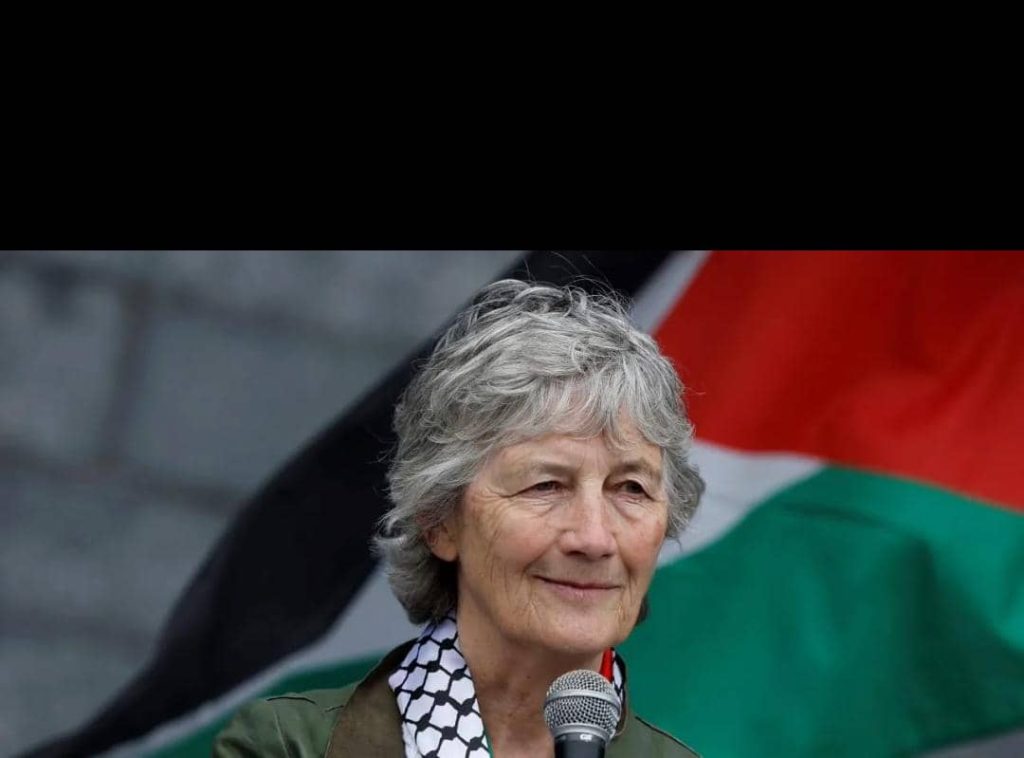
Gaza Comments Put Connolly Under International Spotlight
Connolly’s views on the Israel-Gaza war became one of the most debated parts of her campaign.
She has strongly criticized Israel’s military actions in Gaza, describing them as genocide and saying Israel was acting as a “terrorist state.”
She has also faced criticism over comments regarding Hamas and the wider Palestinian political landscape. During the campaign, she said Hamas was “part of the fabric of the Palestinian people,” while also saying she condemned Hamas’s actions.
The comments sparked backlash from critics who argued that leaders must clearly separate Palestinian civilians from Hamas, the militant group responsible for the October 7, 2023, attacks on Israel.
Connolly defended her position by saying she condemned violence and supported international law while criticizing what she described as the suffering of Palestinian civilians.
The debate reflected Ireland’s broader political divide over the Middle East conflict.
Ireland has become one of the strongest European voices calling for recognition of Palestinian rights. In 2024, Ireland formally recognized the State of Palestine alongside Spain and Norway, a decision that drew criticism from Israel.
Connolly’s victory reinforced that foreign policy questions, particularly Gaza, played an important role in the election conversation.
What Connolly’s Presidency Could Mean for Ireland
While the Irish president has limited executive power, the position can shape public debate and national identity.
Connolly has promised to use the role to promote peace, equality, and Ireland’s humanitarian traditions.
Her election also marks a shift away from Ireland’s traditional political establishment. For much of the country’s modern history, parties such as Fine Gael and Fianna Fáil have dominated national politics.
Connolly’s success showed that independent candidates can still build broad support when they connect with public concerns.
However, her presidency may also bring challenges.
Her strong opinions on international issues could create diplomatic tensions, especially with countries that disagree with her views on Israel, NATO, and military policy.
Supporters say this outspoken approach is a strength, arguing that Ireland benefits from leaders willing to challenge powerful nations.
Critics say the president must carefully represent all citizens and maintain diplomatic balance.
The election also highlighted growing frustration among some voters over domestic issues, including housing shortages, inequality, and public services.
Although Connolly campaigned heavily on international issues, analysts say her victory was also connected to wider dissatisfaction with the political establishment.
A New Chapter for Ireland
Catherine Connolly’s victory represents more than a change in Ireland’s presidency.
It reflects a moment when voters chose a candidate known for taking strong positions on issues that often divide governments and international communities.
Her supporters see her as a voice for peace, human rights, and social justice.
Her critics remain concerned about some of her statements, particularly regarding Israel and Hamas.
But one thing is clear: Connolly’s presidency will be closely watched.
From Ireland’s relationship with the world to debates over neutrality and human rights, she is entering office as one of the country’s most distinctive political figures.
Her landslide win has sent a message that many Irish voters wanted a president willing to speak boldly, even on the most controversial issues of the day.
If you like what you just read, then subscribe to our newsletter and follow us on social media.


