



The post Average Men Aren’t Getting Picked. Their Sex Lives Are Paying for It first appeared on Crafting Your Home.
Being an average man used to come with a fairly simple expectation: grow up, get a job, become reasonably presentable, meet women, have relationships and eventually build a family.
That script has weakened.
The most revealing evidence isn’t in angry posts about dating apps or endless arguments about whether women expect too much. It is in the numbers. American men, particularly younger unmarried men, have become substantially more likely to report no sex over the course of a year.
A 2020 analysis of the nationally representative General Social Survey found that 30.9% of American men ages 18 to 24 reported no sexual activity in the previous year in 2016-2018, up from 18.9% in 2000-2002. Among men ages 25 to 34, sexual inactivity doubled from 7% to 14.1% over the same period.
Young men are increasingly arriving at adulthood without partners
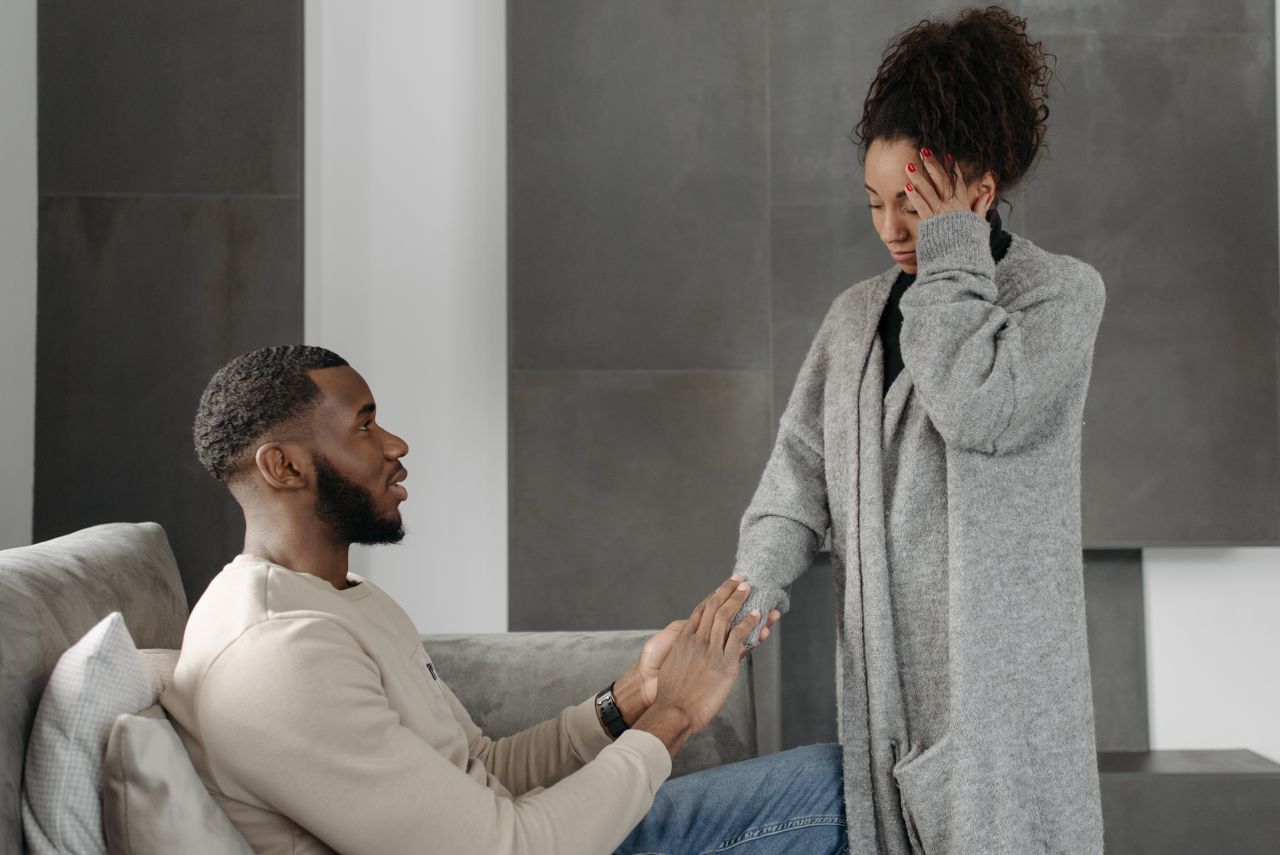
Pew Research Center found that 63% of men ages 18 to 29 described themselves as single in 2022, compared with 34% of women in the same age group. Across all adults under 30, 47% were single.
Those numbers create an obvious mismatch between the romantic experiences of young men and young women.
It does not mean 63% of young men are sexless. Being single is not the same thing as having no sexual partners, and Pew’s definition of single excludes people who are married, cohabiting or in a committed romantic relationship.
Still, the gap is difficult to ignore.
The same Pew analysis found that 42% of single Americans were actively looking for a committed relationship, casual dates, or both. Single men were more likely than single women to be looking, with about half of single men seeking some form of romantic experience compared with 35% of single women.
That produces one of the less comfortable realities in modern dating: some men are looking for relationships while a large share of their female peers are either partnered, uninterested in dating, or operating with different expectations.
A man can therefore be highly motivated and still face a market in which motivation alone has little value.
The sex gap became especially visible among unmarried men
Among unmarried men ages 18 to 44, sexual inactivity increased from 16.2% in 2000-2002 to 24.4% in 2016-2018. Among married men, the increase was much smaller, from 0.4% to 1.7%.
That finding changes the argument considerably.
The central problem is less about men generally becoming incapable of having sex. Marriage and established relationships still provide a very different environment from the open dating market.
The pressure is sharper before partnership formation.
For men who have not secured a relationship, the opportunities can become intermittent, competitive and highly sensitive to social and economic circumstances. Ueda and his colleagues also found that men with lower incomes and men working part-time or not working were more likely to be sexually inactive. Students were also more likely to be sexually inactive.
Money does not buy attraction. Economic stability can, however, affect where people live, how often they socialize, how confidently they present themselves and how easily they participate in conventional dating.
Those factors accumulate.
Online dating turns attraction into a much harsher sorting process

Dating apps did not invent human selectivity. They made some of it easier to observe.
Elizabeth Bruch and Mark Newman analyzed millions of interactions among heterosexual users of a large online dating service in several U.S. cities. Their research found a pronounced hierarchy of desirability, with both men and women tending to pursue people whom the researchers measured as about 25% more desirable than themselves. The farther apart the sender and recipient were on that desirability measure, the lower the probability of a response.
That finding is particularly awkward for anyone who believes the modern dating problem can be explained entirely by demanding women.
Men were doing the same aspirational reaching.
The research does suggest something else, though. A dating market can concentrate attention around a relatively small group of highly sought-after people. Everyone else still has access to the market, but access to the most desired partners becomes increasingly competitive.
For an ordinary man, that competition can produce a peculiar experience.
He may be attractive enough to believe he should receive some attention and ordinary enough to struggle to receive much of it.
That middle ground can be brutal because failure has no dramatic explanation.
He is not necessarily exceptionally unattractive. He may be easier to overlook.
Being a decent man does not automatically create attraction
Much of male frustration comes from the expectation that good behavior should eventually earn romantic access.
Work hard. Be loyal. Avoid criminal behavior. Treat women well. Build a career. Become responsible.
Those are useful qualities.
They are not a reservation at the relationship table.
Romantic attraction has never operated as a merit system, and the available evidence does not establish that women owe ordinary men relationships because those men meet basic standards of adulthood.
That reality becomes more uncomfortable when men discover that some characteristics are difficult to communicate during the early stages of modern dating.
Reliability takes time to observe.
Kindness often becomes visible through repeated interaction.
Emotional maturity cannot easily be compressed into a photograph and a short profile.
Physical appearance, social confidence, occupation, lifestyle and perceived status are easier to assess quickly.
The result can be a market in which men believe they offer substantial qualities while women make decisions before those qualities have enough time to become visible.
That does not make the women irrational.
It makes the market unforgiving.
Related: 7 Flirting Behaviors Women Think Are Attractive But Men Secretly Find Desperate
Women are selective, but men are competing too
There is an easy temptation to turn declining male sexual activity into a story about female hypergamy or women abandoning ordinary men for a tiny pool of exceptional partners.
The evidence is not strong enough for that conclusion.
Bruch and Newman found that men and women both pursued more desirable partners than they themselves. Another study by Derek Kreager and colleagues, using six months of online dating data from more than 14,000 people in a southwestern U.S. city, found that both men and women tended to message highly socially desirable people.
Gender differences exist in how people navigate that market, but the basic competitive impulse is shared.
Men are not simply being victimized by female selectivity.
They are participating in the same selective environment.
The uncomfortable part is that some men may have entered adulthood without realizing how much competition existed for the partners they considered realistically within reach.
Related: 10 Reasons Why Some Women Have “Mercy Sex” Despite Having No Sexual Desire
The economic side of the problem is easy to underestimate
The dating market does not exist separately from the labor market.
Men with lower incomes, as well as men working part time or not working, are more likely to report sexual inactivity.
That does not mean unemployed men are unattractive or that employment guarantees relationships.
It does suggest that economic instability can overlap with romantic exclusion.
Education is part of the changing environment too. Pew Research Center reported that in 2023, 47% of U.S. women ages 25 to 34 had a bachelor’s degree compared with 37% of men in the same age range. In 1995, both groups were at 25%.
That shift matters because American dating increasingly occurs among people whose educational and economic positions may not line up in the way older generations experienced.
A man who assumes that simply becoming a functional adult will automatically place him on equal romantic footing may be operating with an outdated map.
The pandemic made the picture messier
Another reason to avoid turning the trend into a simplistic morality story is that it may not be a universal pattern.
During the pandemic, sexual activity at least monthly fell from 63.9% before COVID-19 to 58.9% during the pandemic period, while the share reporting at least weekly activity dropped from 35.8% to 30.6%. Among men, the researchers did not find a significant change in frequency, although the proportion reporting more than one sexual partner fell from 18.6% to 11.7%.
That complicates any claim that male sexual inactivity has continued upward in a straight line.
The strongest evidence for a long-term increase predates COVID-19 and runs through 2018. Later GSS data are available, but establishing whether the same pattern continued after 2018 requires a separate analysis of the relevant variables by age, marital status and sexual activity.
It also makes the pre-pandemic findings more useful, because they show the phenomenon was already visible before social isolation dramatically altered dating behavior.
Some men may be discovering that average was never enough
The most uncomfortable conclusion is also the simplest
Being ordinary has never guaranteed romantic success.
Modern dating may make that fact harder to ignore.
A man can have an ordinary appearance, a normal job, decent social skills and no obvious character problems and still struggle to find women who want him romantically. That outcome does not mean women are cruel, dating apps are rigged or society has betrayed men.
It means attraction is selective.
The data do show something more concrete: younger American men were increasingly likely to report no sex, unmarried men accounted for most of the rise in male sexual inactivity through 2018, younger men were considerably more likely than young women to describe themselves as single, and online dating research has documented strong competition for highly desired partners.
Those facts are enough to make the cultural argument uncomfortable without turning it into mythology.
The average man does not need to be hated to be overlooked.
He does not need to be oppressed to be frustrated.
And he does not need to blame women for the possibility that the romantic marketplace has become harder for him to navigate.
For some men, the real shock may simply be learning that adulthood guarantees very little in the way of romantic reward.
The dating market does not promise that everyone gets chosen.
The numbers suggest that more young American men are learning that lesson in the most personal way possible: by going home alone.
Other Posts You May Like
- How Open Conversations About Sexuality Strengthen Relationships
- 10 Painful Signs You’re Losing Sexual Attraction to Your Partner
If you like what you just read, then subscribe to our newsletter and follow us on social media.


