


The post 9 Pet Myths Science Has Debunked first appeared on Crafting Your Home.
Dogs and cats dominate the American pet landscape: 71 million U.S. households owned a dog and 53 million owned a cat in 2025, according to the American Pet Products Association. Overall, 95 million American households owned at least one pet that year, underscoring how many homes make daily decisions based on animal behavior.
Yet some of the advice Americans have absorbed about their pets has more to do with folklore than biology. A wagging tail isn’t automatically a happy signal, cats don’t have nine lives, and a purring feline can be experiencing something other than contentment.
One dog year equals seven human years

The seven-year rule is easy to remember but not a universal formula. The American Veterinary Medical Association explains that dogs do not age at a fixed rate of seven human years for every year of life.
Age also varies substantially by size. The AVMA’s senior-pet guidance shows that a 7-year-old dog can correspond to roughly 44 human years for a small dog and 56 for a very large dog. At age 10, the estimated human equivalents range from 56 to 78 years.
That difference matters because a Chihuahua and a Great Dane do not follow the same aging trajectory. Treating every dog as if its biological clock moves at one identical speed turns a convenient rule of thumb into a misleading measurement.
Dogs see the world in black and white
The old image of a dog experiencing life like a black-and-white movie has survived for decades. Modern understanding of canine vision has made that description obsolete.
Dogs have two types of color-sensitive cone cells rather than the three found in typical human vision. As a result, their color range is narrower, with blue and yellow standing out more clearly than the full spectrum humans perceive.
The American Kennel Club notes that dogs also have anatomical adaptations that improve their ability to detect movement and see in low light. Their visual world is different from ours, not colorless.
The myth probably persisted because people interpreted reduced color discrimination as complete color blindness. Those are very different things.
A wagging tail always means a happy dog
A dog wagging its tail looks so obviously joyful that it is easy to stop reading the rest of the animal’s body. That shortcut can be dangerous.
Tail wagging signals emotional arousal, which can include excitement, frustration, fear, insecurity, friendliness, or aggression. Speed, direction, height, posture, and the rest of the dog’s body provide the context.
A high, fast wag from a tense dog sends a different message than a loose, sweeping wag with relaxed body language. Treating every wag as an invitation to pet can make people miss warning signals.
The tail is communication equipment. It is not a happiness meter.
Dogs eat grass because they need to vomit
The sight of a dog suddenly grazing on the lawn has inspired a remarkably persistent explanation: the animal must be trying to make itself throw up.
Evidence does not support that as the standard explanation. In one study, only about 22% of dogs frequently vomited after eating grass, while only 9% frequently showed signs of illness before eating it.
Dogs may eat grass for several possible reasons, including taste, boredom, instinct, or digestive behavior. Researchers have not identified a single universal explanation.
The more useful distinction is between occasional grass eating and a sudden behavior change accompanied by symptoms. A dog repeatedly consuming large amounts of grass while also showing signs of illness deserves veterinary attention, not the assumption that the animal is simply following an ancient stomach-cleaning routine.
A dog’s mouth is cleaner than a human’s
Few pet sayings have been repeated more casually than the idea that a dog’s mouth is cleaner than a person’s. Veterinary evidence gives the claim little foundation.
Colin Harvey, a professor at the University of Pennsylvania’s School of Veterinary Medicine and executive secretary of the American Veterinary Dental College, explained that comparing human and canine mouths is fundamentally difficult because their microbial communities differ.
Dogs and humans both carry hundreds of types of bacteria in their mouths. Some bacterial species overlap between the two animals, while others are specific to each species.
That makes the word cleaner almost meaningless in this context. A dog can have a mouth that is healthy for a dog while still containing microorganisms that would not belong in a human mouth. The same principle works in reverse.
The affection behind a dog kiss is real. The supposed microbiological superiority is not.
Cats have nine lives
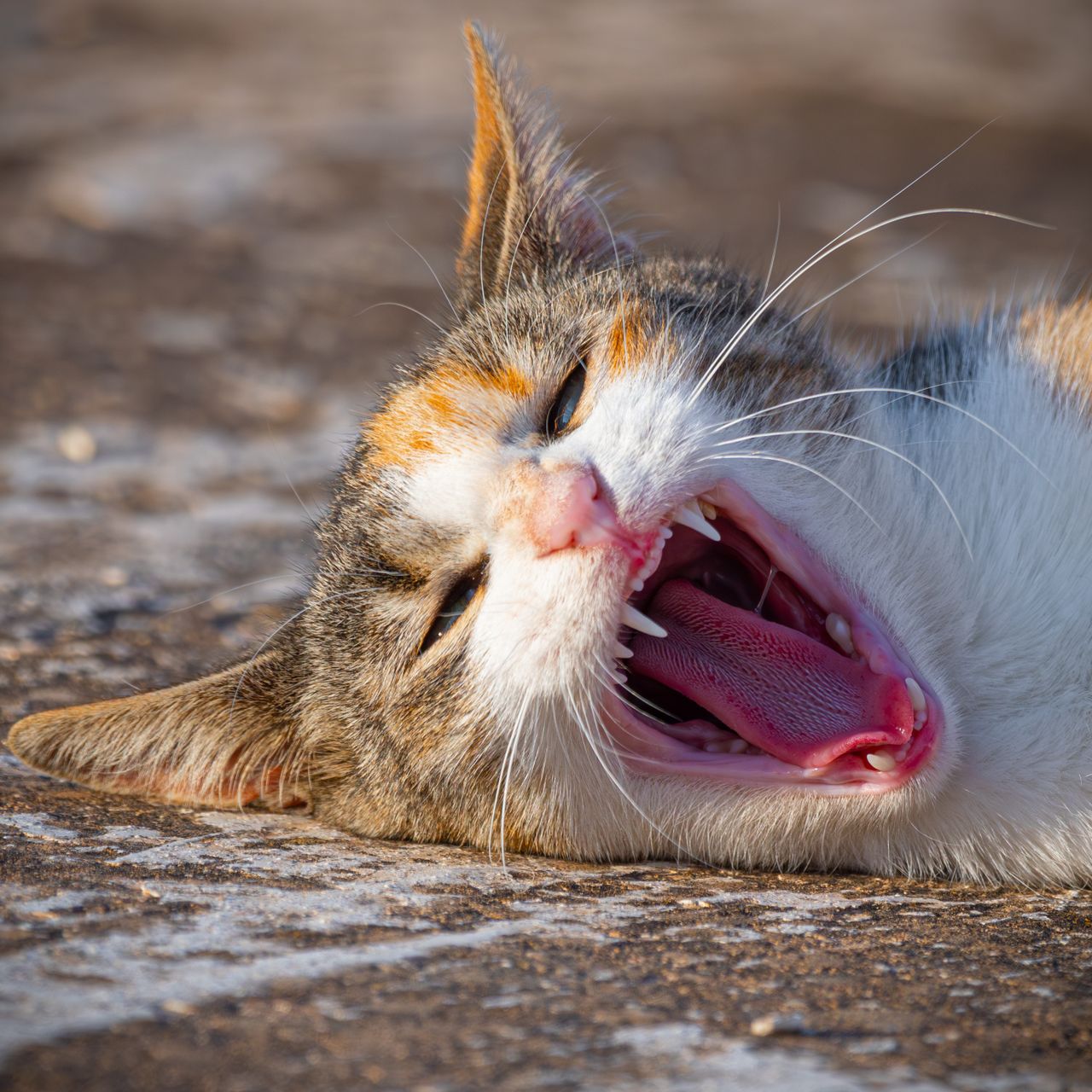
The nine-lives idea belongs to folklore, not feline biology. Its endurance is impressive, but cats have one life and the same basic vulnerability to injury as other mammals.
The Library of Congress preserves examples of the expression in older English-language literature, including a 1901 edition of Little Button Rose that uses the familiar belief about cats having nine lives. The saying therefore has a documented cultural history that predates modern internet pet culture by generations.
The myth feels plausible for a biological reason. Cats have exceptional reflexes and a flexible skeleton, and their bodies can often orient themselves during a fall. Those abilities can make cats appear astonishingly resilient.
Survival skill, however, is not extra lives.
Cats always land safely on their feet
Cats have an impressive righting reflex that lets them rotate their bodies during a fall. That ability has likely reinforced the belief that a cat can survive almost any drop.
Veterinary evidence tells a harsher story. The ASPCA describes high-rise syndrome as a recurring veterinary emergency involving cats that fall from windows, balconies, terraces, and fire escapes. Injuries can include broken limbs, fractured jaws, punctured lungs, and pelvic damage.
The organization also warns that shorter falls can be dangerous because cats may not have enough time to adjust their bodies properly. A cat’s ability to orient itself does not guarantee a safe landing.
Related: How Cats Land on Their Feet: The Physics Behind the Feline Righting Reflex
Cats should drink milk
The classic picture of a cat happily lapping milk from a saucer has had a long cultural life. Veterinary nutrition guidance tells a different story.
Cats do not possess significant amounts of lactase, the enzyme needed to break down lactose in milk. Dairy products can therefore cause gastrointestinal problems such as vomiting or diarrhea in cats.
That does not mean every cat will visibly react to a small amount of milk. Individual tolerance varies, which may help the myth survive.
The larger problem is assuming that something a cat enjoys must be an appropriate staple. Cats can be attracted to foods that don’t belong in their regular diet, just as humans can enjoy foods that aren’t particularly useful as everyday nutrition.
A purring cat must be happy
Purring is one of the most heavily anthropomorphized behaviors in the animal world. People hear the vibration and immediately translate it into contentment.
Veterinary behavior guidance makes the picture considerably more complicated. Purring can occur when cats are comfortable, but it can also appear alongside pain, fear, nervousness, or stress.
A 2023 study published in Current Biology added another surprising detail by examining the physical mechanics of feline purring. Researchers studied excised larynges from eight domestic cats and found that the structures could produce purring-range vibrations around 25 to 30 hertz without neural input or active muscular contraction.
The finding challenged older assumptions about exactly how cats generate the sound. It also illustrates why interpreting a purr as a direct emotional translation is risky.
You have to read a cat’s body language as a whole. A purring cat curled comfortably on a familiar blanket may be content. A purring cat hiding, avoiding movement, or behaving unusually may require a very different interpretation.
Related: Why Do Cats Purr? Scientists Are Still Figuring It Out
Other Posts You May Like
- How Old Is Your Cat in Human Years? The Real Formula Vets Use
- 8 Animals That Are Illegal to Keep as Pets in Many States
If you like what you just read, then subscribe to our newsletter and follow us on social media.


