



The post How Old Is Your Cat in Human Years? The Real Formula Vets Use first appeared on Crafting Your Home.
If you have ever wondered whether your cat is secretly a teenager, middle-aged adult, or senior citizen in human terms, the familiar “one cat year equals seven human years” rule is not a very good guide. Cats mature much faster in their first two years, and their aging rate changes as they move through different life stages.
There is also an important distinction between a cat-age conversion chart and the way veterinarians actually assess aging. No single scientifically validated formula can translate every cat’s chronological age into an exact human equivalent. Instead, veterinary organizations classify cats by life stage and consider their physical condition, behavior, lifestyle, and health alongside chronological age. The 2021 AAHA/AAFP Feline Life Stage Guidelines divide cats into kitten, young adult, mature adult, and senior stages, while recognizing that individual cats can age differently.
Forget the 7-Year Rule: Cats Don’t Age That Way
The seven-year rule probably survives because it is simple. But feline development doesn’t happen at a constant rate, so multiplying a cat’s age by seven gives a misleading picture, especially in the early years.
A one-year-old cat is already physically mature enough to be considered roughly comparable to a human teenager or young adult, depending on the conversion system used. Cornell University’s College of Veterinary Medicine offers a commonly used approximation: a one-year-old cat corresponds to about 16 human years, while a two-year-old cat corresponds to about 21 human years. After that, Cornell’s model adds approximately four human years for each additional cat year.
Other veterinary sources use a slightly different approximation. VCA describes the first cat year as roughly equivalent to 15 human years, the second as bringing the total to about 24, and subsequent years as adding approximately four human years each. These differences are not necessarily contradictions. They illustrate the bigger point: human-equivalent cat ages are estimates, not measurements of biological age.
The Cat-to-Human Age Formula
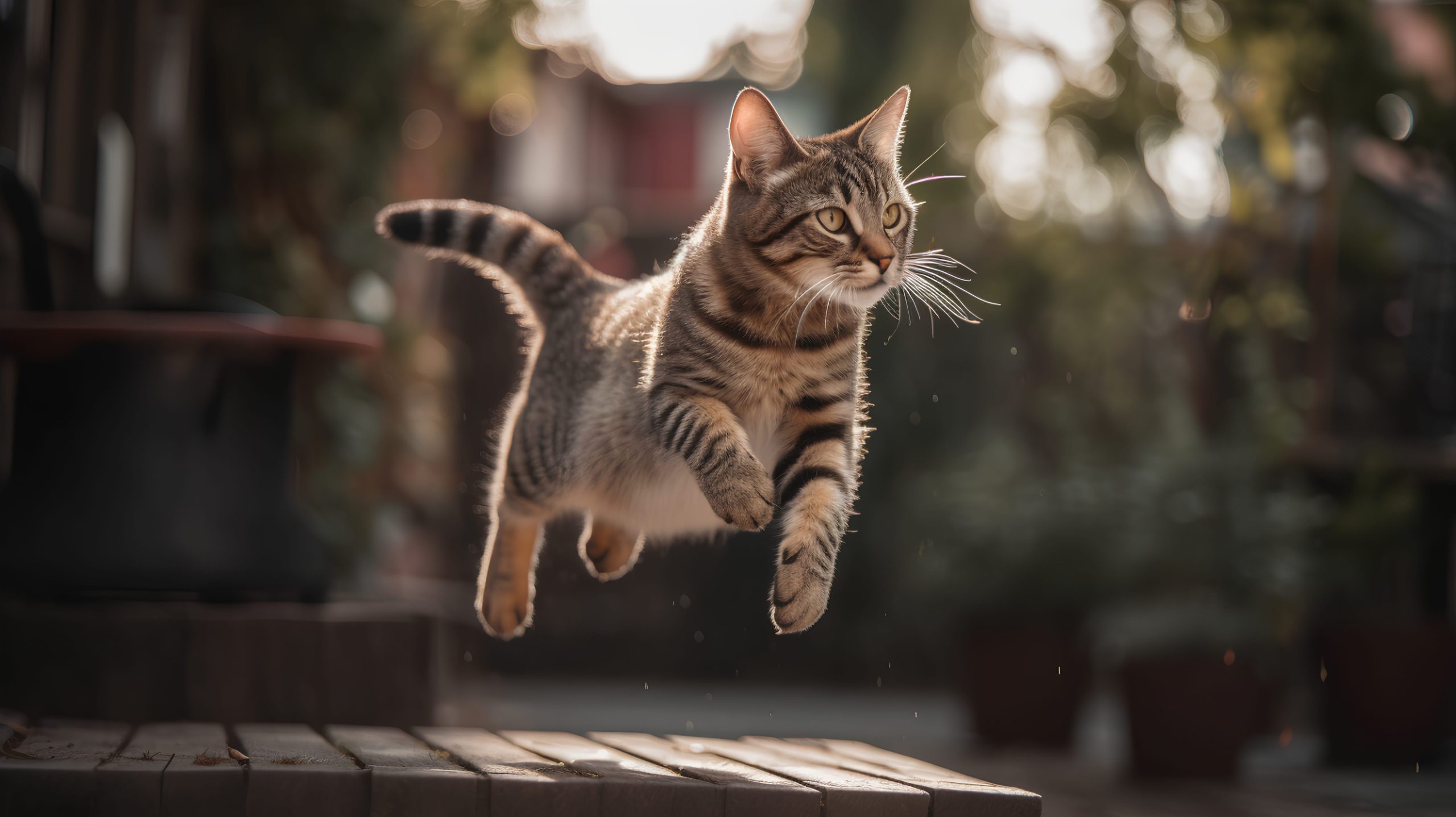
For a simple, everyday estimate, one commonly cited veterinary conversion works like this: treat the first year as about 15 human years, the second year as another nine, and then add roughly four human years for each additional cat year. Using that approximation, a one-year-old cat is about 15 in human-equivalent age. A two-year-old cat is about 24. A three-year-old cat is about 28. A five-year-old cat is about 36. A ten-year-old cat is about 56, and a 15-year-old cat is about 76.
VCA publishes a similar conversion, while Cornell uses a closely related system that puts a one-year-old cat at about 16 human years and a two-year-old cat at about 21. Cornell then adds about four human years per additional cat year.
The safest way to use these numbers is therefore as rough comparisons, not as a biological measurement. If a calculator tells you your cat is “64 in human years,” it does not mean the cat has the same physiology, disease risk, or functional capacity as a 64-year-old person.
Related: The Maine Coon Is America’s Favorite Cat Breed Again — See the Full Top 10
What Happens During Each Stage of a Cat’s Life?
Kitten: Birth to 1 Year
The first year is the period of fastest development. Kittens undergo major physical and behavioral changes in a relatively short time, so the first cat year represents a much larger change in maturity than later years. The AAHA/AAFP guidelines identify birth through one year as the kitten stage. Veterinary care during this period includes attention to nutrition, vaccination, parasite control, socialization, behavior, and development.
This is also why treating a one-year-old cat as equivalent to a seven-year-old human is particularly misleading. The cat has already passed through the equivalent of several human developmental stages.
Young Adult: 1 to 6 Years
From one through six years, cats are classified as young adults under the AAHA/AAFP system. They are no longer growing kittens, but they are not yet in the mature-adult category used by those guidelines.
Health priorities during these years include maintaining a healthy body condition, providing appropriate nutrition, encouraging activity and enrichment, and continuing preventive veterinary care. The AAHA/AAFP checklist specifically calls attention to weight gain and obesity risk during the young-adult stage.
Mature Adult: 7 to 10 Years
The mature-adult stage covers ages seven through ten in the 2021 AAHA/AAFP framework. This does not mean that every seven-year-old cat suddenly becomes “old.” Instead, it marks a period when age-related health changes deserve increasing attention.
Research from the Cat Prospective Aging and Welfare Study illustrates why chronological age alone does not tell the whole story. In a study of 206 cats aged seven to ten, owners commonly reported changes in physical appearance, behavior, eating patterns, and activity. Clinical examinations also identified substantial variation in body condition among these cats.
Senior: Over 10 Years
The AAHA/AAFP guidelines classify cats older than ten as senior cats. Veterinary attention at this stage focuses increasingly on early detection of disease and changes that may otherwise be mistaken for normal aging.
Aging itself is not a disease. However, older cats are more likely to develop chronic health problems, and some age-related changes can be subtle. Cornell notes that many cats begin showing physical changes associated with aging between seven and ten years, with most experiencing some changes by around 12.
Why Two Cats of the Same Age Can Age Differently

Two cats can have the same birth date and still have very different health profiles. That is one reason veterinarians do not rely on an age-conversion number alone.
Body condition is one measurable factor associated with longevity. A peer-reviewed study published in the Journal of Feline Medicine and Surgery analyzed records from 2,609 cats and found associations between body-condition scores and survival. The study reported a median lifespan of 15.8 years in its population and found that both very low and very high body-condition scores were associated with shorter survival compared with a moderate score. Importantly, this was an observational study, so the findings demonstrate associations rather than proving that body condition alone determines lifespan.
Lifestyle, nutrition, preventive healthcare, genetics, and disease influence how an individual cat experiences aging. The age-conversion number gives you context, but it cannot replace an assessment of the actual cat.
Related: Why Slow-Blinking at Your Cat Actually Works, According to Science
How Vets Estimate the Age of an Unknown Cat
When a cat’s birth date is unknown, veterinarians can estimate its age by examining physical characteristics, but the result is generally an estimate rather than an exact birthday. Dental development can be particularly useful in young cats because teeth change predictably during early development. In older cats, however, determining an exact age becomes more difficult. Veterinarians may combine findings from the teeth, eyes, coat, muscle condition, body condition, and overall physical examination to estimate age.
That distinction is important for rescued or adopted cats. A veterinarian may be able to say that a cat appears to be a young adult or senior, for example, without being able to determine that the animal is precisely eight or 11 years old.
What Aging Signs Should Cat Owners Watch For?
Don’t automatically dismiss changes in an older cat as “just getting old.” The AAHA/AAFP guidelines specifically encourage veterinarians to investigate changes in appetite, weight, behavior, activity, elimination, and other normal habits in mature and senior cats. A 2022 peer-reviewed study of mature cats published in Frontiers in Veterinary Science found that owners frequently noticed changes in physical appearance, behavior, eating patterns, and activity. The results reinforce the value of noticing gradual changes rather than waiting for an obvious illness.
Research also suggests that some physiological changes begin before a cat reaches the oldest age groups. A recent study of apparently healthy cats found that kidney concentrating ability began to decline, on average, at approximately nine years of age and became progressively lower with increasing age. That does not mean every nine-year-old cat has kidney disease; it shows why age can help veterinarians decide which aspects of health deserve closer monitoring.
Key Takeaways

So, how old is your cat in human years? No single “real” formula lets veterinarians convert feline age into an exact human age. A commonly used approximation treats the first cat year as about 15 human years, the second as about 24 total, and each subsequent year as roughly four additional human years. Cornell uses a similar but slightly different approximation.
For veterinary medicine, however, life-stage classification is more useful. The current AAHA/AAFP framework places cats into kitten, young adult, mature adult, and senior stages, while emphasizing that individual health and physical condition can vary substantially within each group.
Think of the human-age comparison as a helpful mental model, not a diagnostic tool. Your cat’s chronological age tells you where it is on the calendar; its life stage, physical condition, behavior, and veterinary examination tell you much more about how it is actually aging.
Other Posts You Might Like
- Why Black Cats Are Lucky in Some Countries and Unlucky in Others
- How Cats Land on Their Feet: The Physics Behind the Feline Righting Reflex
- Why Do Cats Purr? Scientists Are Still Figuring It Out
If you like what you just read, then subscribe to our newsletter and follow us on social media.


