


This article was originally published on Crafting Your Home. A human contributor also wrote and edited the post.
Few dog behaviors are as instantly recognizable as the head tilt. You say a familiar word, make an unusual sound, or ask a question, and your dog suddenly turns its head to one side as if trying to solve a puzzle.
For years, people have offered different explanations. Perhaps the dog is trying to hear more clearly. Perhaps it is studying a person’s face. New research offers another possibility: in some dogs, the head tilt may be linked to attention, memory, and processing meaningful words.
The Study Focused on “Gifted” Dogs

Researchers examined dogs that were unusually good at learning toy names. These dogs could hear the name of a particular object and retrieve it from a group of toys.
The study compared seven highly skilled dogs with 33 dogs that did not show the same ability to learn multiple toy names. The researchers observed how often the dogs tilted their heads when they were asked to retrieve a named toy.
The results were striking. The highly skilled dogs tilted their heads during about 43 percent of the trials, while the comparison dogs did so only about 2 percent of the time.
The Tilt May Show Concentration
The researchers suggested that the head tilt could be linked to the way dogs process important or familiar sounds. When a dog hears the name of a toy it knows, it may be trying to connect the spoken word with a mental image of the object.
In other words, the tilt may occur while the dog is paying close attention and working out what the person wants. The researchers described the behavior as potentially related to processing meaningful stimuli rather than simply hearing a sound.
This does not prove that every head-tilting dog is thinking about a specific word. The study involved a small group of unusually talented dogs, so the findings should not be applied directly to all dogs.
Why Do Dogs Tilt When We Talk?
Dogs may tilt their heads for several reasons. They may be trying to locate a sound, understand a familiar command, focus on a person’s voice, or see a face more clearly around the shape of their muzzle.
Dogs also learn that certain sounds predict enjoyable events. A word such as “walk,” “dinner,” or a toy’s name may immediately attract attention because it has meaning in the dog’s daily life.
The study adds an important clue: the behavior may be especially likely when the sound is relevant to the dog, rather than merely unfamiliar.
Each Dog May Have a Preferred Side

The researchers also noticed that some dogs consistently tilted in the same direction across different trials and over several months. This suggests the behavior may not always be random or simply a response to the speaker’s location.
A dog that tilts to the right may keep tilting to the right when it hears a meaningful word, even if the person is standing in a different position.
The study authors said this could be connected to how the dog’s brain processes sound, although more research is needed to understand the mechanism.
It Does Not Mean Your Dog Is Confused
People often interpret the head tilt as confusion, but confusion is only one possibility. A dog may be carefully listening rather than failing to understand.
The rest of the body can provide useful context. A relaxed dog with forward-facing ears, soft eyes, and an alert but loose posture may be interested in what it hears. A dog that lowers its body, pulls its ears back, avoids eye contact, or appears tense may be worried instead.
Dogs Trust advises owners to read the animal’s entire body rather than relying on one movement.
When a Head Tilt May Be a Medical Problem
A brief head tilt in response to a voice or sound is usually different from a persistent tilt. If a dog suddenly keeps its head tilted to one side, walks in circles, loses balance, vomits, flicks its eyes abnormally, or seems distressed, contact a veterinarian.
Veterinary guidance helps distinguish a temporary listening gesture from a lasting head tilt, which can signal ear or nervous system issues.
Don’t assume a persistent tilt is simply an appealing personality trait. A professional should check a sudden or continuous change.
How Owners Can Encourage Listening
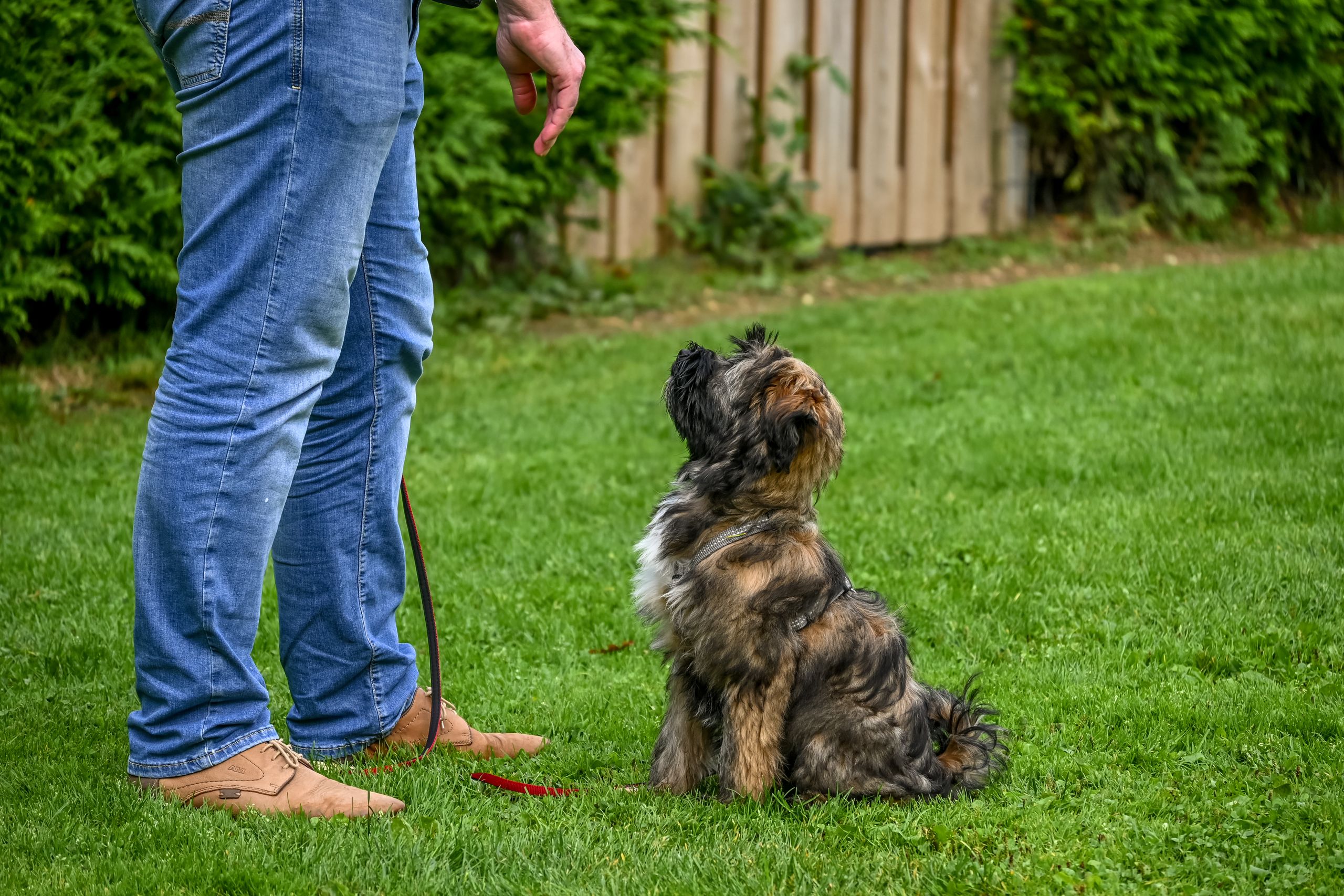
Owners can use the behavior as an opportunity to observe how their dog learns. Say a familiar word in a calm voice and watch for changes in the ears, eyes, posture and head position.
If the dog responds correctly to a cue, reward it with praise, a toy or a suitable treat. Keep training sessions brief and positive. Repeating a word loudly or frustrating the dog is unlikely to improve learning.
It is also useful to avoid overusing important cues. If you repeat “walk” constantly without an actual walk, the word may lose some of its meaning.
A Small Gesture With a Bigger Meaning
The dog head tilt remains partly mysterious. The research does not provide one universal explanation, and the study was limited to a small group of highly skilled toy-learning dogs.
Still, the findings suggest that the familiar gesture may sometimes reflect more than curiosity or an attempt to hear better. When a dog tilts its head after hearing a meaningful word, it may be concentrating, recalling information, and trying to match the sound with something it knows.
So the next time your dog tilts its head when you speak, the animal may not be confused at all. It may be paying close attention.
Other post you might like:


