

The post Why Do Cats Purr? Scientists Are Still Figuring It Out first appeared on Crafting Your Home.
The familiar rumble seems simple enough when a cat is curled up on a couch, but researchers still have unanswered questions about how the sound is produced and what it means in different situations.
The biggest surprise arrived in 2023, when a team studying eight domestic cat larynges found that the structures could produce purring frequencies without a cat’s brain sending repeated signals to the vocal muscles. The finding challenged a mechanism that had dominated explanations of feline purring for decades.
The more scientists investigate, the less convincing the idea becomes that every purr means a cat is happy.
The sound is unusually low for such a small animal
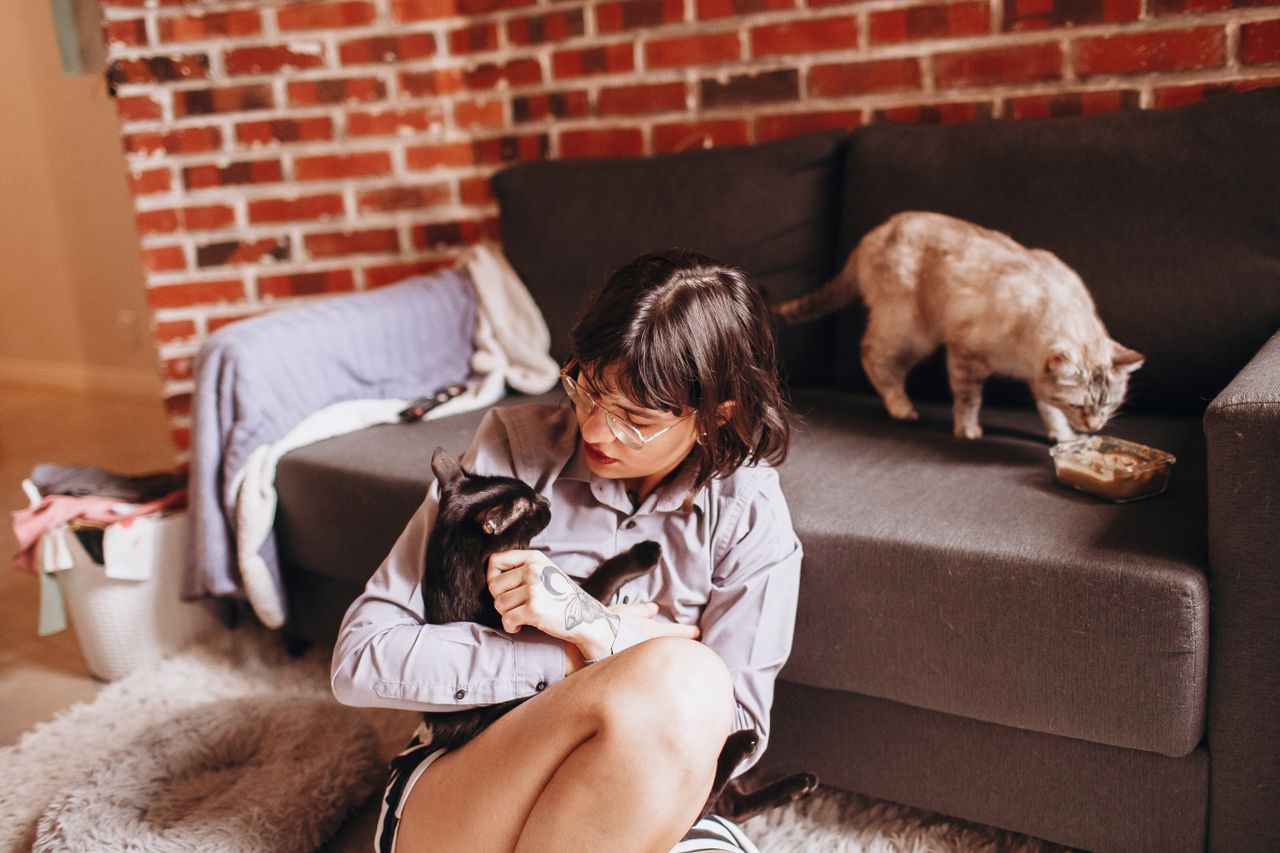
Domestic cats can purr at roughly 25 to 30 hertz, an unusually low frequency for an animal with relatively small vocal folds.
That presented researchers with a basic anatomical puzzle. Larger animals generally have longer vocal folds that can produce lower frequencies, yet a house cat can generate a remarkably deep rumble despite its modest size.
A 2023 study examined the larynges of eight domestic cats and found connective-tissue structures embedded in the vocal folds. The researchers proposed that these structures, measuring up to about 4 millimeters in diameter, may help enable such low-frequency oscillations.
The result matters because purring had long been treated as an unusual exception to the usual mechanics of mammalian sound production.
Scientists once thought muscles were doing the work
For decades, the leading explanation involved rapid contractions of the muscles inside the cat’s larynx. Earlier physiological research described extremely regular bursts of muscle activity occurring around 20 to 30 times per second during purring.
That theory made intuitive sense. A cat would need a highly controlled mechanism to repeatedly alter airflow through its larynx while maintaining the characteristic rhythm.
The 2023 experiment complicated that picture.
When researchers pushed warm air through excised cat larynges, the tissues generated purring-range sounds even though the larynges were no longer connected to a living nervous system. The researchers therefore concluded that self-sustaining oscillations of the laryngeal tissues can produce the basic purring frequency without continuous neural input.
They did not eliminate the possibility that active muscle control contributes to purring in living cats. Their findings instead suggest that the old explanation may have been too simple.
Related Post: Scientists Hid a Sponge to See Whether Dogs or Cats Would Help Their Owners
The mystery is partly hidden inside the cat’s throat
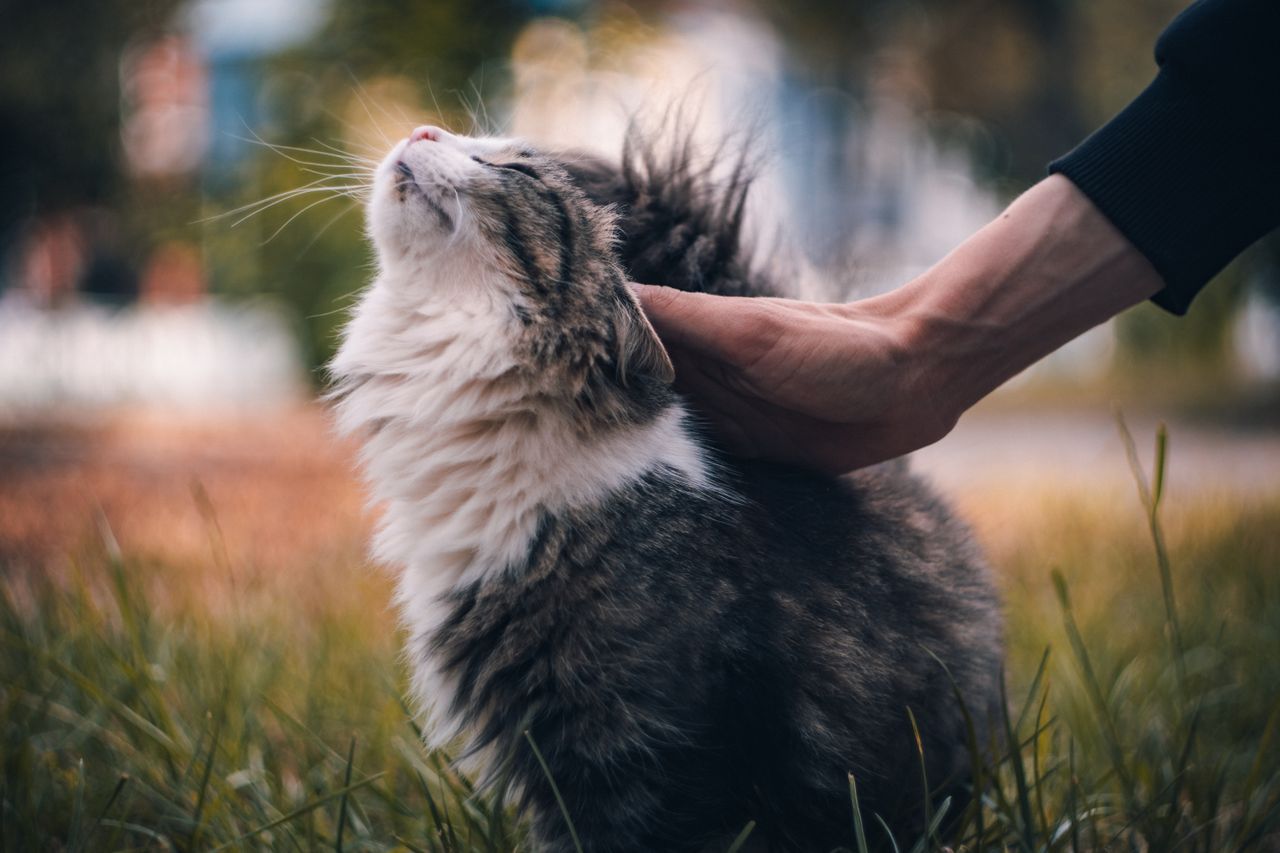
Purring is difficult to study in a living cat because researchers cannot simply instruct one to purr on command while equipment is positioned inside its throat.
That limitation has shaped the history of purring research. Scientists can record the sound’s acoustic properties, examine feline anatomy, and study physiological responses, but those methods do not provide a complete view of what happens inside a conscious animal.
Research published in 1991 had already established that purring occurs throughout the respiratory cycle, with the acoustic pattern changing as the cat inhales and exhales. That work helped move attention toward the larynx and away from earlier theories involving deeper structures of the body.
The newer findings add another layer. Researchers now have evidence that feline laryngeal tissue itself has physical properties capable of generating the unusually low frequencies.
So the question has shifted from simply asking where the purr comes from to determining exactly how the different mechanical and physiological processes cooperate in a living cat.
A purr does not always mean happiness
The cozy image of a cat purring on someone’s lap has made purring synonymous with contentment. Feline behavior research paints a messier picture.
A review of feline communication research notes that cats can purr in social interactions with humans, other cats, and kittens. Still, purring can also occur in contexts associated with hunger, stress, or pain.
Veterinary literature makes the same distinction important during examinations. Cats may continue purring in unpleasant or stressful situations, so a veterinarian cannot reasonably interpret the sound alone as proof that the animal feels comfortable.
That makes purring a particularly poor emotional shortcut for humans.
A cat stretched across a blanket and purring softly may indeed be relaxed. A cat undergoing an uncomfortable veterinary procedure may also purr. The sound carries information, but its meaning depends heavily on what else the animal is doing and what is happening around it.
Cats can make the purr useful to humans
The most intriguing evidence may involve food.
In a 2009 study led by Karen McComb at the University of Sussex, researchers recorded cats producing purrs in different circumstances. They discovered an acoustic feature that made some food-seeking purrs sound particularly urgent to human listeners.
The researchers called these solicitation purrs. Alongside the low-frequency component, the vocalization contained a higher-frequency element resembling a cry. Human participants consistently judged those purrs as more urgent and less pleasant than ordinary purrs, even when the listeners had never owned a cat.
That suggests domestic cats developed a particularly effective vocal tool for communicating with humans.
The finding also gives American cat owners a reason to reconsider the supposedly innocent breakfast purr coming from the side of the bed. The sound may be adorable, but feline communication can be remarkably well adapted to getting a human response.
Kittens give researchers another clue
Purring also has a developmental and social dimension.
A review of feline communication research identifies purring as a behavior commonly observed in kittens seeking care from their mothers. Early life provides an obvious setting in which a low, continuous vocalization could function differently from a loud separation call.
Research on mother-kitten communication has shown that vocal behavior changes substantially during the first weeks of life. In one study examining domestic cats through the first two months after birth, kittens gradually produced fewer and less intense separation calls as they approached weaning, while mothers became less responsive to those calls.
Purring therefore belongs to a broader feline communication system that changes with age and social circumstances.
For domesticated cats living with people, that communication system has another audience. Humans became part of the cat’s social environment, and cats have shown they can distinguish and respond to human voices and other human cues.
Related: From Grain Stores to Sofas: The Surprisingly Wild Story of How Cats Became Our Roommates
The healing story is much shakier than the internet suggests
Purring has acquired an almost mythical reputation online, particularly claims that its low frequencies can heal bones, reduce pain or repair damaged tissue.
The scientific evidence does not justify treating a household cat as a vibrating medical device.
Legitimate research examines how sound and mechanical vibration can affect biological tissues.
A 2025 systematic review examined studies involving infrasound and audible low-frequency sound in wound healing and reported experimental findings involving cellular migration, tissue regeneration and bone-related processes.
That research, however, does not establish that a cat’s purr produces therapeutic effects in humans or that cats deliberately purr to heal themselves.
Even research involving cats and species-specific sounds has produced more modest results. A study involving 20 cats exposed to different auditory treatments found that combinations of cat purring and eating sounds did not produce pronounced stress-relieving effects in a novel environment.
The distinction matters because an interesting biological frequency is not automatically a medical treatment.
Scientists have solved part of the puzzle
The most honest answer to why cats purr is therefore frustratingly incomplete.
Researchers have strong evidence that the larynx plays a central role. They know domestic cats can generate remarkably low frequencies around 25 to 30 hertz. They have identified unusual connective-tissue structures within feline vocal folds that may help explain those frequencies. They also know purring appears in multiple behavioral contexts, from social interaction to food solicitation and potentially stressful situations.
Yet the precise function of every purr remains unresolved.
The 2023 larynx study changed the mechanical explanation by showing that feline larynges can generate purring-range oscillations without neural input. It did not settle every question about how a living cat controls the sound or why purring appears in such different circumstances.
That may be why the humble house cat remains scientifically interesting. Americans can spend years living beside the same animal and hear its purr thousands of times, while researchers are still working out exactly what the animal is doing.
The purr sounds simple.
The biology clearly is not.
Other Posts You May Like
If you like what you just read, then subscribe to our newsletter and follow us on social media.


