

The post The 10 Countries With the Highest Alcohol Consumption Per Person in 2024 first appeared on Crafting Your Home.
When people hear the phrase “the drunkest countries in the world,” they often imagine crowded bars, wild parties, or people who are constantly intoxicated. But the real story is a little more complicated. The latest global comparison does not measure who gets drunk the most; it measures something more specific, the estimated amount of pure alcohol consumed per person aged 15 and older.
According to the World Health Organization’s 2024 estimate, the ranking looks at total alcohol consumption per capita. It includes recorded alcohol sales, estimated unrecorded alcohol, and tourism adjustments. In simple terms, it estimates how much pure alcohol is consumed across an entire adult population, including people who do not drink at all.
So, this is not a list of countries where everyone is walking around with a drink in hand. It measures national averages. With that in mind, here are the ten countries with the highest estimated alcohol consumption per person aged 15+ in 2024.
Romania, 17.066 liters

Romania tops the 2024 WHO estimate among sovereign countries, with 17.066 liters of pure alcohol per person aged 15 and older. The country has a long relationship with beer, wine, and spirits, with beer making up the largest share of recorded alcohol in older WHO beverage data.
Interestingly, Romania’s current position does not mean consumption has been constantly rising. The long-term trend shows a decline from higher levels in the early 2000s, followed by relative stability in recent years.
Georgia, 14.395 liters
Georgia comes second with 14.395 liters. The country is famous for its ancient wine traditions, including the traditional qvevri method of making wine in large clay vessels.
However, Georgia’s drinking culture is not only about wine. WHO data show spirits also represent a significant share of recorded alcohol consumption, meaning the country’s alcohol habits are more diverse than the popular image of a wine-focused culture suggests.
Latvia ranks third at 14.180 liters. Its alcohol pattern is a mix of beer and spirits, with both categories contributing heavily to recorded alcohol consumption.
The country has seen a notable increase compared with its 2000 estimate, although recent years have shown more stability.
Portugal, 13.746 liters

Portugal’s ranking reflects its deep connection with wine culture, but the story has changed over time. Wine represents a large share of recorded alcohol consumption, and the country has a history of wine production stretching back thousands of years.
However, Portugal’s current level is partly a rebound after a long decline rather than a simple upward climb.
Related: 9-best-countries-to-retire-in-2026
Czechia, 13.516 liters
Czechia is often associated with beer, and the data supports that reputation. Beer accounts for the largest share of recorded alcohol consumption, although wine and spirits also contribute significantly.
The country’s overall consumption has gradually decreased over the long term but remains among the highest globally.
Bulgaria, 13.246 liters
Bulgaria ranks sixth with 13.246 liters. Unlike countries known mainly for one type of drink, Bulgaria has a mixed pattern involving spirits, wine, and beer.
The country’s current WHO series shows a long-term increase compared with 2000 levels.
Moldova , 12.989 liters
Moldova places seventh. The country is well known for its wine production and cultural connection to vineyards, with wine representing the largest share of recorded alcohol in older WHO profile data.
Moldova also shows why updated data matters: older rankings often placed it differently because WHO estimates have changed as methods and information sources have improved.
Cameroon, 12.943 liters
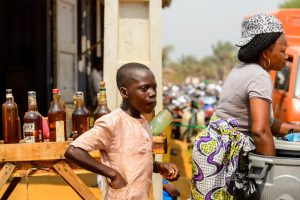
Cameroon stands out because its alcohol pattern differs from many European countries on the list. A large share of recorded pure alcohol comes from the WHO category of “other” beverages, which can include traditional fermented drinks.
Because informal and homemade alcohol is hard to measure, estimates for countries with significant unrecorded consumption require extra caution.
Spain, 12.072 liters
Spain has a famous wine tradition, but modern drinking patterns are changing. Recent data suggests beer has become a leading category, while older wine-centered habits have declined.
Spain’s overall alcohol consumption has fallen significantly since 2000, although it has experienced some rebound in recent years.
Saint Lucia, 11.831 liters
Saint Lucia completes the list with 11.831 liters. Spirits, particularly rum, play an important role in the country’s alcohol profile.
As a small island nation with a major tourism industry, its estimate is especially influenced by the way WHO adjusts for tourist consumption.
The bigger picture
A ranking like this is interesting, but it needs context. A national average does not tell us how many people drink, how often they drink, or whether drinking happens regularly or in occasional heavy sessions. A country can have a high average because many people drink moderate amounts, because a smaller group consumes large quantities, or because unrecorded alcohol plays a role.
Alcohol consumption is also different from binge drinking, alcohol dependence, or alcohol-related harm. These are separate measures that look at different parts of drinking behavior.
So while these ten countries have the highest estimated alcohol consumption levels in the 2024 WHO ranking, the numbers reflect national averages, not every individual living there.
Other Posts You Might Like
- 5-countries-with-the-highest-divorce-rates
- the-9-most-fascinating-facts-about-alcohol-you-didnt-know
If you like what you just read, then subscribe to our newsletter and follow us on social media.


