
This article was originally published on Crafting Your Home. A human contributor also wrote and edited the post.
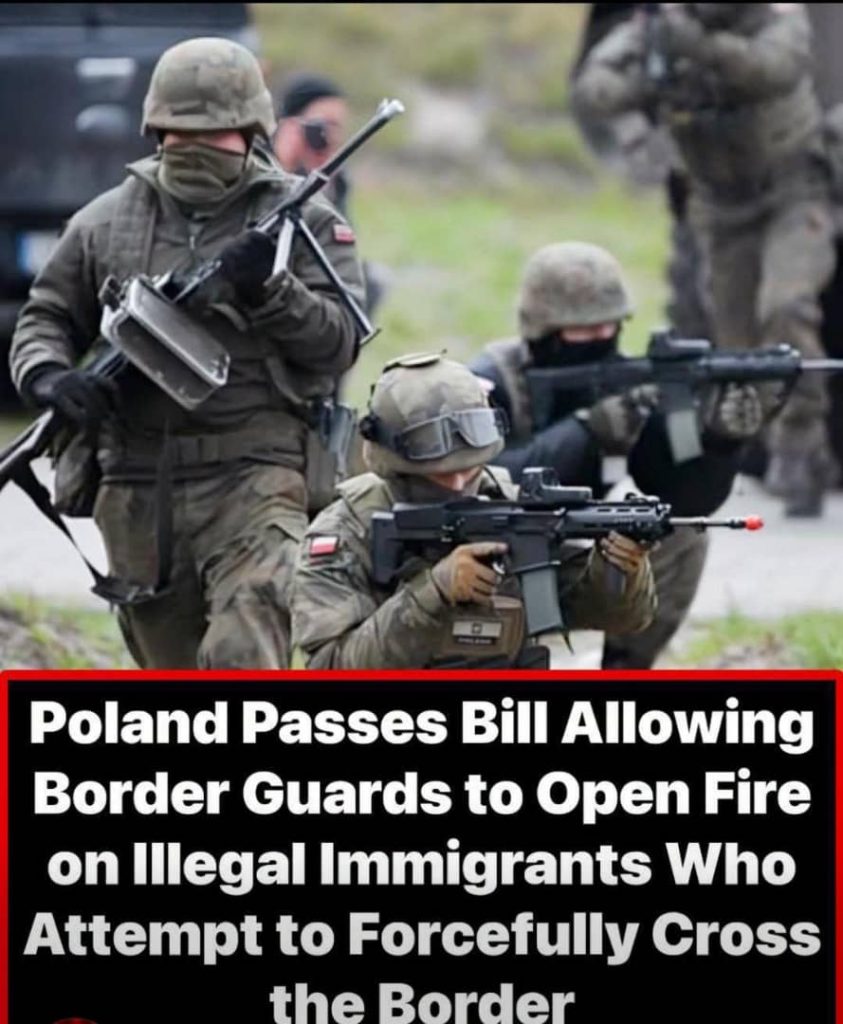
Poland has approved new legislation expanding the authority of its Border Guard, including provisions allowing officers to use firearms in situations where migrants attempt to cross the country’s border forcefully.
The move comes as Poland continues to deal with pressure along its eastern border, particularly with Belarus, where Polish officials have accused Belarusian authorities of facilitating irregular migration into the European Union.
Supporters of the law say the measure is necessary to protect border officers and maintain national security. Critics warn that expanding the use of force at the border could create humanitarian concerns and increase the risk of unnecessary violence.
The legislation has placed Poland at the center of Europe’s ongoing debate over border protection, migration control, and the balance between security and human rights.
Poland Says New Rules Protect Border Officers
The new law gives Poland’s Border Guard clearer authority regarding the use of weapons during dangerous situations at the border.
Under the legislation, officers may use firearms when facing immediate threats, including attempts to forcibly break through border barriers or attacks that put their lives or the lives of others at risk.
Polish officials argue that border officers have faced increasingly difficult conditions, including confrontations with groups attempting to cross illegally from Belarus.
The government has described the eastern border as a security priority, especially since thousands of migrants began arriving at the Belarus-Poland border in recent years.
Polish Prime Minister Donald Tusk has previously emphasized the importance of protecting the country’s borders while also following legal standards.
Government supporters argue that border guards should not be placed in situations where they are expected to stop aggressive crossings without adequate authority or protection.
They say the law provides officers with tools to respond when peaceful enforcement measures are no longer enough.
However, officials have also emphasized that firearms are intended as a last resort and that officers must follow legal procedures when using force.
Border Crisis With Belarus Fuels Political Debate
The legislation comes amid a long-running migration dispute involving Poland and Belarus.
Poland has accused Belarus of encouraging migrants from countries in the Middle East, Africa, and Asia to travel toward the EU border as part of what Polish leaders describe as a pressure campaign against Europe.
Belarus has denied those accusations.
The situation led Poland to build a border barrier and increase security measures along its frontier. The European Union has supported Poland’s efforts to strengthen the external EU border.
Polish officials argue that protecting the border is not only a national issue but also a European responsibility because Poland’s eastern frontier is part of the EU’s external boundary.
The issue has divided public opinion.
Supporters of stricter enforcement say governments have a duty to control who enters their territory and protect citizens.
Human rights organizations, however, have raised concerns about the treatment of migrants and asylum seekers at the border. They argue that security measures must still respect international obligations, including the right to request asylum.
The debate has become a major political issue across Europe as countries struggle with rising migration pressures and questions about how to manage irregular crossings.
Critics Raise Concerns Over Use of Force
Opponents of the new law argue that giving border guards broader authority to use firearms requires strong oversight.
Human rights advocates have warned that migrants crossing borders illegally are not automatically security threats and that each situation must be carefully assessed.
They argue that officers should prioritize de-escalation and ensure that vulnerable individuals, including families and children, are treated according to humanitarian standards.
Supporters of the law respond that the legislation does not allow officers to use force without limits. They argue that firearms can only be used in serious situations where there is a direct threat.
The Polish government has maintained that border security and humanitarian responsibilities can exist together.
The discussion reflects a wider European challenge: how to protect national borders while managing migration in accordance with legal and humanitarian principles.
Other European countries have also strengthened border controls in recent years as migration remains a major political issue.
Poland’s decision is likely to continue attracting international attention because it represents one of the strongest approaches to border enforcement within the European Union.
For supporters, the new law is about protecting the officers responsible for defending the country’s borders.
For critics, it raises questions about how far governments should go when responding to migration challenges.
As Poland continues enforcing its border policies, the debate over security, migration, and the use of force is expected to remain a major issue both domestically and across Europe.
If you like what you just read, then subscribe to our newsletter and follow us on social media.