For most of primary day, New York’s political class watched the numbers with one question hanging over the city: where were the voters? The answer did not arrive all at once.
It came in pieces, precinct by precinct, neighborhood by neighborhood, until the early story of a missing “Mamdani surge” gave way to something much more serious for the Democratic establishment. By the end of the night, New York City Mayor Zohran Mamdani had not simply tested his influence in a few congressional races. He had proved that his political brand could travel beyond City Hall and land directly in the fight for power in Washington.
Early turnout figures had suggested a softer story. Compared with the electricity of the previous mayoral race, when Mamdani rode youthful energy, left-wing organizing, and anger over affordability into office, Tuesday’s congressional primaries looked quieter. The lines were not dramatic. The city did not feel as if it were pulsing with a once-in-a-generation movement.
Some observers wondered whether Mamdani’s coalition had faded, or whether his voters were more loyal to him personally than to the broader slate of candidates he supported. That was the early read. It was also incomplete.
By nightfall, the map told a different story. Mamdani-backed candidates won three closely watched Democratic House primaries across New York City. Brad Lander defeated Rep. Dan Goldman in a Lower Manhattan and Brooklyn district. Claire Valdez won the Brooklyn and Queens seat being vacated by retiring Rep. Nydia Velázquez.
Darializa Avila Chevalier stunned Rep. Adriano Espaillat, a veteran lawmaker and chair of the Congressional Hispanic Caucus, in a race that few in the old Democratic order expected to become a political earthquake. The lesson was sharp: a surge does not always look like a crowd from a helicopter shot. Sometimes it looks like disciplined voters showing up exactly where they matter most.
A quiet primary became a loud warning
The daytime turnout story was not meaningless. Low primary participation still matters because it reveals how small, organized blocs can shape major outcomes. But the assumption that lower citywide energy meant weaker progressive power missed the structure of the night.
Mamdani’s allies did not need every Democrat in New York City to vote. They needed the right voters in the right districts. They needed people angry about rent, policing, immigration, Gaza, affordability, and the slow pace of Democratic leadership to treat a congressional primary as something urgent. That is what happened.
For establishment Democrats, the results were unsettling because they showed that Mamdani’s movement was not just a mayoral moment. It had enough muscle to threaten sitting members of Congress and outmaneuver candidates with deeper institutional ties.
That matters in New York because Democratic primaries in safe blue districts are often the real election. Whoever wins the primary is usually heavily favored in November. So when a progressive challenger wins in June, the party is not just choosing a nominee. It is often choosing the next member of Congress.
Mamdani turned endorsement politics into a pressure test
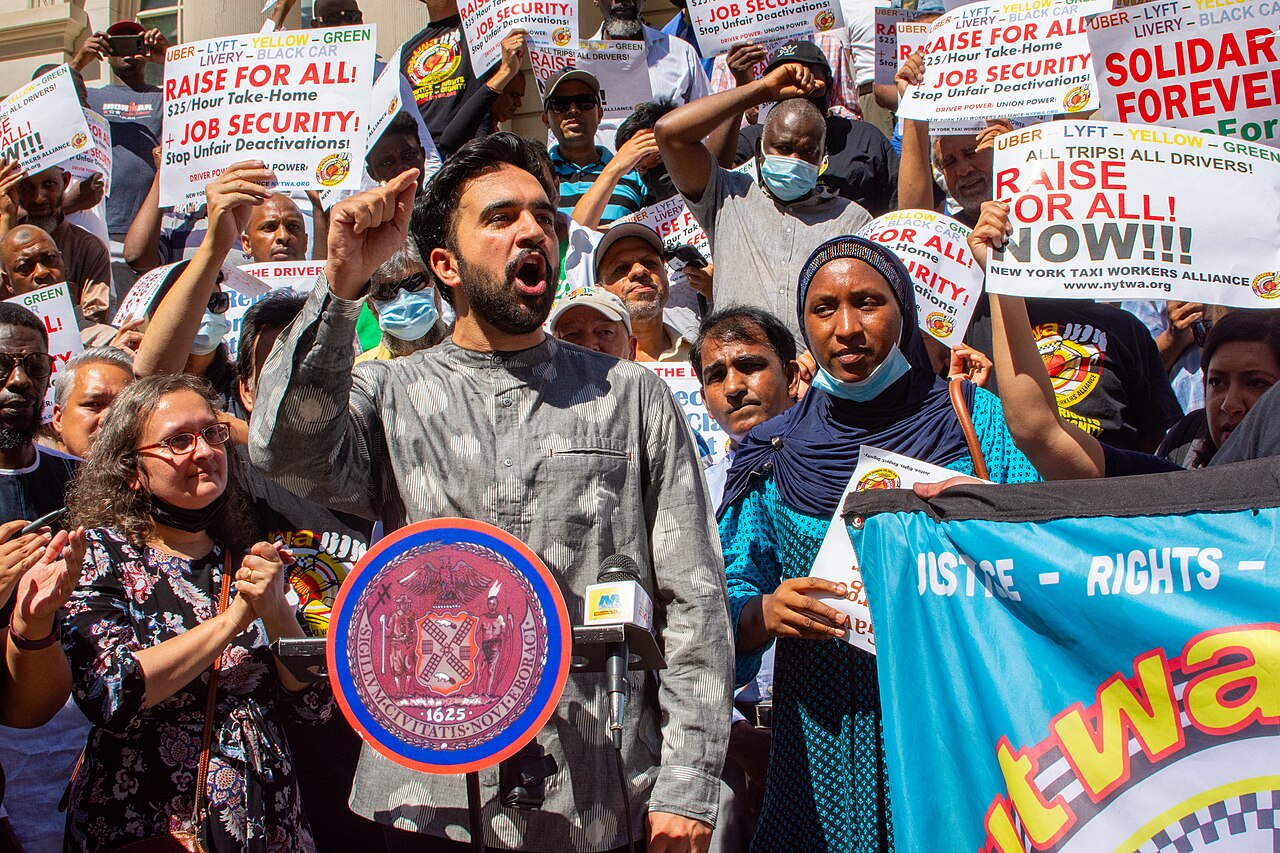
Political endorsements can be ceremonial. A popular figure appears at a rally, cuts a short video, smiles for the cameras, and hopes some of the magic transfers. Mamdani’s endorsements carried more weight because they came with a clear message: the city’s left wing wanted power, not applause.
His endorsed candidates represented a direct challenge to different corners of the Democratic establishment. Lander’s race against Goldman became a fight over wealth, ideology, foreign policy, and the future of Lower Manhattan liberalism.
Valdez’s campaign became a test of whether organized labor and democratic socialist energy could overcome traditional local power brokers. Chevalier’s challenge to Espaillat became the night’s most dramatic symbol, pitting a younger left-wing insurgent against a deeply connected incumbent with major support from senior Democratic figures.
These were not symbolic races. There were factional battles. And Mamdani’s side won all three.
The establishment misread the temperature
One reason the results landed so hard is that many traditional Democrats believed their candidates still had enough protection from name recognition, endorsements, and long-standing political networks. That confidence now looks badly misplaced. The Democratic establishment often assumes voters are cautious in congressional races.
The theory is simple: voters may flirt with outsiders in mayoral contests, but when choosing federal representation, they return to familiar names. Tuesday challenged that assumption. Voters in these districts appeared willing to replace experience with confrontation, seniority with ideological clarity, and access with urgency.
That does not mean every voter was a democratic socialist or even a committed leftist. It means enough voters believed the old formula was not meeting the moment.
In a city where rent feels punishing, groceries remain expensive, public safety debates are raw, and foreign policy divides have become deeply personal, “steady leadership” no longer sells itself. Candidates must explain what they are steady about, who benefits from that steadiness, and why patience is still a virtue when many voters feel squeezed.
Younger and left-leaning voters still matter, even when turnout is low
The early question, “Where are the voters?” missed another reality. Younger voters do not always dominate turnout by sheer volume, but they can still shape races when they are motivated, organized, and concentrated.
Mamdani’s political rise was built on the support of people who felt locked out of the older Democratic conversation. They heard constant talk about democracy, stability, and experience, but less about rent checks, student debt, immigrant pressure, transit costs, and the moral arguments tearing apart the party’s base.
That kind of voter does not need a perfect election environment to matter. They need a reason to believe their vote can punish complacency. Tuesday gave them that reason.
The results also show how modern political influence works. A mayor with a large public profile can use social media, rallies, cultural messaging, and movement networks to turn low-salience primaries into identity contests.
Mamdani did not have to be on the ballot to become the central character. His name functioned almost like a shorthand for a bigger argument: should New York Democrats keep managing the party from the center, or should they move left with force?
The wins create a new problem for national Democrats
For Republicans, the result is easy to frame. They will argue that New York Democrats are being pulled toward socialism and away from the political middle. That attack will almost certainly appear in congressional ads far outside New York, especially in swing districts where Democrats are trying to look practical, moderate, and focused on costs.
For Democratic leaders, the challenge is more complicated. They cannot simply dismiss Mamdani’s coalition after it helped defeat two sitting members of Congress. They also cannot pretend there is no risk in letting the party’s most visible urban left become a national Republican target. That tension is now unavoidable.
House Democratic leader Hakeem Jeffries faces a particularly delicate balancing act. He needs progressives energized, but he also needs frontline Democrats in competitive districts to survive. The Mamdani-backed winners may be safe in November, but their politics will be used to define Democrats who are running in much tougher places.
This is the old Democratic dilemma with a new face. The party needs its base to be passionate, but it also needs persuadable voters not to recoil. Mamdani’s victories make the base louder. The question is whether they strengthen the broader party.
A political earthquake hiding inside a low-turnout election
The most fascinating part of the night is that both things can be true. The citywide turnout may have looked underwhelming, and Mamdani’s influence may have been enormous. Those facts do not cancel each other out. They explain each other.
Low turnout does not always weaken insurgents. Sometimes it rewards them. In sleepy primaries, organization beats habit. Passion beats familiarity. A small but committed movement can defeat a larger but less motivated establishment.
That is what made Tuesday so dangerous for incumbents. Many voters stayed home. The ones who came out were ready to send a message.
By the time the results settled, the original question had changed. It was no longer, “Where are the voters?” It was, “Which voters mattered most?”
The answer was clear enough to rattle New York Democrats from City Hall to Capitol Hill. Mamdani’s surge may not have looked massive in the early afternoon. It may not have filled the streets or matched the emotional theater of his mayoral campaign. But in the races that counted, it was real, targeted, and powerful.
The establishment spent the day looking for a wave. By night, it realized the wave had already hit.