

When most people imagine flight, they probably picture feathers first and bats second. But the natural world seems to enjoy a technicality. Many of the creatures below do not truly fly in the powered, flapping sense.
Even so, they still enter the air in ways that feel almost improbable, as if gravity briefly loosens its grip and lets them improvise.
Colugo
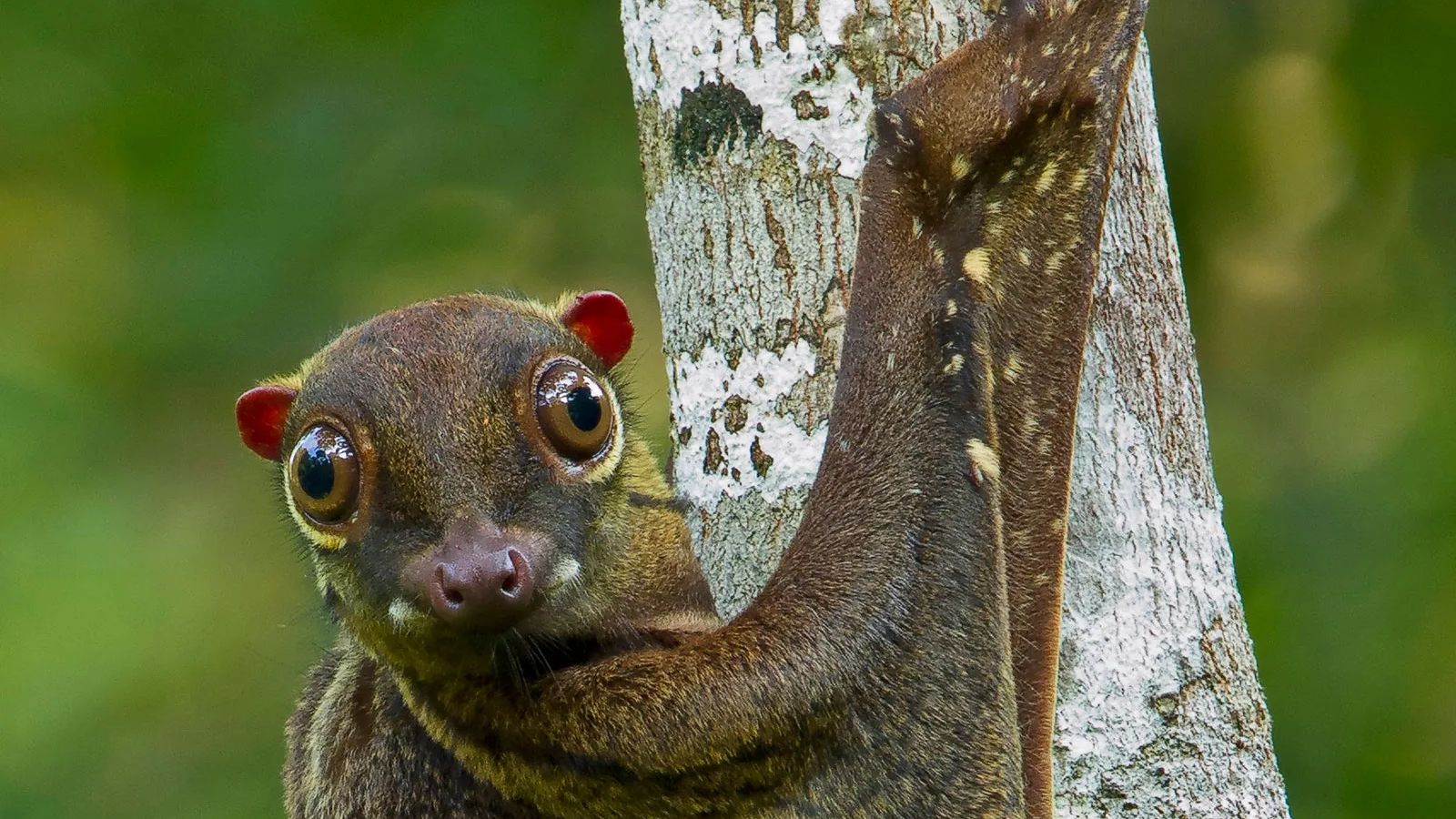
A colugo may be one of the strangest aerial specialists on Earth. It is sometimes called a flying lemur, though it is not really a lemur, and its movement is more gliding than true flight. Still, that hardly makes it less impressive. Its broad membrane stretches from face to tail and gives it a remarkable ability to sail between trees in Southeast Asia, sometimes for 100 metres or more.
There is something almost dreamlike about the idea of a mammal crossing a forest canopy with a baby clinging to its belly, landing with the accuracy of an animal that seems to have rehearsed the sky.
Paradise Tree Snake
A flying snake sounds like the kind of rumor people might invent just to ruin a walk in the tropics. Yet the paradise tree snake really can launch itself from trees, flatten its body, hold itself in a curved shape, and glide through the air.
Researchers have found that its wriggling is not random drama but part of what keeps it stable. The effect is so odd that it almost feels like watching a ribbon decide to become aerodynamic for a few seconds. It does not look built for the air, which may be why seeing it there feels even more unsettling.
Kuhl’s Parachute Gecko
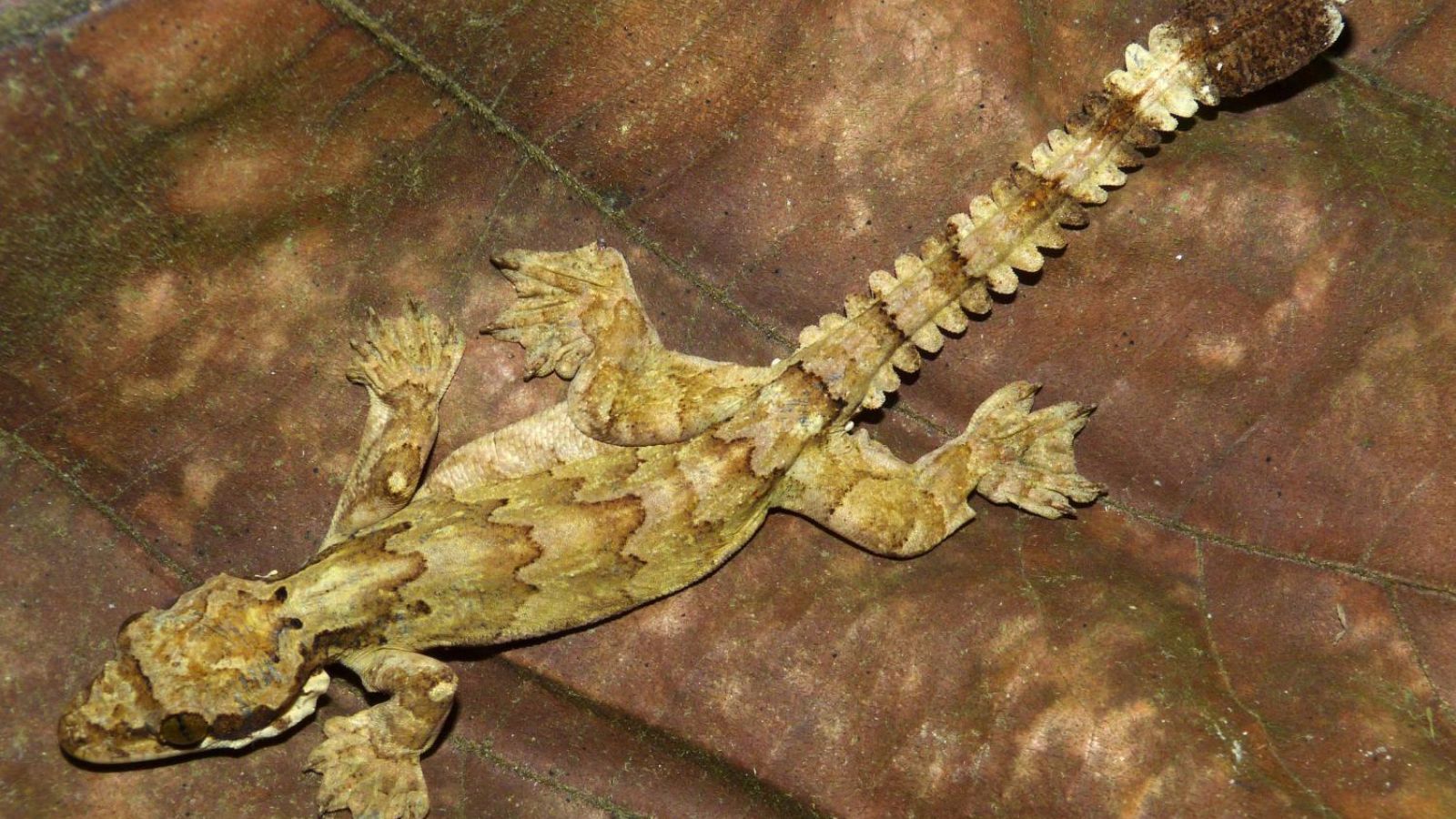
Kuhl’s parachute gecko seems less like a reptile and more like a secret the forest is trying to keep. It has flaps of skin along its body, webbed feet, and a flattened tail that help it manage short glides. Just as striking is its camouflage, which blends so neatly with bark that it can be difficult to notice until it moves.
That combination makes the animal feel almost designed around hesitation. One moment it appears to be part of the tree, and the next it is slipping away from it.
Freshwater Butterfly Fish
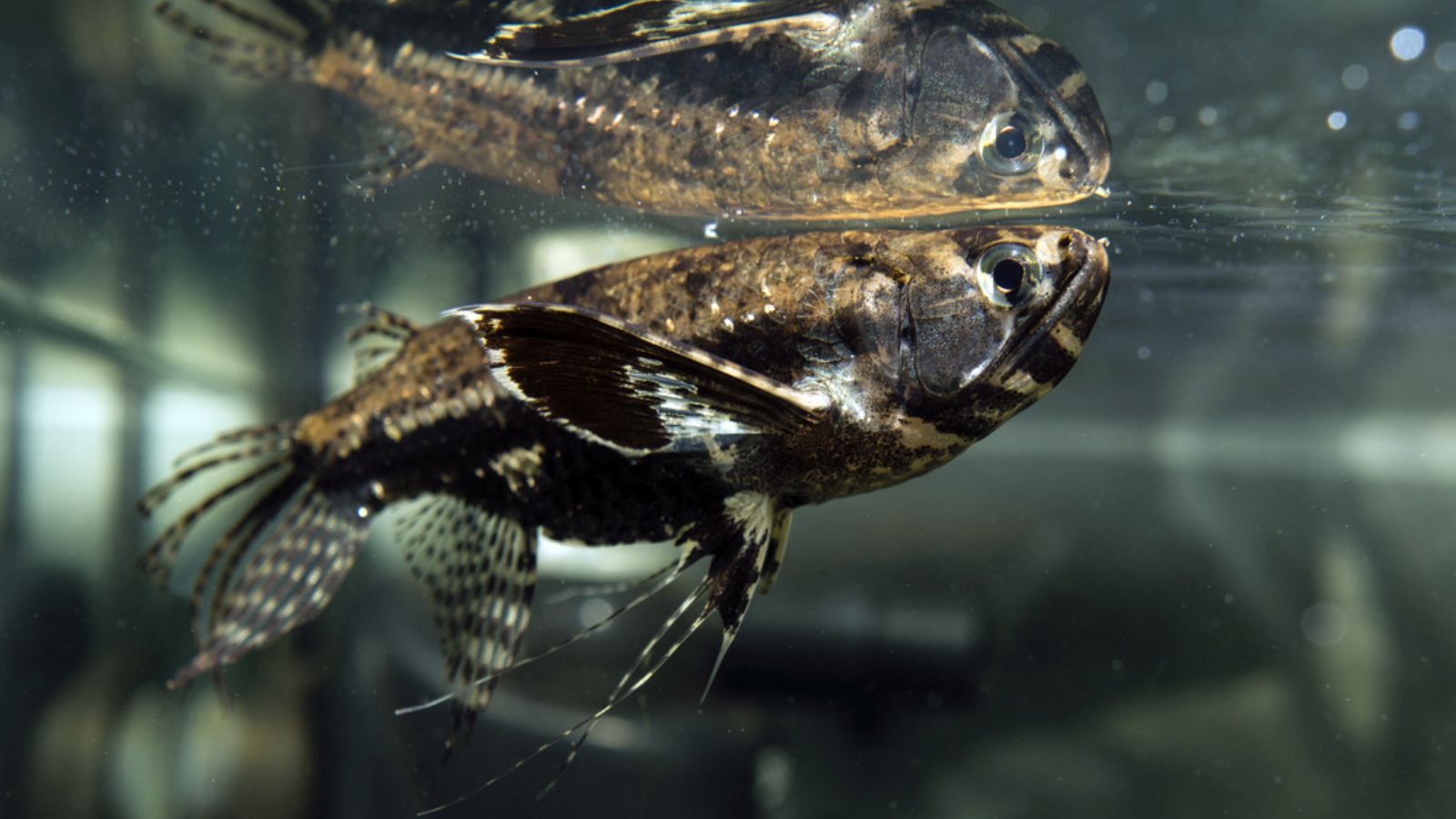
The freshwater butterfly fish has a name that already sounds half imaginary, and its behavior does very little to make it seem ordinary. Found in Africa, it waits near the surface of slow water, using sensitive skin and upward-facing eyes to detect prey.
When danger appears, it can leap and glide briefly above the water. It also has the unusual advantage of handling both air and water visually, which gives it a kind of split-world awareness. It might be one of the best examples of how nature sometimes builds an animal for two environments without fully committing it to either one.
Flying Squirrel
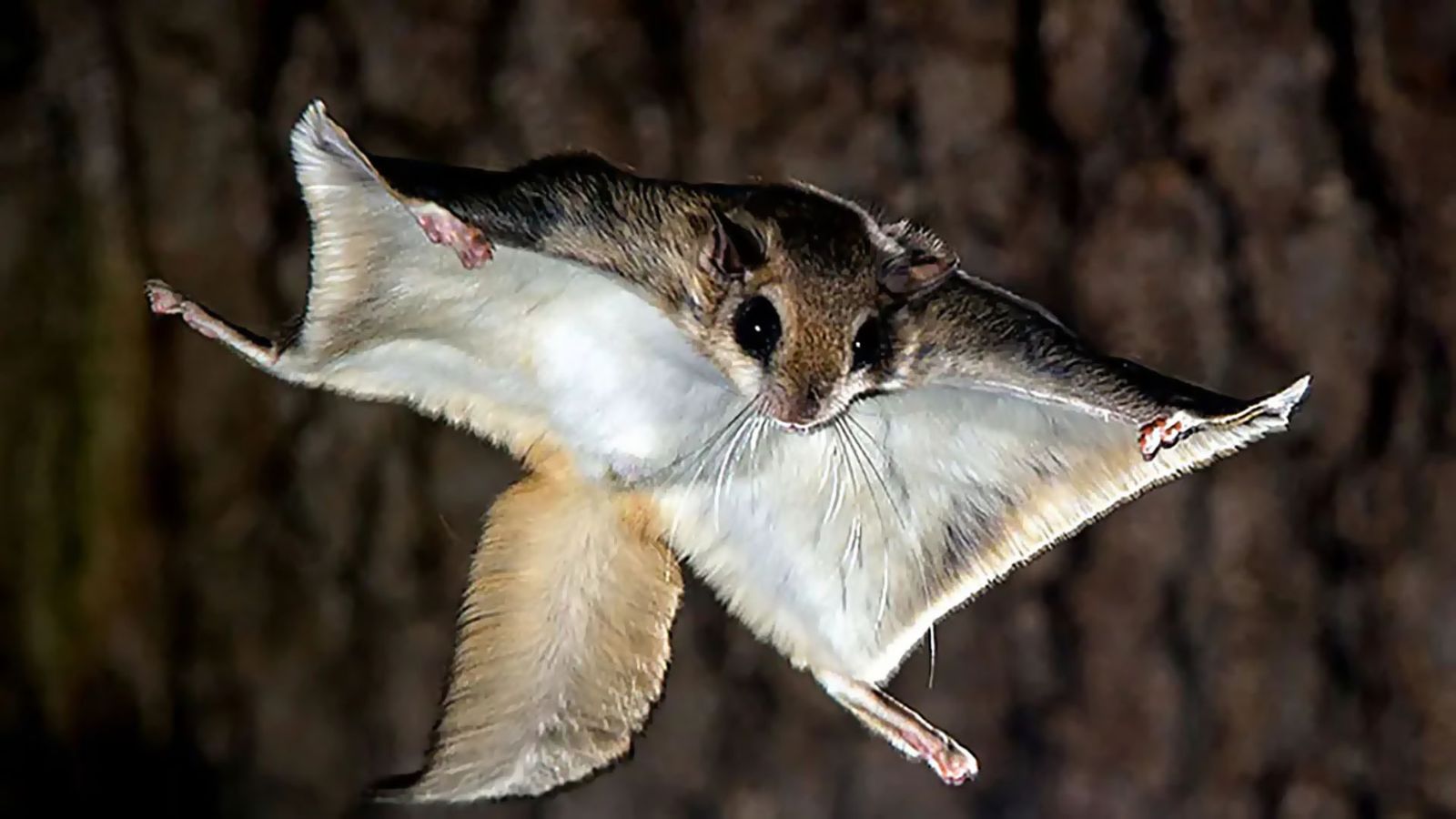
The flying squirrel is perhaps the best-known animal on this list, but even then it is often misunderstood. It does not truly fly. Instead, it stretches a membrane between its front and back legs and turns a leap into a controlled glide.
Some can cover around 46 metres, and the motion is said to be accurate enough to make a dark forest seem less like an obstacle course and more like a mapped route. There is something gentle about its version of aerial travel. It does not conquer space so much as borrow it.
Flying Fish
Flying fish may be the most literal show-offs here, though even they are really gliders. Their bodies are shaped for speed underwater, and they burst toward the surface fast enough to break free and spread wing-like fins. Some species reach around 60 kilometres per hour before takeoff, and repeated glides can stretch for hundreds of metres.
It is tempting to imagine panic in these leaps, because scientists think the behavior likely evolved to escape predators. Yet from a distance, it can look almost joyful, as if the ocean itself briefly tossed a silver thought into the air.
Japanese Flying Squid
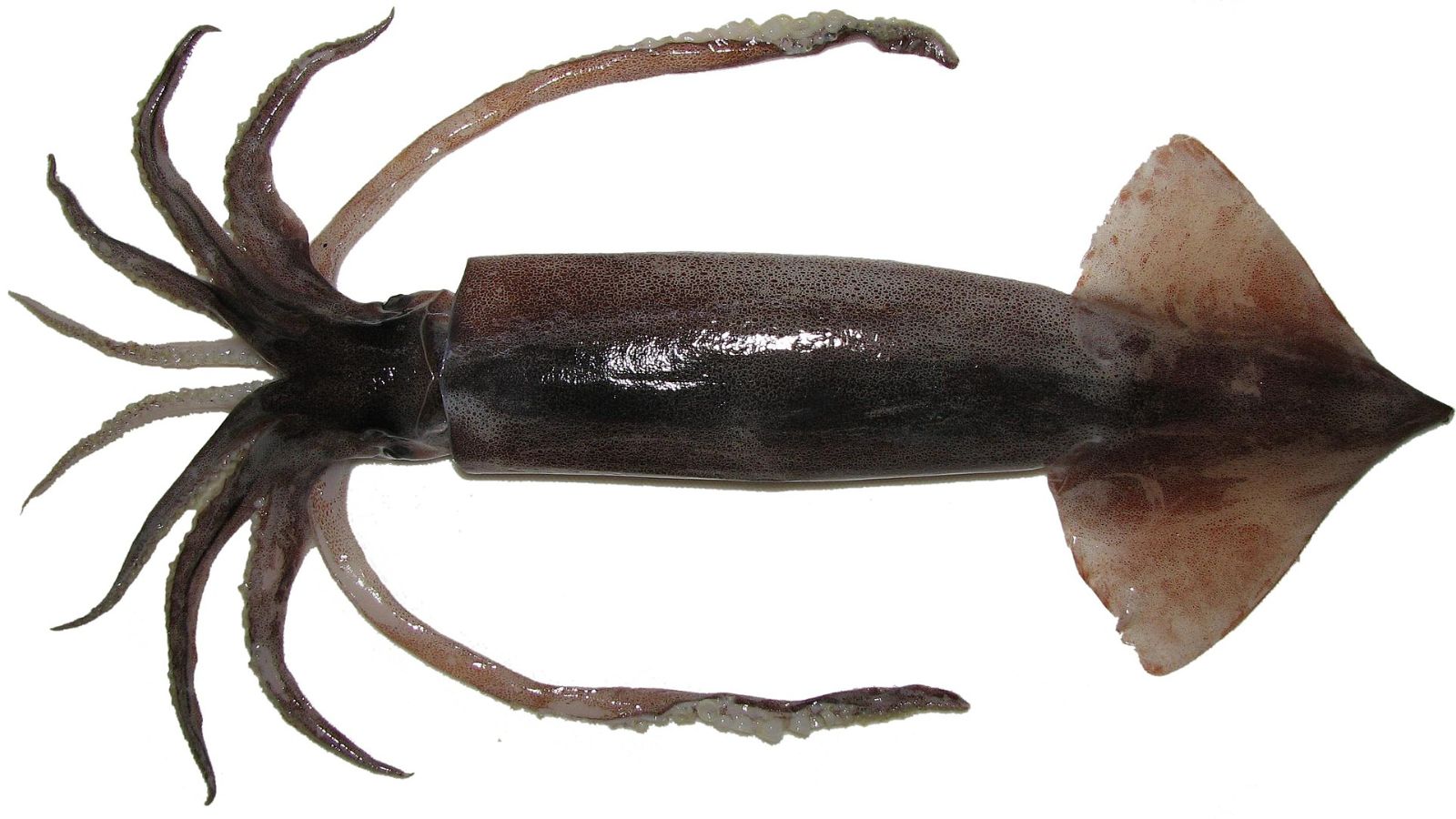
A squid that launches itself from the sea and glides sounds like the sort of fact one double-checks immediately. In the case of the Japanese flying squid, it turns out to be real. Using jet propulsion, it can burst from the water and spread its fins and arms to create lift, reaching speeds of up to 11 metres per second in the air.
Scientists think this may help it escape predators and travel more quickly than it can underwater. Somehow that makes the image even stranger. A creature we tend to associate with the deep can, for a moment, behave almost like an arrow with eyes.
Draco Lizard
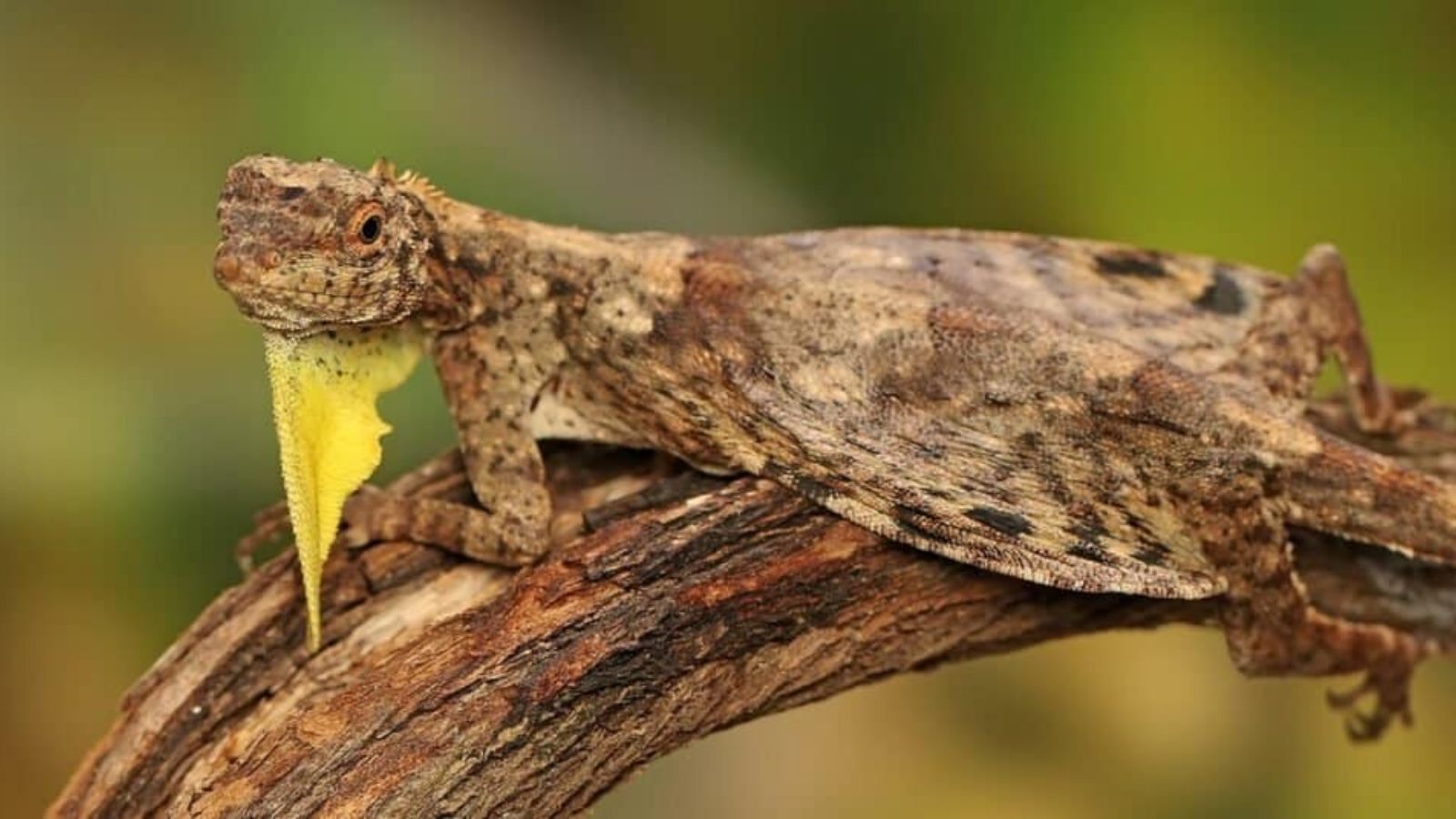
The draco lizard seems to have solved the problem of flight with a kind of elegant stubbornness. Instead of wings in the usual sense, it extends elongated ribs that support a membrane on either side of its body. That lets it glide between trees, sometimes for distances of up to 58 metres, while using its tail to steer.
It is such an inventive body plan that the animal feels less evolved than engineered. And yet it lives quietly in Southeast Asian forests, eating ants and termites, as if carrying a tiny hang glider were the most normal thing in the world.
Wallace’s Flying Frog
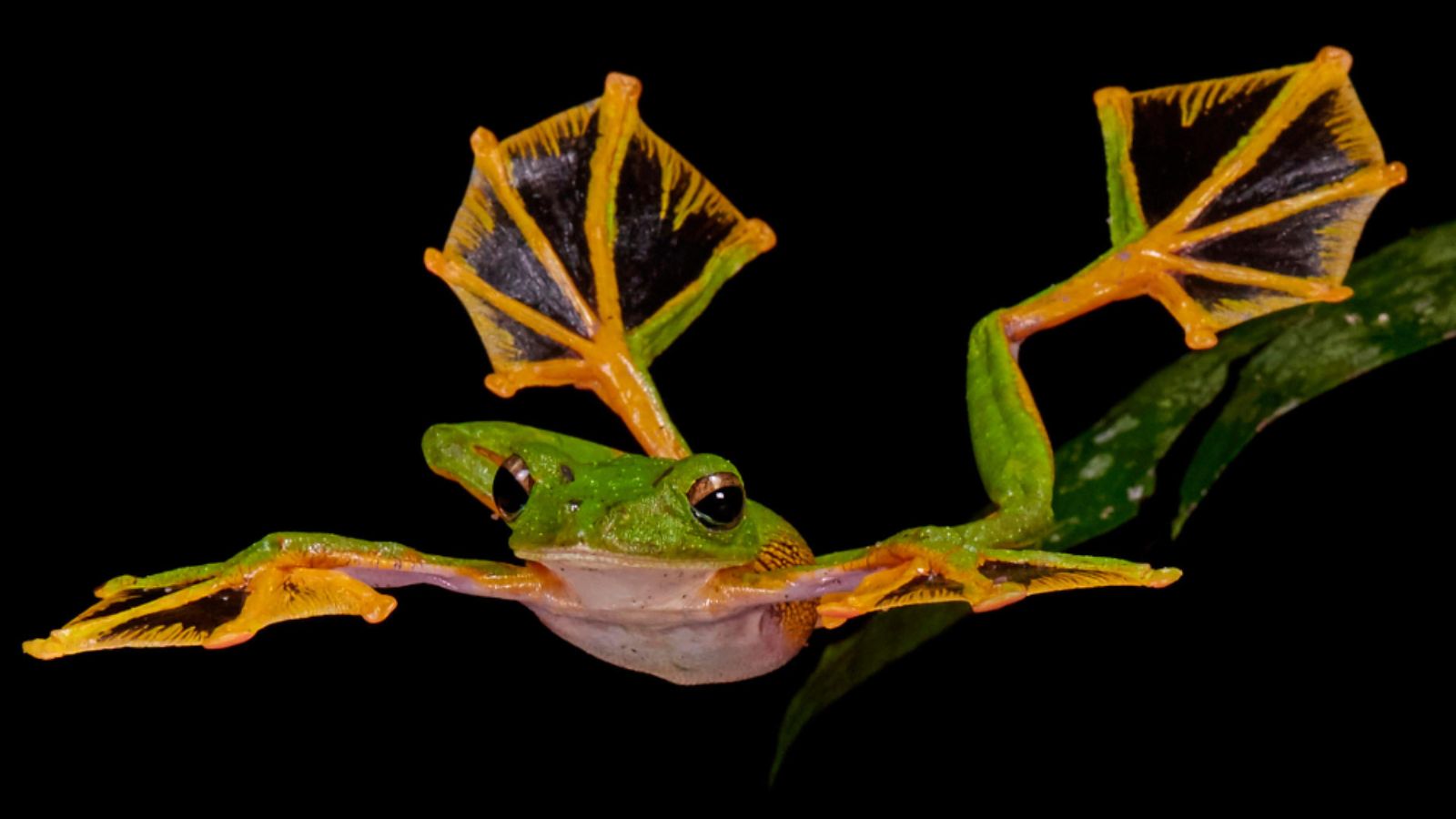
Wallace’s flying frog may be the most charming contradiction on the list. Frogs are usually imagined as jumpers, climbers, or croakers in the dark, not as animals that glide through rainforest air. But this species uses its large webbed feet like little parachutes and can travel about 15 metres between branches or down toward the ground.
Its bright green body and dramatic black webbing make it look almost theatrical, as if it understands how astonishing it already is. If any animal seems to treat the air as a temporary stage, it might be this one.
Gliding Ants
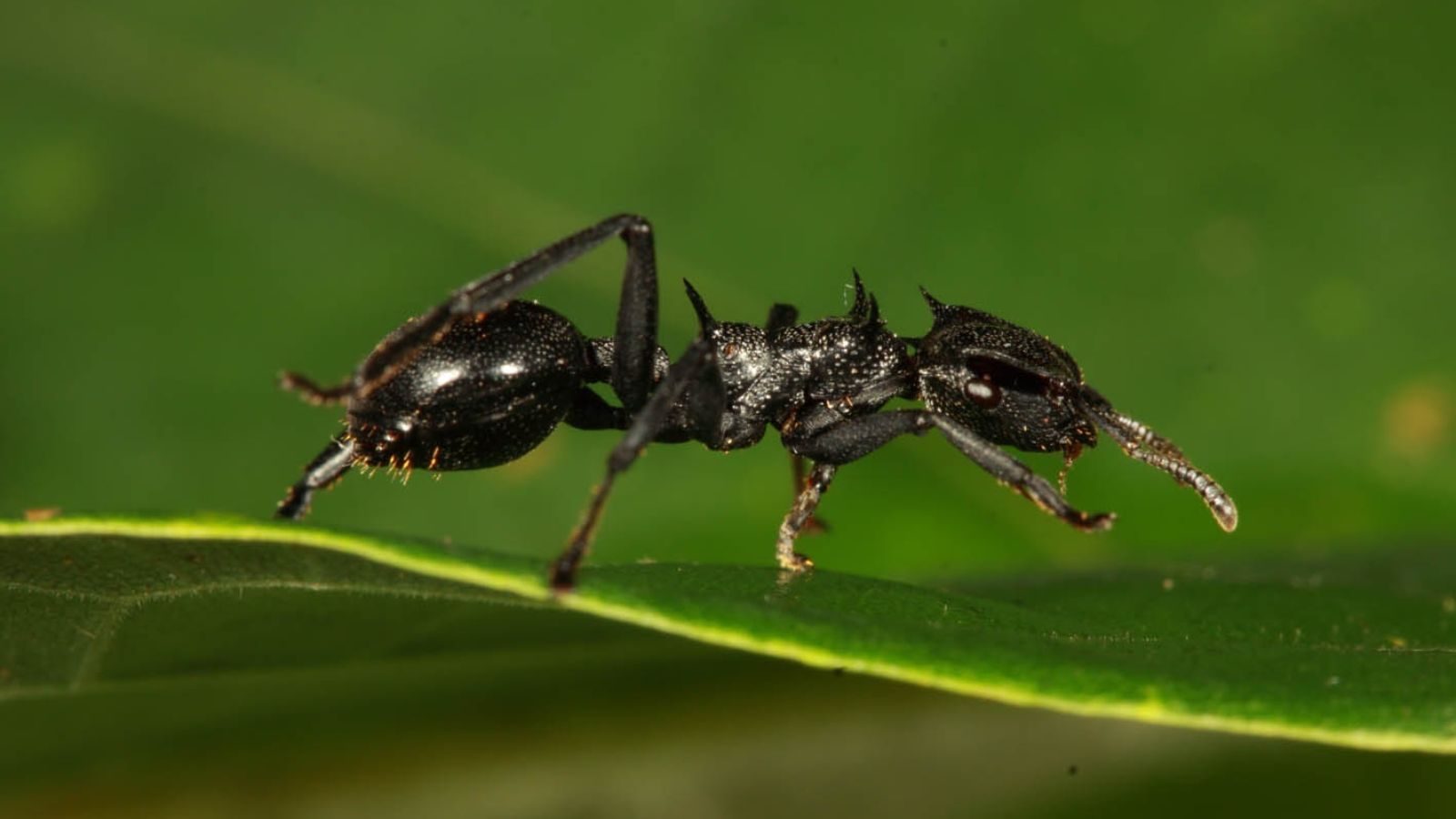
Gliding ants may be the most quietly astonishing creatures in the whole group because they seem so ordinary until they fall. Researchers at UC Berkeley reported that certain arboreal ants can actively direct their descent, steering back toward the same tree rather than simply dropping to the forest floor.
Some were observed making dramatic turns in midair, even up to 180 degrees. That means an ant, an animal many people barely notice, can turn a mistake into a return flight. It is a small feat, perhaps, but it feels oddly profound.
Key Takeaways
Seen together, these animals make the sky feel less exclusive than we were taught to think. Birds may own it in the obvious sense, but plenty of other creatures seem to visit it through loopholes, nerve, and extraordinary design.
Perhaps that is the more interesting story anyway. True flight is impressive, certainly, yet gliding, parachuting, and steering through open air with borrowed anatomy may be even stranger. Nature, it seems, rarely settles for one solution when ten weirder ones are available


