


The Post: 9 Things Grandkids Today Will Probably Never Experience the Way We Did first appeared on Crafting Your Home
Some of the best childhood memories come from things we barely noticed at the time. The telephone hanging in the kitchen, a trip to the video store, or the excitement of finally seeing family photographs were all ordinary parts of growing up, and they now feel linked by a shared sense of everyday family life.
Today’s grandchildren live in a very different world. Technology has made many everyday tasks quicker and more convenient, but it has also changed the little family routines that once brought people together.
Some of these traditions still exist, but they’re no longer the everyday experiences many of us remember. Here are nine things that remind us just how much childhood has changed.
Sharing One Family Telephone
Remember when the telephone belonged to the entire household? You couldn’t simply call someone’s personal phone and expect them to answer. Sometimes, you had to speak to their mother, father, or sibling first.
And when the phone rang at home, anyone nearby could pick it up. There was always that awkward moment when someone answered a call meant for you and wanted to know who was calling.
That experience is becoming increasingly unfamiliar to younger generations. According to the CDC’s National Center for Health Statistics, 86.9% of American children under 18 lived in wireless-only households during the second half of 2024.
For many grandparents, the family telephone wasn’t just for communication. It was a shared part of household life, full of interruptions and unplanned conversations.
Making Friday Night Trips to the Video Store
There was something special about visiting a video rental store before settling down for movie night. Choosing what to watch was an outing in itself, not just another decision made from the couch.
Families wandered through rows of movies, discussed their choices, and eventually agreed on something everyone could enjoy. Sometimes, finding the right movie took almost as much effort as watching it.
At its height in 2004, Blockbuster had 9,094 stores, according to the company’s surviving franchise history. The company filed for bankruptcy in 2010, and it closed its final corporate-owned store in January 2014.
Today, the surviving Blockbuster in Bend, Oregon, remains a reminder of that era, a small link to how Friday nights once felt.
Streaming has made finding entertainment easier, but it cannot quite recreate the excitement of turning an ordinary Friday evening into a family trip to choose a movie.
Related: If You Grew Up in the ’80s, These 10 Friday-Night Memories May Sound Familiar
Waiting to See How Family Photographs Turned Out
Imagine taking pictures at a birthday celebration and not knowing whether they turned out well until the film was developed.
For families who grew up using conventional film cameras, that waiting was simply part of photography.
Unlike today’s digital cameras and phones, film cameras couldn’t show people their photos right away.
People needed to process the exposed film before anyone could see the results.
Kodak’s photographic guidance explains that exposed film contains an unprocessed image that requires development before it can be used.
That made the finished photographs something to look forward to. Families could finally see which moments had been captured and decide which pictures deserved a place in their albums, turning the wait into part of the experience.
Film photography still exists, but for most children, the anticipation of an envelope of freshly developed family pictures is no longer an everyday experience.
Saving Green Stamps for Something Special
Before digital loyalty programs became familiar, many American shoppers collected trading stamps they could exchange for merchandise. S&H Green Stamps were especially memorable. Families saved the stamps in books, gradually working toward household items they wanted.
The Sperry & Hutchinson Company was founded in 1896, and its rewards program eventually became a major part of American shopping culture.
According to Smithsonian Magazine, S&H distributed approximately 32 million catalogs in 1964. At its peak during the 1960s, the program had around 800 redemption centers and more than 100,000 participating businesses.
Furniture, silverware, and other household goods were among the merchandise available.
The joy wasn’t simply receiving something new. It was watching those stamp books fill up and knowing that everyday shopping was bringing the family closer to a reward, one page at a time.
Looking Up Homework in a Set of Encyclopedias
Before searching online became second nature, finding information often meant reaching for a heavy reference book.
For children growing up with encyclopedias at home, homework required a different kind of effort. You had to find the right volume, locate the relevant entry, and read through the available information.
A complete encyclopedia set could occupy an impressive amount of shelf space.
Consider Encyclopedia Britannica’s final printed edition, published in 2010. The collection contained 32 volumes and weighed 129 pounds.
In March 2012, Britannica announced it would stop producing new printed editions and focus on electronic products.
Today’s grandchildren can search for information almost instantly. They may never appreciate how satisfying it once felt to find the answer hidden somewhere inside a shelf full of books after a little extra effort.
Searching Through Library Card Catalogs
Walking into a library once meant more than browsing shelves. Finding a particular book could involve opening wooden drawers filled with carefully organized catalog cards.
Each card helped readers locate material in the library’s collection. It was a hands-on process that required patience and attention.
The scale of these systems was remarkable.
According to the Library of Congress, its physical card catalog eventually contained more than 22 million cards arranged in approximately 22,000 drawers. The institution added its final new catalog cards in 1980.
Although computerized catalogs have largely replaced this experience, the Library of Congress still recognizes the research value of its original cards.
For anyone who remembers those drawers, searching for a book was a small adventure before the reading even began, and the process itself was part of the memory.
Navigating Family Road Trips With Paper Maps
lightfieldstudios/123rf
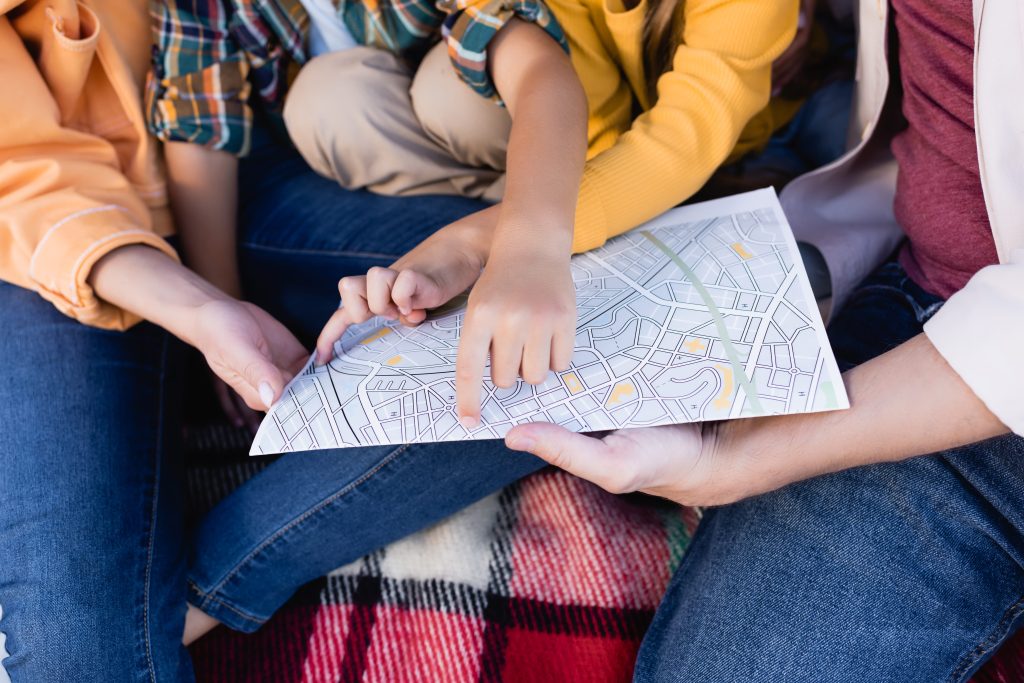
Long before navigation apps offered spoken directions, families relied on paper maps to reach their destinations.
Someone had to follow the route, spot turns, and keep the family on the right road.
AAA helped generations of travelers with its TripTik route guides. The spiral-bound guides appeared in 1937, with mass production beginning the following year.
Travelers could provide their starting point and destination, and an AAA agent would highlight the recommended route. The guides could also include information about rest stops, construction, and places worth visiting.
AAA still provides printed maps and TripTiks today, so the tradition hasn’t disappeared completely.
But for grandchildren accustomed to automatic directions, navigating a long journey one map page at a time may feel like stepping into another world.
Related: 8 Things Boomers Did on Family Road Trips That Families Rarely Do Now
Waiting for Dial-Up Internet to Connect
There was a time when getting online required a little patience.
Unlike modern internet connections that are usually available whenever needed, dial-up made connecting to the internet a noticeable part of using the computer.
It wasn’t unusual for internet access to feel like something the household had to prepare for rather than something constantly running in the background.
Pew Research Center figures show how dramatically things changed.
In June 2000, 34% of American adults accessed the internet at home through dial-up, compared with just 3% using broadband.
By May 2013, 70% had home broadband, while only 3% used dial-up.
For today’s grandchildren, the idea of making a separate connection just to use the internet might be difficult to imagine, especially when access now feels immediate.
Watching Television With Analog Reception Problems
Television once required a little adjustment before everyone could enjoy the program.
Families using analog broadcast television had to deal with reception issues that could interrupt an otherwise enjoyable evening.
Getting a satisfactory picture was part of the routine, especially when the signal wasn’t cooperating.
That era changed significantly on June 12, 2009, when full-power television stations in the United States were required to stop broadcasting analog signals and switch to digital.
According to the Federal Communications Commission, the transition also freed broadcast spectrum for other uses, including public-safety communications.
Antennas and traditional broadcast television didn’t disappear, but the technology behind the experience changed.
For older generations, even a troublesome television picture can bring back memories of family evenings spent together, making the signal problems part of the story.
Times have changed, but these once-ordinary experiences still remind us that some of our fondest childhood memories came from the little things we never thought we’d miss.