



There is a particular kind of household question that sounds simple until you start thinking about it: How long is this thing actually supposed to last?
Some home items come with surprisingly clear deadlines. Others do not. And that distinction matters, because replacing something simply because a calendar says so can waste money just as easily as keeping something around long after it has stopped doing its job.
The better approach is to separate genuine replacement guidance from arbitrary rules. Toothbrushes and smoke alarms have recognizable timelines backed by authoritative guidance. Their condition better judges other everyday items, including cutting boards, pillows, and food-storage containers.
Here are eight household items worth putting on your replacement radar, without turning your home into a revolving door of perfectly usable stuff.
Related: Candles, Blankets, Pillows, and More Walmart Finds That Can Make Your Home Feel Like Fall From $5
Toothbrushes have a surprisingly clear deadline.

Of all the items on this list, toothbrushes may have one of the easiest replacement rules to remember. The American Dental Association recommends replacing a toothbrush or brush head every three to four months, and sooner if the bristles become splayed, matted, or frayed.
That is not simply about making the bathroom counter look fresh. Worn bristles clean teeth less effectively and can irritate gums, so the brush’s condition helps you decide when it is time for a new one.
So if the bristles start to look like they have had a very long week, the calendar doesn’t need to be the only reminder.
Kitchen sponges are better treated as short-term supplies.
A kitchen sponge can look perfectly ordinary while having accumulated plenty of history from wiping counters, washing dishes, and absorbing whatever happens to be in the sink.
Research on domestic sponges has found that heavily used sponges can contain dense and varied bacterial communities. That research doesn’t establish a universal replacement schedule. Still, it makes a strong case for treating sponges as inexpensive items that eventually deserve retirement, rather than trying endlessly to revive an old one.
A practical window is about weekly to every two weeks, with earlier replacement if a sponge develops a sour smell, remains grimy after washing, or begins breaking apart.
In other words, there is little prize for seeing how long one sponge can survive.
HVAC filters need attention before they become an afterthought
Filters are easy to forget because they are usually tucked away inside equipment rather than sitting somewhere you see every day. But the filter’s condition affects how effectively the system operates.
The EPA recommends checking filters monthly, and many standard filters are replaced every 60 to 90 days. A filter may need attention sooner if it is visibly dirty, you have pets, someone has allergies, or the heating and cooling system runs frequently.
There is an important caveat here: the filter and system manufacturer’s instructions should take priority. So rather than treating 60 or 90 days as a universal expiration date, think of it as a useful calendar prompt to check what the particular system requires.
Smoke alarms aren’t meant to last forever.
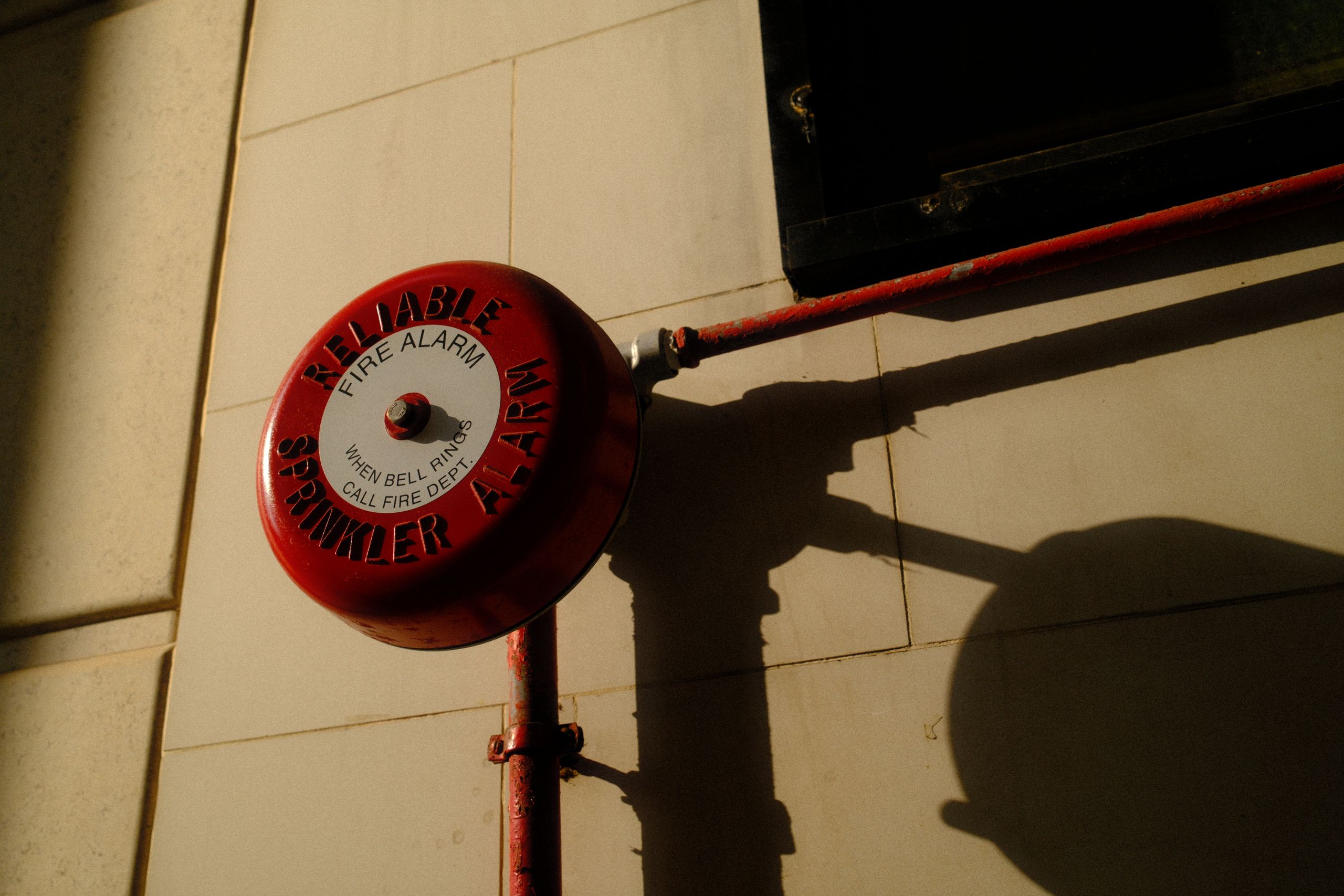
A smoke alarm can still make a reassuring noise when you press its test button, but that does not mean the entire device should remain in service indefinitely.
The U.S. Fire Administration recommends replacing the entire smoke alarm 10 years after its manufacture date. The test button confirms that the alarm can sound; it does not establish that the smoke-sensing component is still performing at its best.
That makes the manufacturing date on the back of the alarm more important than many people realize. Monthly testing remains part of routine upkeep, but testing and replacement serve two different purposes.
This is one household deadline that is worth putting on the calendar rather than relying on memory.
Cutting boards do not need an arbitrary birthday.
Not every household item needs a replacement anniversary.
Cutting boards are a good example. No strict, research-backed rule says a board must be thrown away after a particular number of months or years. Instead, the surface condition provides a more useful signal.
Deep grooves, cracks, splits, warping, or rough damage can make a board increasingly difficult to clean. When that happens, replacing it makes more sense than following an arbitrary calendar.
Also keep the basic food-preparation distinction in mind: use separate boards for raw meat and ready-to-eat foods.
Pillows are about condition, not a magic expiration date
Pillows can quietly deteriorate because their decline is gradual. One month they feel fine; eventually they flatten, lump, or stop feeling comfortable.
A frequently used pillow may last around one to two years, but that figure is better understood as a consumer benchmark than a hard deadline. A more useful trigger is whether the pillow has become permanently flattened or lumpy, is difficult to wash, or no longer provides the support it once did.
Research has also found that pillows can accumulate house-dust-mite allergens over time. In one study, synthetic pillows had significantly higher mite-allergen concentrations after 12 months than feather pillows.
The takeaway is not that every pillow needs to be discarded on its first birthday. It is that both condition and accumulated use can matter.
Mattresses deserve a check-in, not an automatic eviction.

Mattresses are another household item where a commonly quoted number can be useful, but not absolute.
Six to eight years is a reasonable check-in point, but it should not be treated as an automatic expiration date. Construction, quality, care, rotation, and other factors can affect how long a mattress remains useful.
The mattress’s condition provides more meaningful clues. Sagging, damage, persistent noise, reduced support, or consistently waking up uncomfortable can all signal that it may be time to reconsider the mattress.
The calendar can start the conversation. It does not have to make the final decision.
Judge plastic food containers by their condition.
Plastic food-storage containers are the clearest example of why blanket replacement schedules can be misleading.
The available evidence offers no strong, universal, research-backed interval saying every container needs to be replaced after a particular number of years. Instead, look at the container itself.
Cracks, warping, deep scratches, staining that will not come clean, cloudiness, or a lid that no longer seals properly are much more useful retirement signs than age alone. It is also better to follow the manufacturer’s instructions for use and care than to assume that every older plastic container has automatically become unsafe.
Sometimes the most sensible replacement rule is simply: when the item is visibly degraded and no longer doing its job well, let it go.
A better way to think about household replacements
The most useful replacement schedule is not necessarily the one with the most dates on it.
Some items genuinely have authority-backed timelines. Toothbrushes generally belong on a three-to-four-month schedule, while smoke alarms have a 10-year replacement recommendation based on their manufacture date. HVAC filters also benefit from regular checking, with replacement depending on the filter, system, and household circumstances.
For other items, condition matters more than the calendar. A sponge that smells sour, a cutting board riddled with serious damage, a flattened pillow, a sagging mattress, or a cracked food container can all give you a much better reason to replace something than an arbitrary date ever could.
The goal is not to replace more. It is to know what has actually earned its place and when it is finally time to let it go.
Other Posts You Might Like:
The post 8 Everyday Home Items You Should Replace And the Ones You Shouldn’t first appeared on Crafting Your Home.
If you like what you just read, then subscribe to our newsletter and follow us on social media.


