The 7 Dumbest Fashion Trends in History

Fashion has always been about more than looks; it reflects cultural values, status symbols, and even survival risks. Some historical trends weren’t just impractical; they were downright dangerous, causing injury, illness, or even death.
According to All That’s Interesting, it’s estimated that around 3,000 Victorian women died in fires caused by their crinoline skirts alone. These extreme fashions highlight how the pursuit of beauty sometimes came at a very high cost.
Here are seven of the most ill-advised fashion fads in history, exploring how they emerged, why they were so problematic, and what lessons they offer us today.
Powdered Wigs — Status Over Practicality

In the 18th century, powdered wigs became a hallmark of aristocratic fashion, signifying wealth and status. They originated partly from hygiene myths; some believed the powder masked lice.
Maintaining these wigs was costly and time-consuming, and they required regular re-powdering. Over time, their use became about display rather than hygiene.
Codpieces — Exaggerated Masculinity
Originally intended to cover a functional gap in men’s hose, the codpiece evolved during the Renaissance into a padded, often highly decorated symbol of virility. According to Zendy, some codpieces grew “grotesque” in size, more about spectacle than function.
Crinolines — Deadly Balloon Skirts
The mid-19th-century crinoline craze gave women enormous hoop skirts made from flammable fabrics supported by steel hoops. Apart from approximately 3,000 Victorian women who died when their crinoline dresses caught fire, Florence Nightingale alone estimated 630 deaths in England in a single year (1863–1864) from just skirt fires.
Beyond burns, crinolines were physically hazardous — they could get caught in carriage wheels or industrial machinery, or cause wearers to trip in strong gusts of wind.
Chopines — Platforms That Risked Collapse
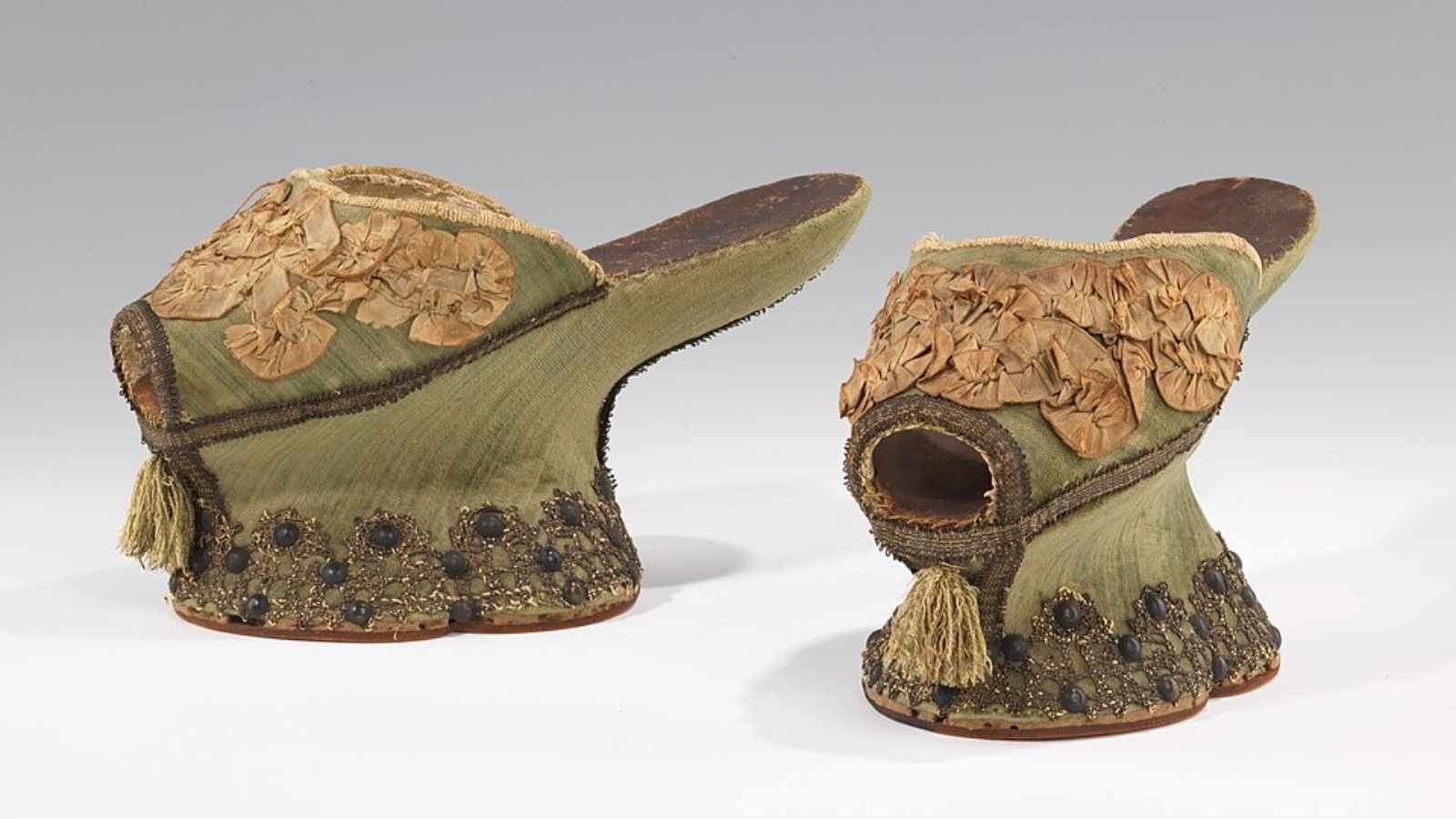
Renaissance-era chopines were extremely tall platform shoes (sometimes over a foot high) worn by women, especially in places like Venice. They elevated the wearer physically and socially, but drastically reduced mobility, and made walking dangerous, especially on uneven surfaces or near open fires.
Their height symbolism came at the expense of practicality and safety.
Lead-Based Makeup — Beauty That Poisoned
From the 16th to the 18th centuries, wealthy Europeans used white lead makeup, often in a formulation called Venetian ceruse, to achieve a pale “aristocratic” complexion.
But lead is highly toxic: research by RealClearScience shows that in certain historical recipes, lead was absorbed through the skin, leading to lead poisoning, skin damage, hair loss, and even death. For instance, Maria Coventry, Countess of Coventry, famously died from lead-poisoned beauty products.
Tightlacing Corsets — Fashion That Hurt

Tightlaced corsets were a staple of Victorian women’s fashion, offering the desirable “hourglass” silhouette. But medically, extreme corseting created real health problems: compressed ribs, reduced lung capacity, digestive issues, and potential displacement of internal organs. Over-tightening corsets can restrict breathing, weaken core muscles, and even press on nerves.
1970s Polyester Mania — Synthetic Overload
During the 1970s, polyester became one of the most popular fabrics due to its affordability, wrinkle resistance, and durability. But polyester blends also had a dark side: synthetic fibers like polyester melt at high heat rather than simply burn, and they can stick to skin during fires.
A ScienceDirect research paper on polyester-cotton blended fabrics found that untreated blends are highly flammable, but adding flame-retardant treatments can significantly reduce their heat release rates. These inherent risks contributed to the regulation of flammable fabrics; for instance, the United States passed the Flammable Fabrics Act in 1953, mainly in response to garment fire hazards.
Why These Trends Matter Today
These extreme fashion fads are more than quirky historical anecdotes; they reveal how social status, gender norms, and powers of persuasion have long influenced what people wear. Many of these trends carried real physical or health risks.
Modern fashion benefits from material science, safety regulations, and a greater awareness of these historical dangers, but these stories remind us how far aesthetics have come — and why fashion should never be divorced from its human cost.
Read the original article on Crafting Your Home