


The post Opossums Aren’t ‘Playing’ Dead: Scientists Say They Can’t Control It first appeared on Crafting Your Home.
Humans have used the opossum as shorthand for fakery, an odd honor for an animal whose famous collapse is better described as an automatic response. The Virginia opossum is the only marsupial found north of Mexico, and the Tennessee Wildlife Resources Agency counts 50 teeth in its mouth, more than any other mammal in the United States.
Even so, the species is remembered for the idiom ‘playing possum’, the moment it drops onto its side with a lolling tongue. Researchers who have measured that moment describe something stranger than theater.
Adults reach for teeth and hisses long before they collapse
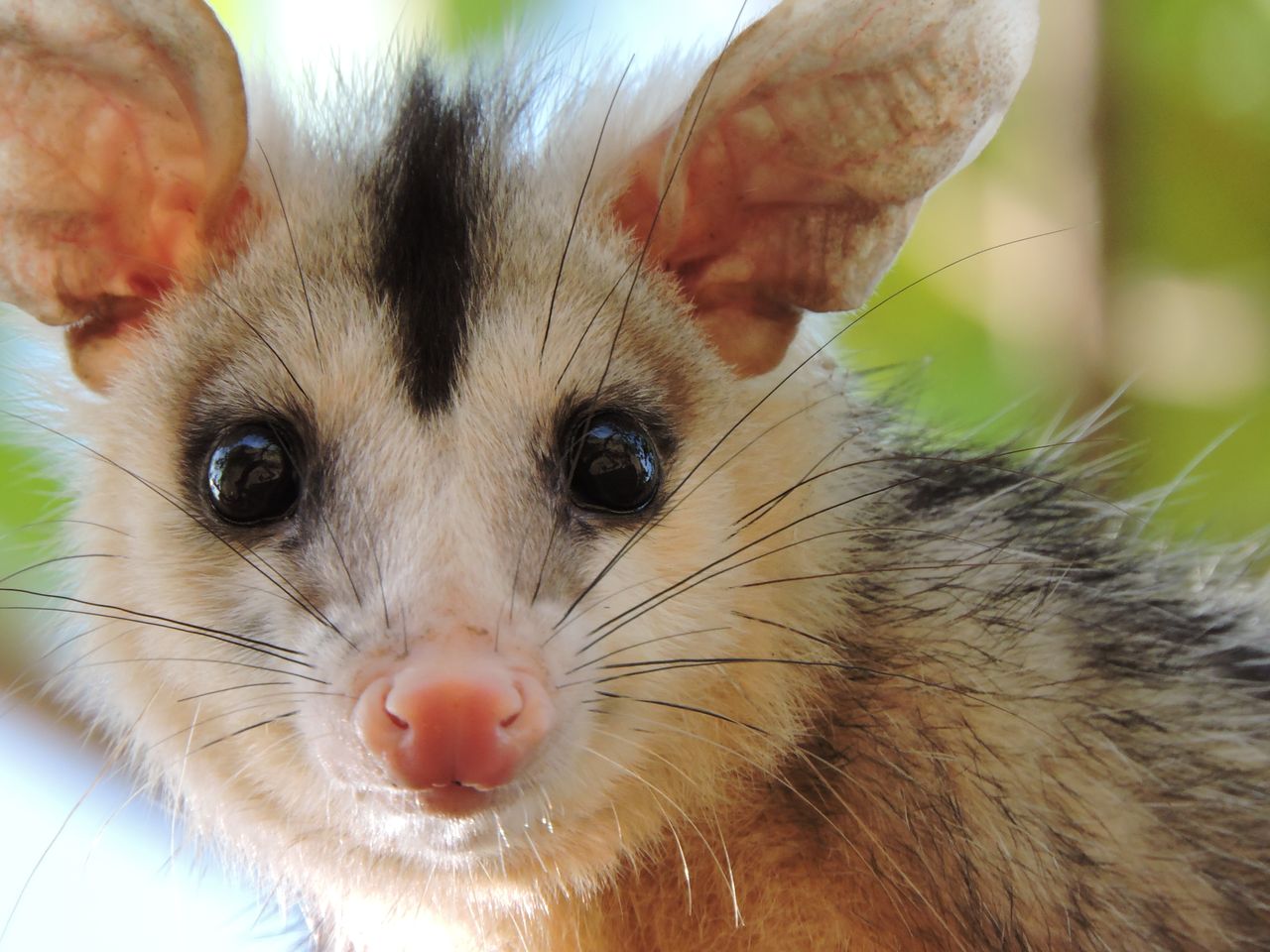
The Smithsonian’s National Zoo says adults bare their teeth, hiss, screech or flee when threatened, and it notes that feigning death is mostly a habit of young opossums. Collapse sits at the far end of the sequence.
The odds outside it look grim. Wild Virginia opossums may live only 1.5 to 2 years, according to the zoo, which lists collisions with motor vehicles as a bigger threat than hunting or trapping. A collapse aimed at teeth and claws does nothing against a bumper.
Heart rate fell by nearly half, measured on only four animals
Four opossums produced one of the most repeated numbers about the behavior. In a 1985 Acta Physiologica Scandinavica paper, Geir Wing Gabrielsen and E.N. Smith recorded heart rate dropping 46%, from 222 to 120 beats per minute, while breathing slowed about 30%. The animals were free-ranging and were provoked by an investigator or a dog.
Drooling, urination and defecation accompanied every episode. Four animals is a thin base for a figure that now circulates widely online.
Related Post: 10 Extraordinary Ways Animals Have Mastered the Art of Surviving Below Freezing Temperatures
The animal on the ground is still tracking everything around it
Picture the scene: a body flexed on its side, eyes open and unmoving, mouth frothy with saliva, muscles rigid down to the toes. The AskNature biology database describes breathing and heartbeat slowing to barely perceptible levels while the animal stays alert enough to monitor its surroundings.
Many scientists call it tonic immobility, since tonic refers to muscle tone and a prolonged contraction. The entry frames the whole package as a built-in defense that fires automatically when escape is blocked, with no decision involved.
A dog’s grip triggered it every time, while shouting rarely did
Edward Francq of the University of New Hampshire set out to provoke the response in captured opossums, and his 1969 paper in The American Midland Naturalist reads like a ledger of failed provocations. Across 24 tests, five minutes of harassment produced no collapse, yet 16 of those tests produced one once the animal was grabbed and shaken. Each of the 25 opossums fully gripped by a dog went down, while dogs that only sniffed around triggered none.
Daily repetition complicated the fear explanation. Six young animals were stimulated every day, and four eventually stopped, after 11 to 35 days, but two were still collapsing when the experiment ended, one at day 60.
Francq floated reinforcement as the cause, the idea that the response persisted because it spared the animal worse treatment. Lifting an opossum by the tail snapped it alert at once, which he read as proof that the slow recovery isn’t dictated by physiology.
Not every biologist buys the idea that predators fall for it
“If you’re a pizza and you play dumb, I’m still going to eat you.” John Morrissey, a biologist at Hofstra University, delivered the line as a challenge to the old assumption that predators lose interest in motionless prey.
He made the remark for a 2006 Science News feature by Susan Milius, which reported that only a few tests had examined whether immobility protects prey at all. One 1981 paper put a cat in an arena with two quail, and when one bird was induced to freeze, the cat went after the mobile bird in 14 of 16 trials. The animals were quail, not opossums, which leaves the marsupial question open.
Beetles bred for stillness were eaten less often
The cleanest experimental support comes from insects. Takahisa Miyatake and colleagues selected red flour beetles for long or short death-feigning over 10 generations, then offered both strains to a model predator, a female Adanson jumper spider.
Their 2004 paper in Proceedings of the Royal Society B reported lower predation among the long-duration strains, and the authors read it as a sign that natural selection could favor the trait.
Beetles say little about marsupials directly. The study offers a plausible route by which stillness could be rewarded over generations.
Wait an hour before deciding an opossum is dead
Humane World for Animals, formerly the Humane Society of the United States, gives a rule of thumb for the unclear case: leave the area for an hour and check whether the animal has gone. Its wildlife guide says an opossum stuck in a trash can won’t move while scared, so slowly tipping the can onto its side and giving the animal space and privacy is the way out.
Trapping gets no endorsement. The group says animals return to any available food source, so secured lids and trash set out the morning of pickup address the cause.
Related Post: 10 Dangerous Animals Lurking in Your Backyard
A quiet corner and a clear exit are all a collapsed opossum needs
A Rhode Island wildlife fact sheet that lists the state’s Division of Fish and Wildlife as its contact puts the instruction plainly: leave an apparently dead opossum in a quiet place with a clear exit path. Within minutes or hours, the sheet says, the animal recovers and leaves on its own.
The sheet adds household rules that apply to any backyard. Keep pet food from being accessible to wild animals, and don’t leave garage doors, pet doors or unscreened windows open at night. The guidance asks nothing of the animal and a great deal of patience from the person.
Other Posts You May Like
- 10 Fascinating Animals with Surprisingly Human-Like Behaviors
- 10 Fascinating Tiny Versions of Animals That Will Amaze You
If you like what you just read, then subscribe to our newsletter and follow us on social media.
