

New Jersey students are in the first school year under a state law that limits phone use during the school day. The measure covers kindergarten through 12th grade and applies to phones and other internet-connected devices.
Gov. Phil Murphy signed it on Thursday, Jan. 8, 2026, at Ramsey High School in Bergen County. The state also set aside $3 million in grants to help districts go phone-free.
What the New Jersey law requires

The law, S-3695 and A-4882, also known as P.L.2025, c.195, directs every school district to adopt a policy restricting phone and other internet-enabled device use, according to the New Jersey School Boards Association. District policies must go into effect for the 2026-27 school year.
The prohibition targets non-academic use. WDHA reported that students are barred from using phones, tablets, smartwatches and other internet-connected devices for non-academic purposes during the school day. Academic use of a device in class is a different matter.
Another state moving on the same issue is covered in a post on Pennsylvania’s school phone ban. Households that want to keep family phone habits in check can browse little rituals from the 80s and 90s for a reminder of life before phones, and habits of people who keep phones off the table shows the same idea at home.
Phones are only part of the gear that travels in a backpack, and tips for cleaning AirPods and their case cover another piece of it. Researchers have also tracked how teen habits last, as in a post on an 18-year study of teen procrastination.
Buses and school events
The policy reaches past the classroom. A Senate Education Committee statement on the bill says each board must adopt a policy covering student cell phone use during regular school hours, on a school bus, or during school-sanctioned events. At school-sanctioned events, the policy applies when a student is under the direct supervision of a teaching staff member or board employee.
WDHA radio, which covers northern New Jersey, reported that districts must limit use during the day, on buses and at school events.
Parents who want more background on raising children can read a guide to gentle parenting. Social expectations around phones are shifting for adults too, a theme in a list of social norms some say should be abandoned. Parents weighing what teens do with their time can compare eras, as teen summer jobs in 1978 versus 2026 shows.
Exceptions and who decides the details
The legislature’s committee statement lists some exceptions. The commissioner’s policy must allow cell phone use in emergencies or in response to a perceived threat of danger. It must also allow use when a parent or guardian submits health care professional documentation showing the phone is necessary for the student’s health or well-being.
The policy also has to be consistent with state and federal law, including accommodations in a student’s individualized education program. WDHA reported that devices remain allowed for educational purposes, language translation and disability accommodations, and that students whose health plans require devices for medical conditions are exempt with a health care provider’s documentation.
The state education commissioner issues the guidelines that districts follow. The New Jersey Department of Education released updated guidance on Jan. 15, 2026, and said each local board must adopt a policy prohibiting non-academic use of cell phones and personal internet-enabled devices during the school day, with certain exceptions. Murphy said, in the department’s release, that classrooms should be places for learning and engagement.
Storage options
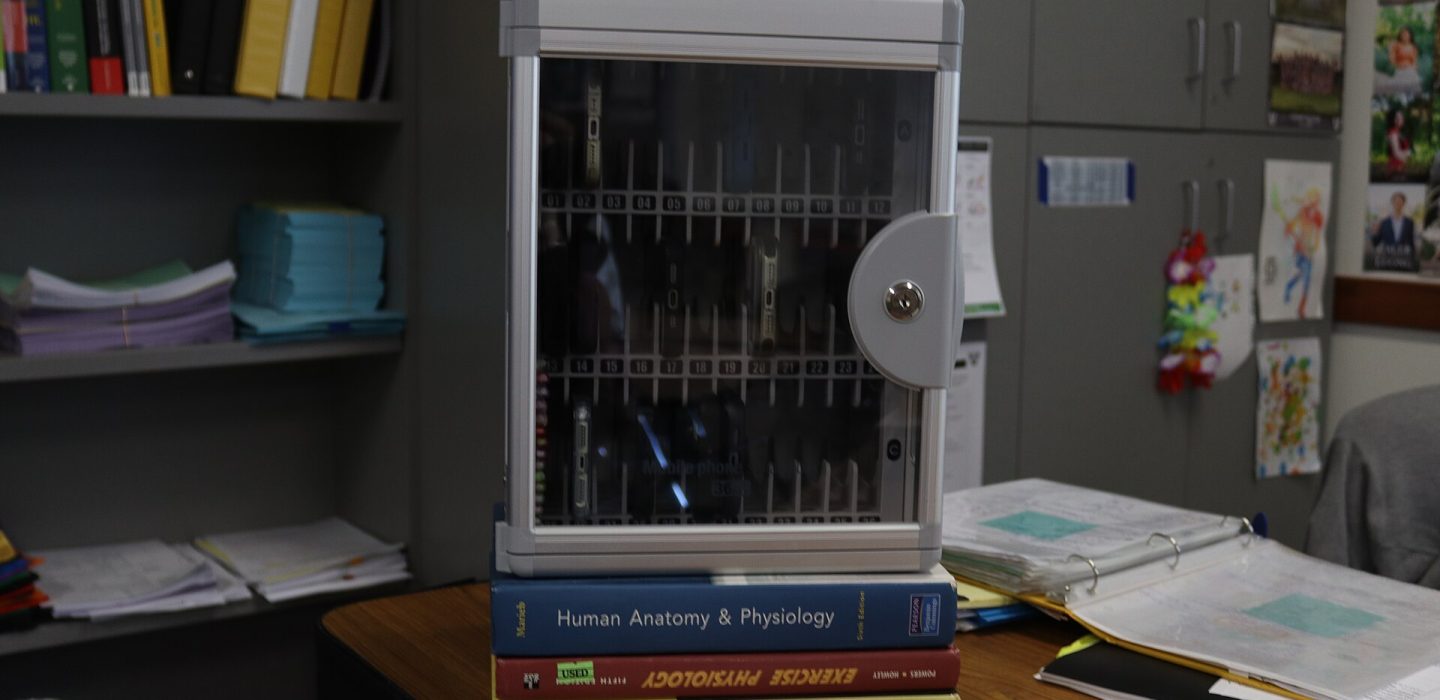
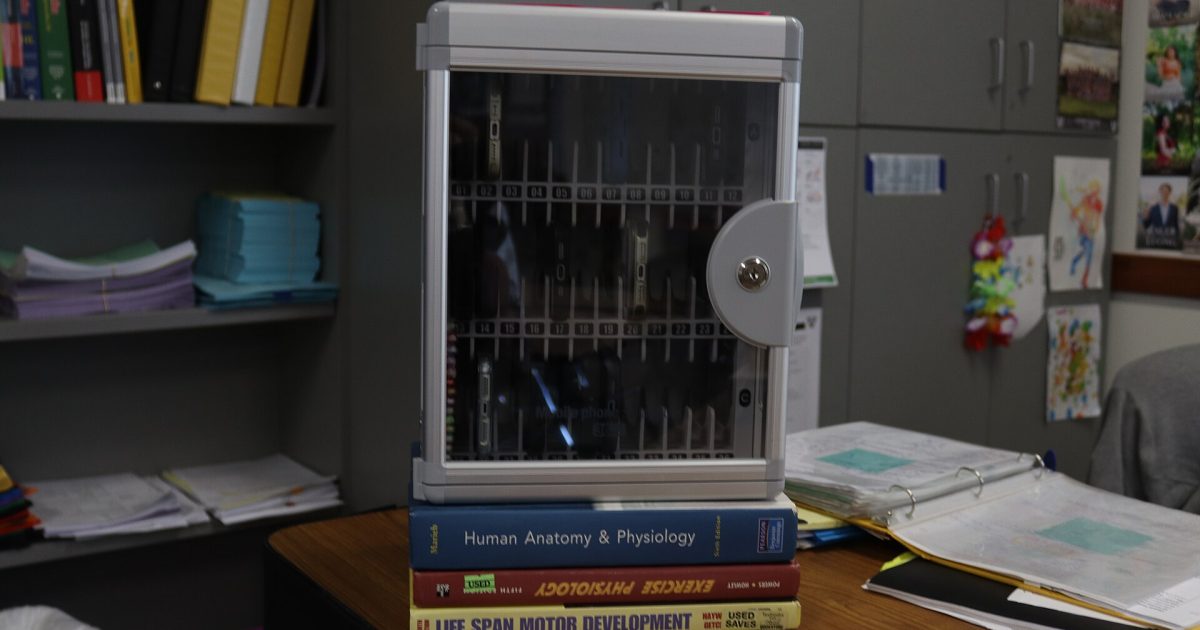
The department’s guidance lists several ways to keep devices out of reach, including locked pouches, school-managed lockers or bins, classroom storage and student-managed options such as backpacks or lockers, according to the New Jersey Department of Education. Districts decide how to handle storage, supervision and enforcement, the department said.
Commissioner Kevin Dehmer described the approach as built to allow local flexibility based on the needs of each school community.
How the $3 million in grants works
The state budget includes $3 million in grants for phone-free schools, according to WDHA. In December, 86 districts received a combined $980,000, the station reported. Districts can also use funds to buy lockers, locked pouches or check-in cabinets.
The bill passed with bipartisan support. WDHA reported that it cleared both the Assembly and the Senate in December with only three dissenting votes.
What parents and students can expect
Because each district writes its own policy within the state guidelines, details differ. A family can find the exact rules in the district handbook or by asking the school office about storage, lunch and emergency contact.
WDHA reported that New Jersey joined 36 other states and Washington, D.C., in limiting phones in schools.
The practical takeaway is simple: phones stay put during the school day unless an exception applies or a teacher assigns academic use, and the district handbook spells out the rest.
Get stories like this by email. Sign up for Crafting Your Home.
This article was produced with AI assistance and edited for accuracy against the sources linked above.
