Khadijah Farrakhan, the longtime wife of Nation of Islam leader Louis Farrakhan and a steady presence beside one of America’s most controversial religious figures, has died at the age of 90.
Her death, announced by the Nation of Islam, marks the end of a life deeply tied to faith, family, Black self-reliance, and the inner story of a movement that shaped generations of followers from its base in Chicago.
To many within the Nation of Islam, she was not simply the wife of a famous minister. She was “Mother Khadijah,” a title that carried affection, respect, and a sense of spiritual motherhood.
She died on Saturday, June 27, 2026, just months after supporters had celebrated her 90th birthday. The Nation of Islam described her passing with grief and gratitude, honoring her as the wife of Louis Farrakhan for 72 years and as the first lady of the movement.
A quiet force beside a powerful public figure
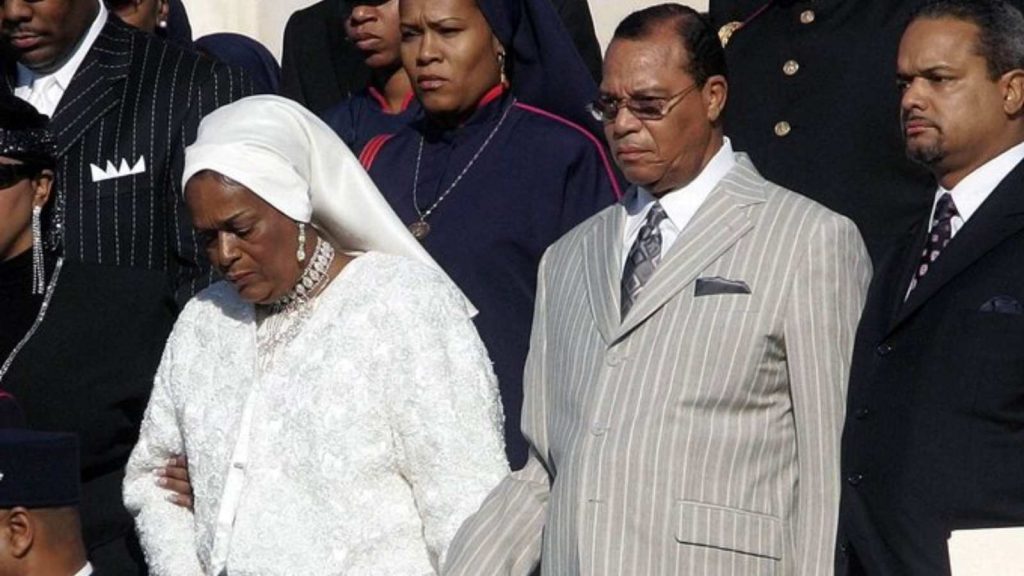
For decades, Louis Farrakhan stood before crowds as a fiery speaker, a magnetic organizer, and a polarizing voice in American religious and political life. Khadijah Farrakhan stood beside him throughout that long public journey, often off the center of the camera but never outside the center of the story.
Their shared life stretched across some of the most intense chapters in modern Black religious history.
They married in Boston on September 12, 1953, when he was still known as Louis Walcott and she was known as Betsy Ross. Two years later, in 1955, both moved toward the Nation of Islam, a decision that reshaped their names, their household, and the direction of their lives.
Khadijah Farrakhan converted to Islam that same year. Her husband also joined the Chicago-based movement after being influenced by Malcolm X, who had known him from Boston. Around that time, the couple adopted a new identity that would eventually place them at the heart of one of the most debated religious and sociopolitical movements in the United States.
A marriage tied to faith, family, and public struggle
The Farrakhans’ marriage lasted more than seven decades. That alone made her life remarkable, but the world around that marriage made it even more complicated and historic.
Together, they raised nine children. Their family also knew deep personal grief. Their eldest son, Louis Farrakhan Jr., died in 2018, and another son, Joshua Farrakhan, died in 2023. Those losses became part of a larger family story marked by public duty and private pain.
Inside the Nation of Islam, Khadijah Farrakhan was remembered as a woman of loyalty, dignity, and religious devotion. Her image was often connected to grace, discipline, and support. Supporters saw her as a model of womanhood within the movement, someone who carried strength without needing the spotlight.
Her home life and public identity were also linked to Mosque Maryam on Chicago’s South Side, the Nation of Islam’s central mosque and spiritual home base. It was there that the Farrakhans lived and worked while helping guide a movement built around faith, Black independence, moral discipline, and community uplift.
Her role in a movement larger than one man
The Nation of Islam has long been a powerful and controversial presence in American life. It has promoted Black self-reliance, business development, discipline, and pride, especially in communities that have faced poverty, racism, and social neglect. At the same time, Louis Farrakhan’s rhetoric and public views have drawn sharp criticism over the years, making the movement deeply polarizing beyond its devoted base.
Khadijah Farrakhan’s role was different from her husband’s. She was not known as the headline-making speaker in the same way he was. Yet her importance came through continuity, presence, and symbolism. She represented the family structure that the movement often preached. She embodied the idea that public leadership depended on private sacrifice.
For many followers, she was the woman who helped hold the household and the mission together. In religious movements, such figures are sometimes easy to overlook because they are not always at the microphone. But their influence can be felt in the way communities remember them after death.
That is what happened after the announcement of her passing. Tributes described her as faithful, gentle, noble, and deeply respected. Mosque Maryam remembered her as a devoted follower with a sweet spirit. Others praised her as a woman of dignity and grace.
The Million Woman March moment
One of Khadijah Farrakhan’s most visible public moments came in 1997, two years after Louis Farrakhan helped organize the Million Man March in Washington.
That year, she addressed the Million Woman March in Philadelphia, a gathering that brought together Black women around themes of unity, family, healing, responsibility, and empowerment. Her message focused on the central place of women in the rise of a people.
“A nation can rise no higher than its women,” she told the crowd.
The line captured the tone of her public identity. She spoke of women, but she also spoke of the family as a whole. Her message was not built on women rising alone, but on men, women, and children rising together.
That moment gave the public a clearer view of Khadijah Farrakhan’s voice. It showed the values she had long represented inside the Nation of Islam: faith, discipline, family strength, and collective responsibility.
A legacy remembered through devotion

Khadijah Farrakhan’s death closes a long chapter in the Nation of Islam’s living memory. She was present through the movement’s growth, conflict, reinvention, and public battles. She lived through the era of Malcolm X, the rise of Louis Farrakhan’s leadership, the Million Man March, the Million Woman March, and decades of national debate over the role of the Nation of Islam in American culture.
Her legacy will likely be remembered differently depending on who is telling the story. To devoted members of the Nation of Islam, she was a spiritual mother, a loyal wife, and an example of faith under pressure. To historians, she was part of the intimate family structure behind a major Black nationalist religious movement. To the broader public, she was the woman who spent 72 years beside one of the most recognizable and controversial religious leaders in America.
What remains clear is that her life cannot be reduced to a title. “First lady of the Nation of Islam” explains her position, but not the full weight of her journey. She was a wife, mother, believer, public example, and quiet witness to history.
As funeral arrangements are awaited, the tributes surrounding her death reveal how deeply she was cherished by those who knew her through faith and community. Khadijah Farrakhan lived a life shaped by devotion, and for those who called her Mother Khadijah, that devotion is now the center of her memory.