


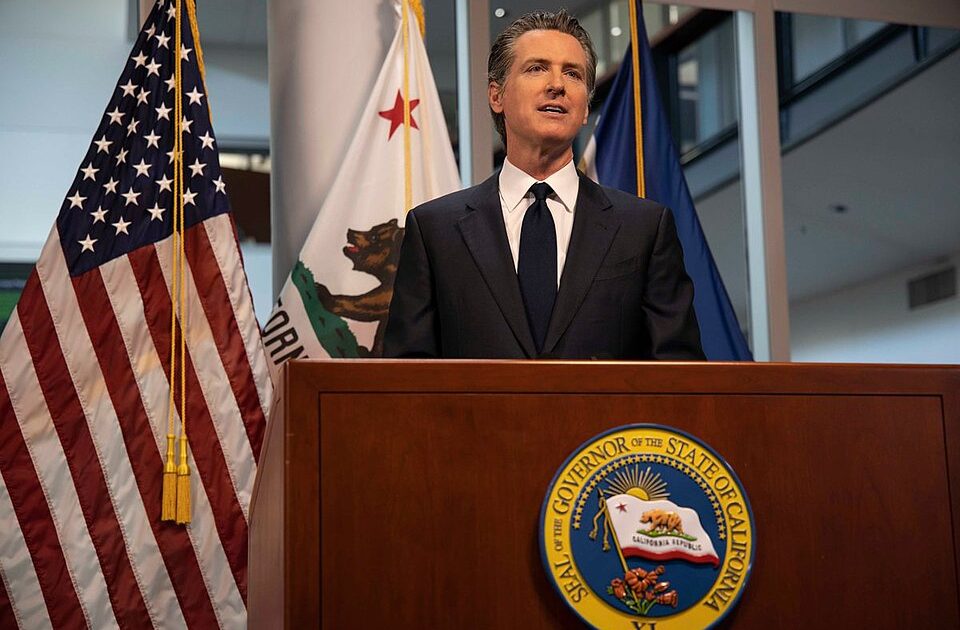
California Governor Gavin Newsom is igniting a national political firestorm after calling for a federal “billionaires’ tax” while simultaneously opposing a similar wealth tax proposal in his own state.
The move has triggered sharp criticism from business leaders, political opponents, and fiscal conservatives who argue the plan reflects ideological ambition rather than economic realism.
The proposal, outlined in a recent policy push, would impose a federal tax on ultra-wealthy Americans with net worth exceeding $100 million, alongside broader reforms targeting inherited wealth and corporate tax loopholes.
Newsom has framed the idea as a way to ensure that the wealthiest Americans pay a “fair minimum contribution” while funding major social programs.
A Federal Wealth Tax Plan Meets Immediate Resistance

Newsom’s federal proposal is being marketed as a modern version of the “Buffett Rule,” a long-debated idea that high-income earners should not pay lower effective tax rates than middle-class workers.
Supporters argue the plan addresses widening inequality and rising concentration of wealth among America’s billionaires.
However, critics say the proposal is politically convenient but economically risky.
Opponents argue that taxing wealth at the federal level could trigger capital flight, discourage investment, and push high-net-worth individuals to restructure assets or relocate.
They also warn that valuing unrealized gains could create legal and enforcement challenges that are difficult to manage at scale.
California Contradiction Raises Political Questions
The controversy deepens because Newsom is simultaneously opposing a California ballot initiative that would impose a one-time 5% tax on billionaires in the state. That proposal is projected to raise tens of billions of dollars for healthcare, education, and social support programs.
Newsom has argued that the state-level tax is too narrow and could drive wealthy residents out of California, weakening long-term tax revenue.
Instead, he insists that a federal approach is more sustainable and less vulnerable to interstate migration.
Critics, however, see a contradiction.
They argue that rejecting a state-level wealth tax while promoting a federal version suggests political positioning rather than consistent economic policy.
Some opponents have described the strategy as an attempt to appear progressive on inequality while avoiding the immediate consequences of implementing such taxes locally.
Billionaire Tax Debate Splits Democrats and Industry Leaders
The proposal has exposed growing divisions within the Democratic Party and among progressive policy circles. Some lawmakers and economists support wealth taxation as a tool to reduce inequality and fund public services, while others warn it could destabilize investment markets and hurt innovation.
In Silicon Valley and broader business communities, reactions have been mixed but largely cautious.
Tech leaders and investors have repeatedly raised concerns that wealth taxes could force entrepreneurs to sell assets prematurely or discourage long-term company building in high-tax environments.
At the same time, progressive economists backing similar initiatives argue that current tax structures allow extreme wealth accumulation with relatively low effective tax rates, calling the system increasingly unsustainable.
A National Debate With No Easy Resolution

Newsom’s proposal arrives at a time when wealth inequality has become a defining issue in U.S. politics. Supporters view a billionaire tax as a corrective measure for a system they believe favors capital over labor.
Opponents view it as a symbolic policy that risks economic disruption without guaranteed benefits.
What remains clear is that the debate is no longer theoretical. With California’s billionaire tax initiative advancing toward a 2026 ballot vote and federal-level proposals gaining visibility, wealth taxation has shifted from academic discussion to a live political battleground.
Whether Newsom’s plan becomes policy or remains political messaging, it has already intensified one of the most polarizing economic debates in modern American politics: how much wealth is too much, and who gets to decide how it is taxed.


