
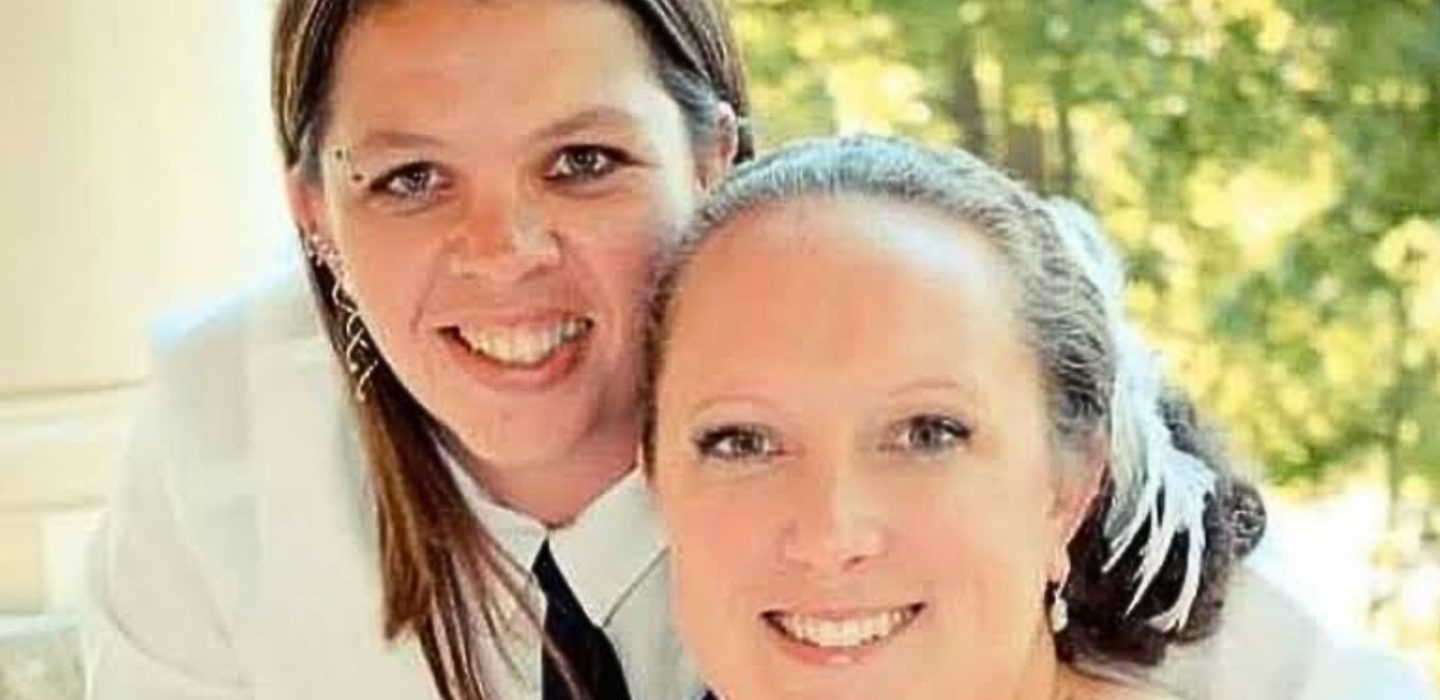

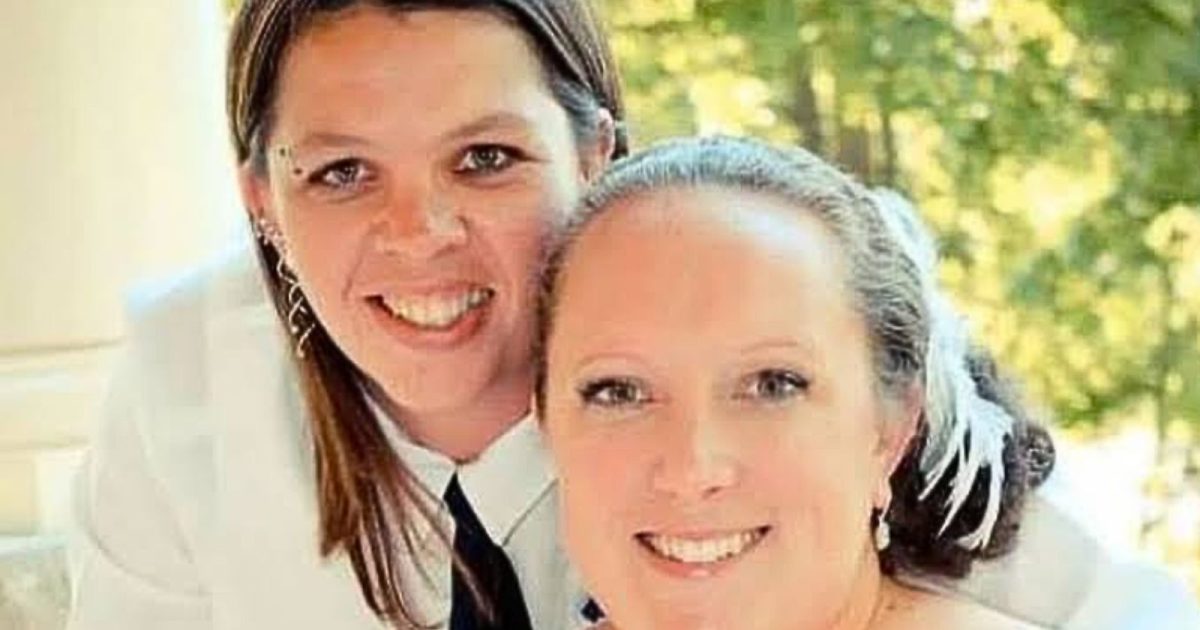
A Burlington, Ontario, couple who took in two young brothers, hoping to adopt them, has been sentenced to life in prison for the murder of the older boy, who died in 2022 after years of escalating abuse in their home.
Becky Hamber, 47, and Brandy Cooney, 45, were convicted in May of first-degree murder in the death of the boy, identified in court only by the initials L.L. to protect his identity under a standard publication ban.
He was 12 years old when he was found without vital signs and severely emaciated in the basement bedroom of the couple’s home, five years after the brothers had come into their care.
Ontario Superior Court Justice Clayton Conlan handed down the mandatory sentence for first-degree murder on Friday, July 3, in a Milton, Ontario, courtroom: life in prison, with no chance of parole for at least 25 years.
Hamber and Cooney were also convicted of forcible confinement, assault with a weapon, and failing to provide the necessaries of life, all connected to the treatment of the younger brother, identified only as J.L., who survived.
Those additional sentences will be served concurrently with the life term. Conlan told the court that the sentencing marked the end of the legal case, though not the end of the memory of the boy who died, adding that his younger brother’s life was only beginning.
What the Court Found

The case took nearly ten months to move from trial to sentencing, and the picture that emerged over that time was not one of overwhelmed parents struggling with difficult children, which is how the defense had tried to frame it.
In his written decision, Conlan found that Hamber and Cooney hated the boys and deeply resented them for entering their lives and for not turning out to be what the couple had expected.
He wrote that the couple had confined the older boy in what he described as a dungeon-like bedroom as the child wasted away, a pattern the judge said showed a deliberate intention to kill him.
Conlan based his findings largely on text messages exchanged between Cooney, Hamber, and Cooney’s father, who lived with the couple, along with J.L.’s trial testimony, evidence from the medical professionals who had treated L.L., the findings of his autopsy, and testimony from two expert witnesses.
One text message admitted into evidence, according to reporting from the trial, showed one of the women mocking the boys for complaining about being hungry, telling them to focus on their exercise punishments rather than the lack of food.
The court also heard that the boys were regularly locked in their rooms for long stretches, sometimes from evening until midday, monitored by surveillance cameras, and forced into physical exercise as a form of punishment.
Both women had pleaded not guilty and maintained their innocence throughout the trial, offering testimony that Conlan ultimately rejected.
In his ruling, the judge noted it was not the fault of the defense that the evidence their clients gave “has been found to be worthless.” J.L.’s testimony, by contrast, became central to the Crown’s case, directly contradicting the couple’s account that they had simply been overwhelmed caregivers dealing with children who had severe behavioral issues.
Conlan also noted that the boys were Indigenous and pointedly rejected claims to the contrary that had been made by Cooney and Hamber during the trial.
The Boy Who Survived, and the Family Left Behind
Sentencing day brought the people most affected by the case face to face with Hamber and Cooney for the first time since the verdict. Now 14, J.L. told the court how much he missed his older brother and said afterward that he had been anxious and scared to be in the courtroom, including having to face the two women directly.
Despite that fear, he said plainly that it was good that the couple got what they deserved, and spoke about his goal of one day becoming a lawyer, saying he enjoys arguing and believes that people accused of crimes still deserve representation because not everyone accused is guilty.
J.L.’s written victim impact statement was harder to hear. He told the court he has endured anxious, sleepless nights and that watching recordings entered into evidence during the trial left him feeling very sad and angry.
He said he will never again get to play baseball with his brother. “I won’t be able to see him, and I won’t be able to talk to him again,” he told the court. “Living with Becky and Brandy, I did not like it, and it should have never happened.”
The boys’ biological mother, whose identity is also protected under the publication ban, described her son’s death as the darkest night of her life.
She told the Milton court that the loss of her resilient, intelligent son, who loved reading and food, follows her into every moment of her life, and that there is an empty place in her family that can never be filled, every birthday, holiday, and ordinary day now serving as a reminder of his absence.
She added that she hopes her son is remembered not for how he died, but for how he lived, calling him a warrior and saying it was the greatest honor of her life to have raised him.
The boys’ grandmother, in a statement read by the Crown, said she and the brothers’ former foster mother had repeatedly warned Ontario’s Children’s Aid Society that the boys were in danger, without any result.
“No matter how many times I tried to tell that to the CAS workers, my grandson stayed with those monsters,” she said, describing how the child’s body had to be padded with newspaper for his funeral because there was so little left of him.
A former teacher of J.L.’s, Sara Biasetti, who testified at the trial, told reporters outside the courthouse afterward that Cooney and Hamber had taken no responsibility for what happened and deserved to be imprisoned for life.
A Case That Raised Bigger Questions
Beyond the sentencing itself, the case has reignited scrutiny of Ontario’s child welfare system and how a child in the care of prospective adoptive parents could suffer this level of harm without intervention.
The brothers had entered the couple’s home in the fall of 2017 through the foster and adoption system, a system meant to place vulnerable children into safer circumstances than the ones they came from.
Instead, over roughly five years, that placement became the site of sustained abuse that ultimately ended in one boy’s death and left his younger brother permanently changed by what he witnessed and endured.
The trial itself was described by those close to it as unusually difficult. It ran for nearly ten months and included testimony from 48 witnesses and 209 exhibits entered into the record, a scope Conlan himself described as lengthy and difficult, a description echoed by several people during their impact statements at sentencing.
For the family and community members who spoke in court, the length of the process did not appear to lessen its weight.
Firefighters who had responded to the scene, teachers, and former neighbors all spoke about grappling with whether more could have been done, while members of the boys’ Indigenous and school communities described two children who had once been kind and energetic before becoming increasingly isolated and withdrawn.
For J.L., life now looks different from what it did while he lived with Hamber and Cooney.
He told the court that things are calm for him now, and that he wants to see better checks put in place for families in the foster care system so that what happened to him and his brother is less likely to happen to another child.
It is a modest, specific request from a 14-year-old who has already had to testify against the two adults who were supposed to protect him, and it stands as one of the more direct pieces of the case’s aftermath: not a policy paper or a courtroom argument, but a boy asking, in his own words, for the system to do better than it did for him.


