



The post Firstborn, Middle or Youngest? What a Large Study Found About Birth Order and Personality first appeared on Crafting Your Home.
Rodica Ioana Damian and Brent W. Roberts analyzed data from Project Talent, a longitudinal study that began in 1960 and eventually provided information on 377,016 American high-school students. Their 2015 paper in the Journal of Research in Personality examined whether birth position was associated with personality and intelligence while accounting for age, sex, family size, parental socioeconomic status and family structure.
The result was awkward for anyone who likes tidy sibling stereotypes: the average absolute association between birth order and personality was just .02.
That distinction matters. A statistical relationship can be detectable in a very large dataset while remaining too small to provide a useful personality profile for an individual.
The firstborn advantage was smaller than the stereotype suggests
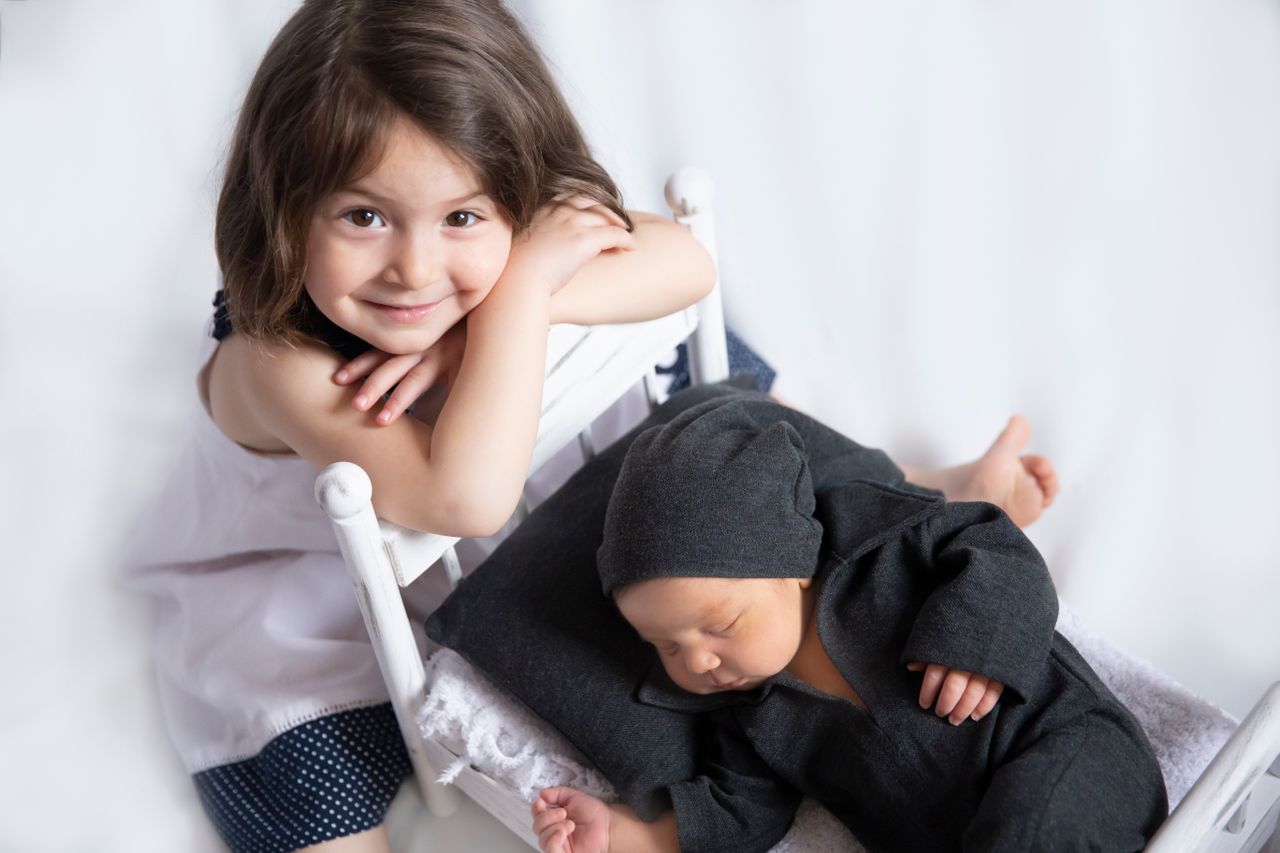
Damian and Roberts did find differences associated with birth position, but personality was not where the strongest pattern appeared.
Their analysis used Project Talent, one of the largest representative datasets of American high-school students available for this question. The researchers tested birth-order associations across personality traits and intelligence rather than simply asking people whether they felt like stereotypical firstborns or youngest children.
The personality associations were tiny. The researchers reported an average absolute association of .02 between birth order and personality traits, compared with .04 for intelligence.
Those numbers put a useful limit on the firstborn narrative. Being the oldest child may correlate with measurable differences in some outcomes, yet the size of the relationship does not justify treating firstborn status as a personality diagnosis.
The study also examined a subgroup of students from three-child families raised by two parents. The researchers found that the birth-order associations did not suddenly become substantial under that more specific family arrangement.
For American families accustomed to joking that the oldest child is the responsible one and the youngest is the wild one, the scale of the finding matters.
Related: 10 Hidden Burdens Older Siblings Face That Can Quietly Affect You for Life
The personality traits people usually associate with birth order did not hold up well
A separate 2015 analysis by Julia Rohrer, Boris Egloff and Stefan Schmukle approached the question from another direction.
Published in Proceedings of the National Academy of Sciences, their study combined three large national panels from the United States, Great Britain and Germany. The samples contained 5,240 people from the United States, 4,489 from Great Britain and 10,457 from Germany.
The researchers examined the Big Five personality dimensions: extraversion, emotional stability, agreeableness, conscientiousness and imagination.
Birth order did not produce lasting differences in those broad personality traits.
The researchers used both between-family comparisons and within-family analyses. That distinction matters because comparing unrelated firstborns with unrelated later-borns can mix many family differences into the results. Comparing siblings within families removes some of that noise.
Across the different samples and analytical approaches, the broad personality differences that popular birth-order theories predict were absent.
The finding leaves little room for the familiar idea that being born first, second or last reliably programs a particular character.
Middle children are especially difficult to fit into the stereotype
The middle-child archetype survives partly because it is flexible.
A middle child can be described as overlooked, diplomatic, independent, adaptable or socially skilled. Almost any behavior can be folded into the story after the fact, making the theory hard to disprove through family anecdotes.
Large datasets create a different test.
If middle children systematically developed a distinctive personality because they occupied the space between an older and younger sibling, researchers should detect consistent differences in personality measures. Large studies did not find a meaningful, broad personality signature tied to birth position.
Rohrer, Egloff and Schmukle went further in later research. Their 2017 study used specification-curve analysis to test narrower characteristics across thousands of analytical models. The researchers examined traits and behaviors including life satisfaction, locus of control, interpersonal trust, reciprocity, risk-taking, patience and impulsivity.
They found no meaningful birth-order effects across those narrower characteristics.
The middle child therefore does not emerge from the evidence as a scientifically identifiable personality type.
Being the youngest does not automatically make someone a risk taker
The youngest-child stereotype often comes with a more adventurous personality.
The theory has an intuitive logic. A youngest sibling enters a family where older children have already occupied certain roles, potentially encouraging the youngest to find a different niche.
Researchers have tested that idea with behavioral data rather than relying entirely on family descriptions.
In 2019, Tomás Lejarraga, Renato Frey, Daniel Schnitzlein and Ralph Hertwig published a PNAS study examining whether birth order predicted adult risk-taking. Their evidence came from three sources, including the German Socio-Economic Panel, the Basel-Berlin Risk Study, and data on consequential life choices.
The Basel-Berlin portion was particularly broad, incorporating 39 measures of risk taking, including incentivized behavioral tasks.
The researchers found no birth-order effect on adult risk taking.
Their specification analysis of the German data produced a similar result. Across 1,456 statistical specifications, only 3.3% produced coefficients reliably different from zero, and those significant results pointed in both directions rather than forming a consistent youngest-child pattern.
That makes the rebellious-youngest stereotype considerably harder to defend as a general personality rule.
Even siblings themselves can misread the pattern

An uncomfortable reason birth-order stories can feel so convincing is that families provide endless opportunities to observe differences, but observation does not automatically reveal the cause.
A 2014 study by psychologists April Bleske-Rechek and Jenna Kelley examined 69 young-adult firstborn-laterborn sibling pairs. Rather than relying on one sibling to describe the entire family, the researchers collected independent personality reports from siblings, along with reports from parents and peers.
The study found no systematic birth-order differences in personality.
That finding matters because family members are not neutral observers. They know the family history, the roles everyone occupied and the conflicts that happened years earlier. A sibling described as the responsible one may genuinely have carried more responsibility, but that does not establish that being firstborn caused a stable personality trait.
The distinction between family role and personality is easy to lose.
Related: 9 Things Only People with Siblings Truly Understand
The large studies did find something associated with being born first
The evidence becomes more interesting when personality and intelligence are separated.
Rohrer, Egloff and Schmukle found a small birth-order association with objectively measured intelligence and a similar pattern for self-reported intellect. Their analysis estimated a decline of about one-tenth of a standard deviation in self-reported intellect as birth order increased.
Damian and Roberts likewise found the association with intelligence was larger than the average association with personality.
That does not mean firstborns are destined to be smarter, more successful or more capable. The observed relationship is a population-level statistical pattern, and its size is small.
It also demonstrates why the birth-order debate should not be reduced to a simple yes-or-no question. Evidence can show a small association in one domain while failing to support the larger personality theory attached to it.
The data give firstborns a measurable statistical wrinkle. They do not give them a predetermined character.
Birth order explains far less than family folklore suggests
The persistence of birth-order stereotypes is understandable because they offer an unusually convenient explanation for sibling differences.
A family can look at one oldest child who organizes everyone, one middle child who mediates arguments and one youngest who takes more chances and see a perfect theory unfolding around the dinner table.
Large-scale personality research asks a harder question: does that pattern survive when thousands of families are measured systematically?
So far, the strongest evidence says the answer is largely no.
Damian and Roberts found an average absolute association of .02 between birth order and personality in their 377,000-person U.S. sample. Rohrer, Egloff and Schmukle found no lasting effects across the major Big Five traits in three national datasets. Their later specification-curve analysis found no meaningful effects across a range of narrower characteristics. Lejarraga and his colleagues found no consistent effect on adult risk taking.
That leaves plenty of room for siblings to be different.
Other Posts You May Like
- 8 Childhood Experiences Adults Say Today’s Kids Are Missing Out On
- The Hidden Manipulative Traits of Each Zodiac Sign: How Your Birth Chart Can Influence Your Interactions
If you like what you just read, then subscribe to our newsletter and follow us on social media.


