

The post Even Though 58% of Boomers Own Their Homes Outright, Senior Living Should Still Be Considered Since 28% of Them Live Alone first appeared on Crafting Your Home.
It is heartbreaking to sit with what this generation was actually promised. When the Servicemen’s Readjustment Act of 1944 put veterans into suburban houses with no down payment, homeownership stopped being a milestone. It became the entire definition of having made it in America. Boomers grew up inside that promise, inherited it, and built a retirement plan around one paid-off house standing in for a pension, an inheritance, and a guarantee that someone would be there when the stairs got harder to climb.
Reality has not kept that second half of the bargain.
Family estrangement, once treated as rare enough to study only in passing, now touches more American households than most people assume. A landmark Cornell survey led by sociologist Karl Pillemer found 27% of adults had cut contact with a close relative and 10% specifically with a parent or child, and a 2025 YouGov poll put the broader estrangement figure at 38%, up more than ten points in five years. Even where the relationship survives, showing up rarely comes free anymore.
Caregiving now competes directly with a labor market where holding down one job is already no guarantee of enough. Stepping back to care for a parent increasingly means stepping away from income nobody in the household can spare.
The generation that built its identity on a paid-off house meaning safety is aging into an economy where its own children cannot always afford to answer that promise.
Capitalism gave boomers the house. It is capitalism, in its current form, quietly taking away the people who were supposed to fill it.
The outright-ownership number is real, and it is getting bigger
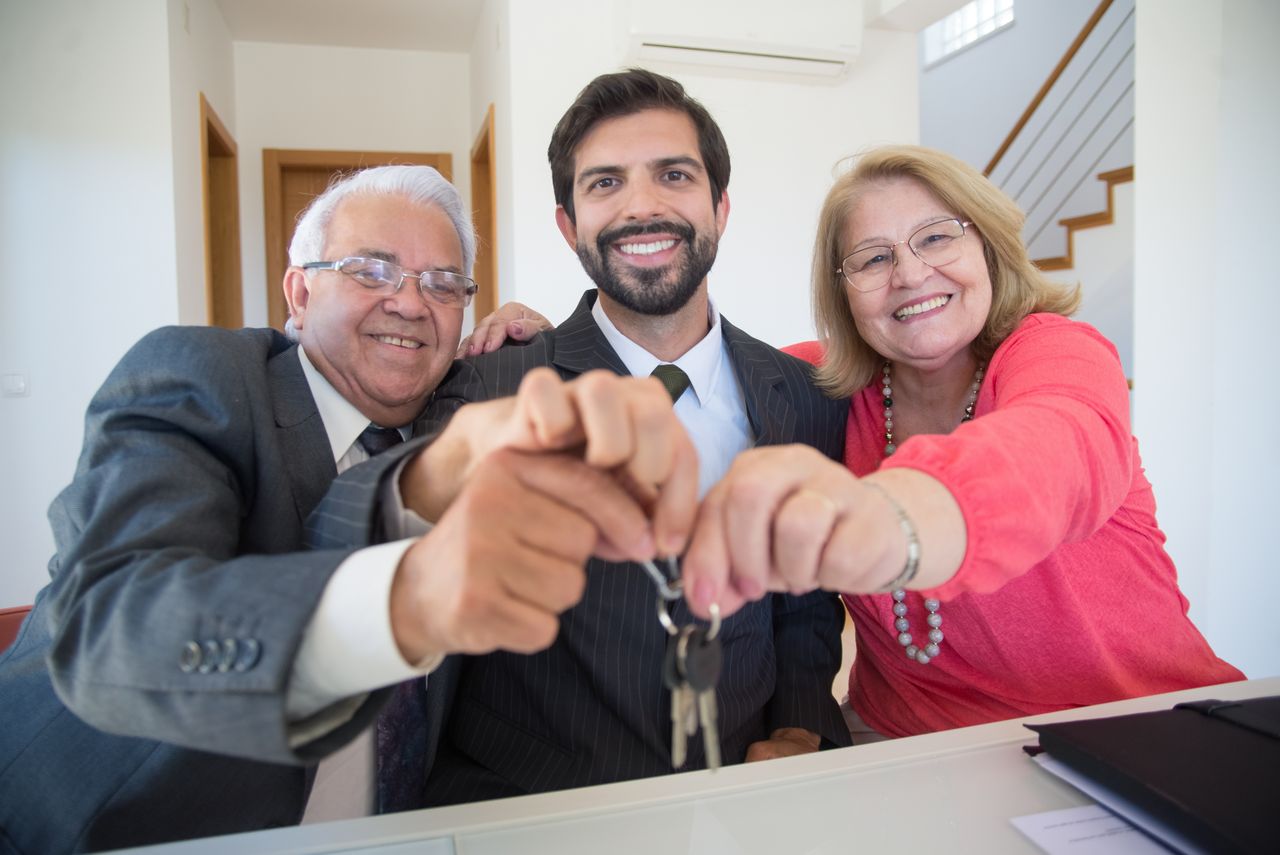
Roughly four in ten U.S. owner-occupied homes are now mortgage-free, an all-time high in the data series, according to ResiClub’s analysis of Census figures reported by Fast Company. More than half of those 35 million debt-free homeowners are 65 or older, and among homeowners in that age bracket, 64% own their primary residence free and clear.
Freddie Mac’s own research backs this up from a different angle.
Half of the boomer homeowners it surveyed own outright, and 53% of those still carrying a mortgage have a rate below 4%. Three out of four plan to leave the home, or the proceeds from selling it, to their children.
That intention matters. It explains why so many boomers describe their house less as an asset to deploy and more as a legacy to preserve intact.
Staying put is a choice, not just a default
Redfin’s national survey of boomer homeowners found the top reason people give for not moving has nothing to do with money. 55% say they like their home and see no reason to leave, while 30% cite an almost or fully paid-off mortgage and 16% point to today’s prices being too high. Two-thirds have lived in the same house for 16 years or more.
Redfin chief economist Daryl Fairweather has connected this to a downstream supply problem: boomers aging in place in large family homes is one reason younger buyers cannot find inventory that fits their households, since 88% of boomer-owned homes are single-family and nearly 90% are held by households with no minor children living there.
None of that criticizes boomers for wanting to stay.
It describes what staying actually costs the rest of the market, and it is rarely put that bluntly.
Related: What Happens to All the Homes Boomers Refuse to Sell When They Finally Move to Senior Living?
Who is actually alone in that paid-off house?

Living alone in later life is more layered than a single percentage suggests.
The Population Reference Bureau’s breakdown of Census data found 62% of boomers under 75 still live in married-couple households, but the picture splits sharply by gender past that age. 23% of women over 75 live alone compared with just 9% of boomer men, largely because women outlive their spouses and remarry less often after widowhood or divorce.
Zooming out to households generally, solo living keeps climbing.
The Census Bureau’s 2024 American Community Survey counted 38.3 million one-person households, or 28.9% of all households nationally, with 2025 estimates already at 29.5%. Among households headed by someone 50 or older specifically, 36% are now single-occupant, roughly 26 million people.
Here is the twist most coverage leaves out. Pew Research found the share of older Americans living alone has actually shrunk since 1990, not grown, because a record 54% of adults 65 and older now live with a spouse, and only 3% live in a nursing home or group setting, down from 6% in 1990.
Solo aging is rising in raw numbers because the boomer generation is simply enormous, not because each boomer is statistically more isolated than their parents were.
That distinction should reshape how we discuss this topic. The story is not that boomers are lonelier than prior generations. It is that a much bigger cohort is reaching the age where a spouse’s death, divorce, or simply outliving a partner leaves someone managing a house, a yard, and a set of stairs by themselves, often for the first time in decades.
The industry counting on that moment is not being generous about it
Senior housing operators are watching this demographic wave arrive on schedule. The oldest boomers turn 80 in 2026, the age at which relocation to senior housing typically shifts from optional to urgent, and roughly 10,000 Americans have been crossing that threshold daily since 2025.
Supply has not kept pace. National occupancy has risen for 20 consecutive quarters while new construction has nearly stalled, and NIC MAP CEO Arick Morton has described the category plainly: senior housing is necessary, not discretionary, yet development has not kept up with demographic demand. NIC’s Lisa McCracken frames the coming shift as boomers reshaping the industry by demanding more choice in lifestyle, services, and price point, even as that choice narrows in practice.
Tight supply plus record demand is a landlord’s market, not a resident’s market. Assisted living now averages roughly $6,386 a month nationally, about $76,600 a year, and rates have been climbing well above general inflation for years running.
The uncomfortable conclusion
A fully paid-off home feels like security. It is not the same as liquidity, and it is not company. Equity sitting in a house does nothing for someone eating dinner alone every night or falling on an empty staircase with no one to hear it.
Waiting until 80, when the move becomes urgent rather than optional, means shopping in the tightest senior housing market NIC has recorded in two decades. The boomers best positioned to age well are not necessarily the ones who own outright and stay put out of habit. They are the ones who treat that equity as a tool to act on before the market, or their own body, forces the timeline.
That paid-off home was never really the safety net. It was just the illusion of one.
Other Posts You May Like
- Senior Savings That Are Actually Worth Knowing About in 2026
- 10 Dark Realities of Aging in America That Many Seniors Face in Silence
If you like what you just read, then subscribe to our newsletter and follow us on social media.


