The post Denver Rolex Robbery Investigation: How Police Used License Plate Readers and Cellphone Data to Track Suspects first appeared on Crafting Your Home.
A series of attempted armed robberies targeting Rolex-wearing men in Denver’s upscale Cherry Creek North neighborhood has drawn attention for two reasons: the high-value watches involved and the investigative tools police say helped identify suspects.
The incidents, which happened in late 2024, involved three linked attempted armed robberies, according to local reporting. Two publicly described cases occurred on November 1, 2024, and roughly 10 days later in Cherry Creek North.
Police said the suspects allegedly approached victims, displayed or pointed firearms, demanded luxury watches, and fled when the victims refused. In the two publicly detailed cases, no one surrendered a Rolex watch. Authorities have not publicly confirmed whether a watch was taken during the third reported incident.
The investigation has since become a case study in how law enforcement agencies are combining traditional detective work with newer digital tools such as automated license-plate readers and cellphone-location analysis.
Two victims describe encounters with armed suspects
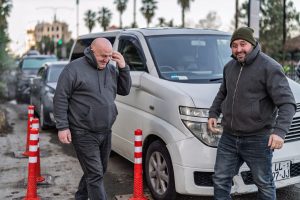
One of the victims was 85-year-old Cherry Creek North resident Larry Detrich, who described being confronted outside his vehicle near 2nd Avenue and Fillmore Street. According to his account reported by CBS Colorado, Detrich had just left coffee with friends when he returned to his car during the day. He said someone tapped on his window, and when he looked over, he saw what appeared to be the barrel of a 9mm pistol.
Detrich said he was wearing a Rolex he had owned for about 40 years and estimated its value at around $15,000. He refused to hand over the watch, confronted the gunman, and the suspect ran away.
A second reported victim, a 71-year-old Denver criminal-defense attorney, was targeted about 10 days later near 3rd Avenue and Steele Street while walking his dog.
CBS Colorado, citing a Denver police document, reported that the suspect demanded the man’s watch at gunpoint. The attorney refused, and the suspect fled on foot. The victim’s name was not publicly released.
How Flock license-plate readers became part of the investigation
A major part of the investigation reportedly involved Flock automated license-plate reader technology.
These systems are designed to capture information about vehicles in public spaces. According to Flock, the technology can collect vehicle images, license-plate information, vehicle characteristics such as make and color, and the date, time, and location of a camera reading.
In the Cherry Creek investigation, police reportedly did not begin with a known license plate. Instead, investigators searched using vehicle characteristics.
Denver police officials described a process where detectives entered information about the vehicle they were looking for, including its type, color, and model, then searched camera data for possible matches. Commander Cliff Barnes was quoted explaining that investigators could use a specific vehicle description to identify a car that may have been in the area during the reported crimes.
According to the reported investigation, detectives were looking for a dark-gray 2006 Honda Civic with a temporary plate. Flock readings allegedly placed the vehicle in Cherry Creek during both robbery timeframes and showed travel toward the Greeley area. Investigators then reportedly connected the vehicle to Fernando Rodriguez-Da Silva.
Investigators also relied on cellphone-location evidence
Police reportedly used cellphone data as another part of the investigation.
CBS Colorado reported that investigators tracked Rodriguez-Da Silva’s cellphone and said the device was present during both attempted robberies. Police also reportedly believed the phone had been turned off shortly before the incidents.
However, the underlying cellphone warrants, affidavits, and carrier records have not been publicly released in the material reviewed. Those details should therefore be treated as investigative claims rather than independently verified court findings.
Suspects identified in the investigation
Public reporting identified Fernando Rodriguez-Da Silva and Daiker Yair Rivero-Urbano as suspects connected to the case.
Rodriguez-Da Silva was publicly described as being linked to the vehicle used in the investigation. DHS officials, as reported by CBS Colorado, said he had admitted to being a getaway driver in multiple Denver-area Tren de Aragua-related robberies. The reviewed material does not include a publicly available affidavit, complaint, or transcript independently supporting that allegation.
Rivero-Urbano was identified by law enforcement, according to CBS reporting, as the alleged gunman in the Cherry Creek attempted robberies. No public Denver charging document establishing those allegations was located in the reviewed records.
Rivero-Urbano was later reported arrested in Detroit in November 2025. CBS Colorado reported that Bergen County prosecutors in New Jersey linked him to a separate armed robbery investigation involving a jewelry store. Those are pending criminal allegations, not convictions.
The debate over surveillance technology
The case has also highlighted the broader debate surrounding license-plate reader technology.
Supporters argue that tools like Flock can help police locate vehicles connected to crimes, reconstruct travel routes, and generate investigative leads. However, privacy advocates have raised concerns about how police collect, store, and access vehicle-location data.
One important distinction is that license-plate readers are vehicle-focused systems, not facial-recognition tools.
They can show that a vehicle appeared at a particular location and time, but they do not independently prove who was driving, who was inside the vehicle, or whether a crime occurred.
Denver officials have introduced additional rules on the use of license-plate reader data, including limits on access, auditing requirements, and restrictions on data sharing.
What remains unclear in the case

Despite the investigative details that have emerged, several questions remain unanswered.
Publicly available information does not establish the exact arrest details for Rodriguez-Da Silva, whether Denver prosecutors filed local charges, or the full evidence investigators collected. The public record also does not include a Denver charging document or court finding confirming every allegation made against the suspects.
The Cherry Creek investigation shows how modern policing increasingly relies on eyewitness accounts, vehicle tracking technology, cellphone analysis, and traditional investigative methods.
But while technology can generate leads, the courts and the evidence presented through the legal process ultimately determine guilt or innocence.
Other Posts You Might Like
- truck-driver-sentenced-to-150-days-after-i-95-crash-killed-5-in-north-carolina
- missouri-mom-who-put-newborn-in-oven-instead-of-crib-learns-her-fate-in-death-of-1-month-old-daughter
If you like what you just read, then subscribe to our newsletter and follow us on social media.