

The post Cows Have Best Friends? What Research Shows About Farm Animals’ Social Lives first appeared on Crafting Your Home
The idea that cows have “best friends” has become a popular claim online. It is an appealing image: two cows choosing to graze together, resting side by side, and becoming distressed when separated.
There is some science behind the idea, but the research calls for more careful language.
Scientists have found that cattle can develop preferred social relationships. Certain cows consistently spend more time near particular herd mates, interact with them more often, and maintain relationships influenced by long-term familiarity. However, researchers are cautious about simply calling these relationships “friendships” in the human sense.
A major 2025 review of peer social bonds in farm animals concluded that cows, pigs, and horses show evidence of non-random and sometimes preferential social relationships. At the same time, the authors noted that the scientific evidence is not yet strong enough to demonstrate every feature researchers would expect from a fully established social bond.
So, do cows have best friends? A better answer is: cows appear to have preferred companions, and those relationships can matter to their wellbeing.
Related:10 Extraordinary Ways Animals Have Mastered the Art of Surviving Below Freezing Temperatures
Cows Don’t Treat Every Herd Mate the Same
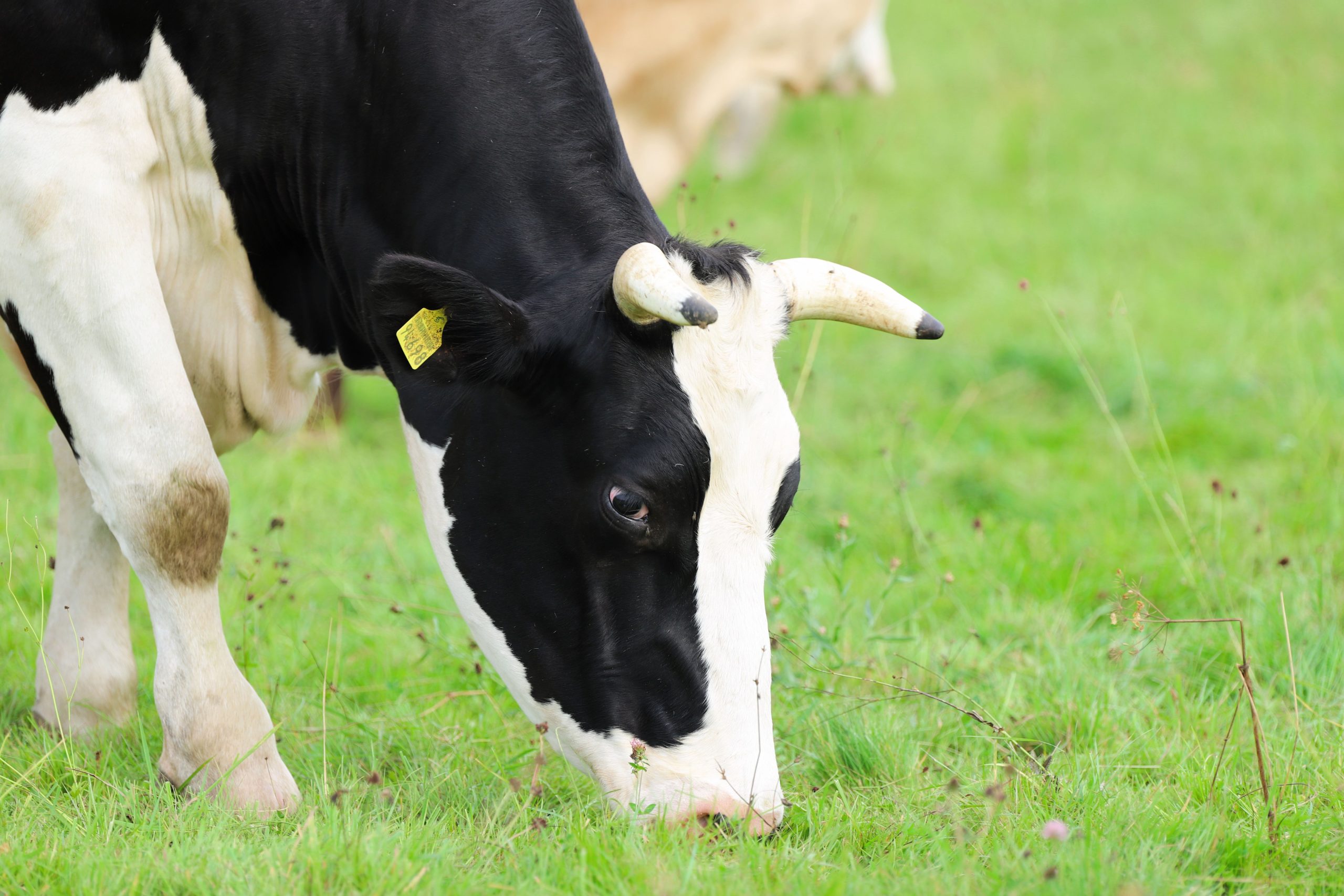
Cattle are naturally social animals. Within a herd, individuals do not necessarily interact equally with everyone around them.
One study of dairy cows found that long-term familiarity influenced the strength of their relationships. Cows that had known one another for longer periods tended to spend more time together and engage in more social interactions. The researchers concluded that keeping familiar cows together could potentially benefit their welfare.
More recent research continues to find that cattle develop preferential relationships within herds. However, factors such as where individual cows prefer to spend their time can influence how frequently two animals meet.
Researchers may examine behaviors such as proximity, grooming, resting near one another, synchronized activities, or repeated interactions to understand these relationships.
That does not mean every pair of cows standing beside each other is emotionally bonded. Two animals may occupy the same area simply because it contains food, shade, water, or a comfortable resting spot. Distinguishing genuine social preference from shared environmental preference is one reason studying animal relationships is surprisingly difficult.
Related:10 Remarkable Times Animals Asked for Help – And Humans Answered
Separation Can Be Stressful for Cattle
The strongest evidence for the importance of cattle’s social world comes from experiments involving separation.
In one study, separating heifers from their companions produced clear signs of distress. The animals vocalized more, struggled, experienced elevated heart rates, and showed increased concentrations of the stress hormone cortisol. Reintroducing other cattle reduced some of these responses, while the return of familiar pen mates produced a particularly pronounced reduction in heart rate.
Research reviews similarly describe social isolation as aversive for cattle and suggest that companionship can help buffer stressful experiences.
This phenomenon is known as social buffering: the presence of another animal can reduce the physiological or behavioral response to stress.
It is an important distinction. Saying “a cow misses her best friend” makes an intuitive story. Scientists instead ask measurable questions: Does the animal call more when separated? Does its heart rate change? Does cortisol increase? Does the response differ depending on which companion is present?
Those measurements allow researchers to investigate relationships without assuming that animals experience them exactly as humans do.
Herds Have Social Structure
Cattle relationships are not limited to friendly associations.
Herds also contain dominance relationships, competition, avoidance, aggression, and cooperation. Cows establish social hierarchies through interactions with one another, especially when groups are changing.
This is why repeatedly moving animals between groups can be disruptive.
A review of studies on mixing unfamiliar cattle found that regrouping commonly increased activity and aggressive interactions while disrupting existing dominance relationships and social bonds.
For farmers, this has practical implications. Herd management is not simply a matter of fitting a certain number of animals into a particular space. The identity and familiarity of those animals can affect their behavior.
Stable groups, adequate space, sufficient access to food and resting areas, and thoughtful regrouping may therefore contribute to better welfare.
Cows Are Individuals, Too
Another complication is that cattle differ substantially from one another.
Some cows are more sociable. Others may be more fearful or less inclined to interact. Researchers studying cattle personality have identified consistent differences in traits such as sociability, fearfulness, and coping style, all of which may affect how individuals behave within a herd.
That means there may be no single “normal” amount of social contact for every cow.
One animal might maintain several close associates, while another could interact with a broader range of herd mates. Age, previous experience, kinship, housing conditions, resource availability, and individual temperament can all influence social behavior.
This makes the social life of a herd less like a simple hierarchy and more like a network.
Pigs Also Form Preferred Associations
Cattle are far from unique.
Research suggests pigs also develop preferential social associations. In a study involving 116 pigs, scientists measured non-aggressive interactions and proximity between piglets before weaning. They investigated whether the strength of those relationships influenced their response when they were later mixed with unfamiliar animals.
Studies of pigs also show that early social experience matters. Piglets allowed to interact with animals outside their immediate litter before weaning can later display differences in social behavior and social skills compared with pigs given fewer opportunities for early socialization.
Such findings challenge the idea that livestock social behavior consists simply of animals tolerating whichever individuals happen to occupy the same pen.
Their previous experiences and social partners can affect how they respond to new situations.
Sheep Can Remember Faces for Years
Sheep provide some of the most striking evidence of sophisticated social recognition among farm animals.
In a well-known experiment, researchers found that sheep could remember the faces of around 50 individual sheep for more than two years. Their brains also showed specialized responses involved in processing socially meaningful faces.
Later studies demonstrated that sheep can distinguish familiar and unfamiliar individuals based on facial information, with familiarity influencing how faces are processed.
Their abilities are not limited to recognizing other sheep.
In another experiment, sheep learned to recognize photographs of human faces and could identify a familiar human handler from photographs without specific training for that person’s image.
These findings make sense from an evolutionary perspective. In a social group, recognizing who is dominant, familiar, threatening, related, or trustworthy can be highly valuable.
Related: 7 canine habits that look bad but prove your dog trusts you
Goats Know Who Their Companions Are
Goats also demonstrate surprisingly sophisticated individual recognition.
Researchers have tested whether goats can connect the voice of another goat with that individual’s appearance. When presented with recorded calls alongside visible herd members, goats were able to match visual and auditory information particularly well for close social partners.
In other words, a goat does not necessarily perceive another goat simply as “one member of the herd.” It may maintain information about a specific individual across different senses.
Research into farm-animal cognition more broadly indicates that livestock species can discriminate among individual companions and humans, respond to subtle social signals, learn socially, and adjust their behavior according to previous experience.
So Is “Best Friend” Scientifically Accurate?
This is where popular descriptions sometimes move faster than the evidence.
Researchers usually prefer terms such as preferred partner, preferential association, affiliative relationship, or social bond.
A strong social bond can be defined using several criteria. A 2025 systematic review proposed looking for social preference, consistency over time, reciprocal behavior, and evidence that the relationship helps regulate stress. The review examined 47 studies covering cows, pigs, sheep, horses, donkeys, goats, chickens, and quail. It found promising evidence of preferential relationships, particularly among cows, pigs, and horses. Still, it concluded that research has not yet demonstrated all of these criteria consistently enough to make sweeping claims about animal “friendships.”
So calling two cows “best friends” is a useful shorthand, but it carries a human interpretation that science cannot directly measure.
What researchers can say is arguably interesting: animals raised for food often recognize individuals, prefer some companions over others, remember social partners, respond negatively to isolation, and can gain measurable benefits from social contact.
Why Farm Animals’ Social Lives Matter
These discoveries are not merely interesting facts about animal intelligence.
They can change how animal welfare is evaluated.
Traditional welfare measures have often focused on preventing obvious negatives such as disease, hunger, injury, extreme temperatures, or pain. Modern animal-welfare science increasingly asks another question: Does an animal have opportunities to engage in behaviors and relationships that are important to it?
For social species, companionship may be part of that equation.
For cattle, this could mean considering the effects of isolation and repeated regrouping. For young animals, it can mean providing appropriate opportunities for social development. Housing design can also influence whether animals are able to approach preferred companions or avoid aggressive individuals.
None of this means group housing automatically guarantees good welfare. Social groups also create competition, bullying, and conflict, particularly when food, resting space, or other resources are limited. Good welfare therefore requires both opportunities for social contact and enough space and resources for animals to control those interactions.
Farm Animals Have Richer Social Worlds Than They May Appear To
The scientific picture emerging from cattle, pigs, sheep, goats, and other livestock is increasingly clear: farm animals are not socially interchangeable units.
They recognize individuals. They remember companions. They form preferences. Their behavior changes depending on who is nearby. Familiar animals can sometimes reduce stress, while separation and disruption of established groups can have measurable consequences.
Calling those relationships “friendships” remains partly a matter of interpretation.
But the underlying discovery does not depend on the label.
A herd is more than a collection of animals occupying the same field. For each animal, it is also a social environment composed of familiar individuals, competitors, relatives, preferred companions, and relationships shaped by months or even years of shared experience.
And understanding that social world may be essential to understanding what good farm-animal welfare really means.
Other Posts You May Like
13 Famous Movie Lines Almost Everyone Gets Wrong
8 Cozy Fall Home Habits from Scandinavia
9 Things That Make a Family Reunion Actually Fun
If you like what you just read, then subscribe to our newsletter and follow us on social media.


