
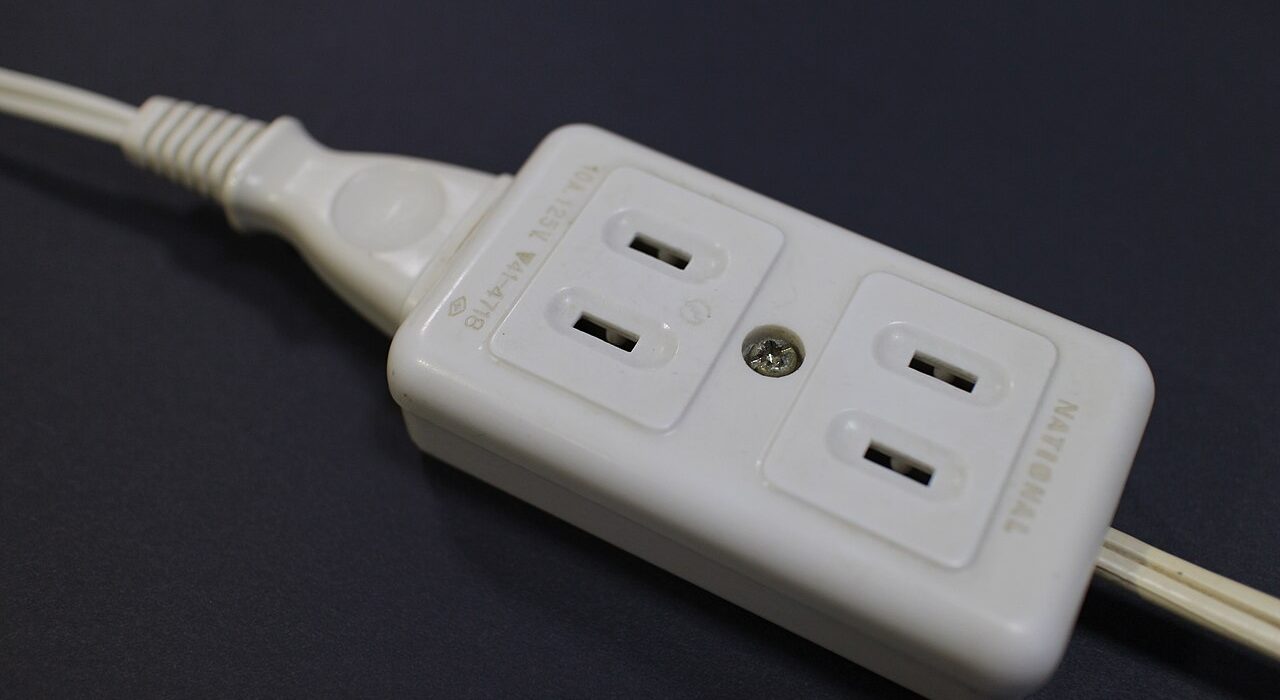

A power strip looks harmless, which is exactly why it gets asked to do too much. Fire-safety guides keep repeating the same warning: some appliances draw so much power that they belong in a wall outlet and nowhere else.
Here are 8 that show up on almost every list, from space heaters to slow cookers: space heaters, toaster ovens, hair-styling tools, slow cookers, microwaves, coffee makers, refrigerators and air conditioners. As winter heating season starts, here is the roundup, plus what the experts say to do instead.
Space Heaters, Toaster Ovens and Hair Tools

Space heaters top every list. The U.S. Fire Administration’s space heater safety pictograph, last reviewed in October 2021, says a heater should be plugged straight into a wall outlet and never into an extension cord or power strip. The Electrical Safety Foundation International, in its home electrical tips, says the same and adds that paper and other flammables should stay at least three feet from any heat source. Winter is when it matters most, since a U.S. Fire Administration report on winter heating fires finds that nearly half of home heating fires happen in December, January and February. Heater recalls such as the Costco space heater recall are a reminder to check the model, and a self-cleaning litter box or any other plug-in gadget deserves the same wall-outlet treatment.
Portable heaters pull about 1,500 watts on high, according to Bob Vila’s power strip guide, first published in 2023 and updated in September 2025. The same guide says most power strips are 15-amp models handling up to 1,800 watts, with heavy-duty 20-amp strips handling up to 2,400. One heater alone eats most of that budget, while a phone or earbud charger, like the gadgets in a guide to cleaning AirPods and their case, barely registers.
Toasters and toaster ovens come next. Bob Vila lists toasters, toaster ovens, pizza ovens and waffle makers as appliances that should skip the strip. Houston’s KPRC-TV, in a consumer segment built around U.S. Consumer Product Safety Commission statistics, names toaster ovens among the high-capacity appliances that belong in the wall. A comparison of countertop air fryers and toaster ovens is a handy reminder that these appliances multiply fast during the holidays, and each one needs its own outlet.
Hair-styling tools are also on the list. Hair dryers, curling wands and flat irons all heat up fast, and the Bob Vila guide says they should be plugged into a GFCI outlet in the bathroom as well. The Ready.gov winter heater fire safety flyer repeats the heater advice: keep the cord run direct, with no daisy-chaining, and check the cord and plug for cracks or damage before each use. Holiday decorating adds more cords, as a list of checks for the tree, cords and outlets shows. A list of electrical mistakes homeowners make shows how often those bathroom outlets get overlooked.
Slow Cookers, Microwaves and Coffee Makers
Kitchen appliances do the rest of the damage, and anyone weighing a single-cup brewer versus a full pot for the holidays should plan the outlet before the guests arrive. Bob Vila lists slow cookers, microwaves and coffee makers as appliances that should not share a strip. A slow cooker may seem gentle, since it sits on low heat all day, but a long-running appliance on a crowded strip is the setup that leads to trouble.
Microwaves draw a lot of current in short bursts. The KPRC piece lists microwave ovens among the appliances to plug directly into a wall outlet.
Refrigerators and Air Conditioners
Refrigerators and freezers are the item people forget. The KPRC piece lists refrigerators among appliances that should go straight into the wall, and Bob Vila says the same. A fridge that loses power because a strip trips can also mean a loss of food.
Window and portable air conditioners are on Bob Vila’s list as well. The guide adds that sump pumps, air compressors, blenders and washing machines should also stay off power strips. Some of these draw serious wattage, with blenders up to 1,500 watts and washing machines up to 1,400.
What to Do Instead
The most useful rule is the simplest: when an appliance heats, cooks or cools, it belongs in a wall outlet. According to KPRC, if a power strip or extension cord feels hot, it is overloaded. A strip should plug directly into the wall, and Bob Vila says connecting power strips together, known as daisy-chaining, “violates most fire safety codes” and can overload a whole home’s electrical system.
Other tips from the same sources are small but sensible. Never run rugs over cords, since hidden damage can expose wires. Do not use indoor power strips outdoors, where rain or snow can damage them. Extension cords are only a short-term fix, ESFI says, and cords should stay out from under rugs, carpets, doors and windows. Plug the strip into the wall, keep its total load under the limit printed on its label, and save it for lamps, chargers and electronics.
Heating season makes this more than a theory, and a quick walk around the house with that rule in mind takes about five minutes, which is a small price for a safer winter.
Get stories like this by email. Sign up for Crafting Your Home.
This article was produced with AI assistance and edited for accuracy against the sources linked above.
Image: Yapparina – CC0/Wikimedia Commons
