


The post Squirrels Don’t Find Every Nut They Bury — and That’s How Many Oak Forests Get Planted first appeared on Crafting Your Home.
A squirrel burying an acorn may seem like an ordinary part of life in the woods. It finds food, digs a small hole, buries the acorn, covers it with soil, and moves on to search for more. The purpose is simple: save food for a time when it may be harder to find. Yet this everyday behavior can have an unexpected result. Some of the acorns squirrels bury are never recovered, and under the right conditions, those forgotten seeds can grow into oak trees.
This is one way animals help forests renew themselves. Squirrels don’t deliberately plant trees as people do, but their food-storage habits can move seeds away from their parent trees and place them where they may survive and grow. Research on seed-hoarding animals shows that this link between food storage and seed dispersal can shape how trees spread across a landscape. Research on squirrel–seed interactions, published in Frontiers in Ecology and Evolution (2020), explains how squirrels can act as both seed consumers and seed dispersers.
A Squirrel, an Acorn, and a Hidden Beginning

For many tree squirrels, acorns are a key food source. These hard-shelled fruits contain an oak tree seed and provide nutrients that support an animal’s energy needs. When food is plentiful, squirrels may collect acorns and hide them in multiple locations rather than eat everything immediately.
Scientists call this behavior scatter-hoarding. Instead of storing an entire food supply in one central location, an animal distributes individual food items or small groups of them across different places. This strategy can reduce the risk of losing an entire food supply and lets an animal return to stored food later. A 2020 review in Frontiers in Ecology and Evolution examined the relationship between squirrels and the seeds they collect, highlighting the balance between food consumption, storage, and seed dispersal.
The key point is that squirrels don’t bury acorns to grow trees. They bury them because they are food. Any benefit to the forest is a possible consequence of that behavior, not the squirrel’s intention.
The instinct to save food for later
Finding food takes time and energy, so saving some for later can be valuable. A squirrel that stores acorns may return to its caches when fresh food becomes less available. However, storing food does not guarantee that every item will be recovered.
An acorn may remain buried because the squirrel does not return to that location, another animal moves it, or the original hiding place becomes difficult to locate. Other animals may also discover and eat some caches. These possibilities mean food storage is not simply burying a seed and forgetting it; it is part of an ongoing contest among animals for access to limited food.
Research on rodents in North American deciduous forests has also documented re-caching, in which animals retrieve stored acorns and bury them again elsewhere. A 2018 study in Acta Oecologica examined this behavior and its implications for seed dispersal and oak regeneration. Read the original study on acorn re-caching. This movement matters because an acorn’s final location can influence whether it is eaten, remains viable, or has an opportunity to germinate.
Related: Science Explains Why Your Cat Keeps Leaving You Dead Animals
The Acorn That Never Gets Found
How forgotten food becomes an opportunity
Imagine an acorn buried beneath a thin layer of soil and fallen leaves. The squirrel that hid it may return to other caches but never revisit this particular spot. If the acorn remains intact, receives enough moisture, and avoids being eaten or damaged, it may begin to grow.
This is the basic connection between squirrel behavior and oak regeneration. By moving acorns away from their parent tree, squirrels can help seeds reach new locations. Some of these locations may be suitable for germination and early growth. The effect is not guaranteed, but the possibility is ecologically important.
The 2020 review in Frontiers in Ecology and Evolution explains that squirrels can disperse seeds in deciduous forests by moving them from parent trees and storing them in sites that may support germination and seedling establishment. The same review emphasizes that the outcome depends on the tree species, seed characteristics, and the squirrels’ behavior. In other words, a buried acorn is not automatically a future tree. It is a seed that has been given a possible opportunity to grow.
Related: Squirrels Remember Where They Bury Their Nuts Better Than You Think, Research Shows
How the first signs of a growing oak appear
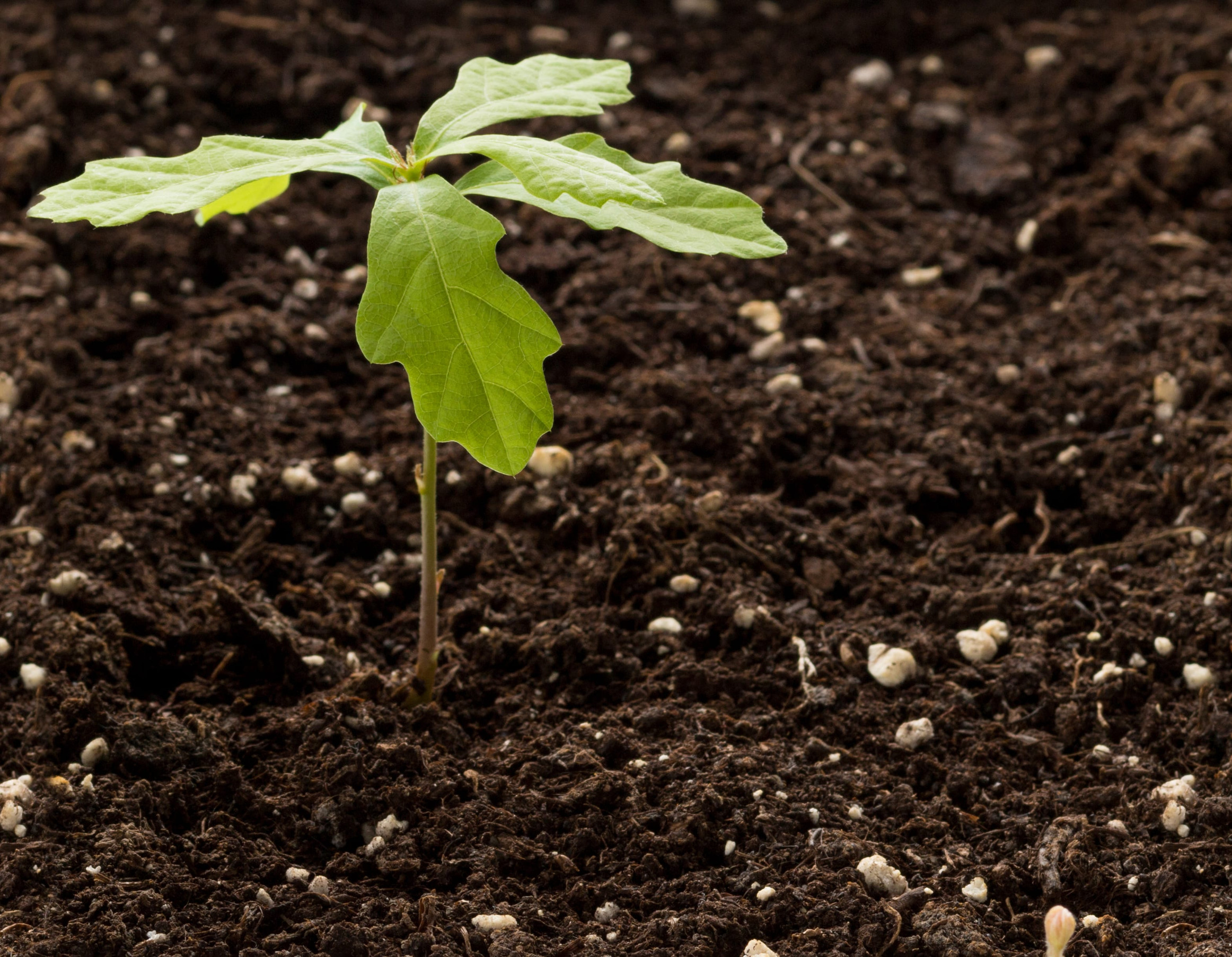
When an acorn germinates, the embryo inside begins developing into a young plant. The first major step is root development, which allows the seedling to absorb water and begin establishing itself in the soil. Shoots and leaves then develop according to the species and environmental conditions.
Oak species do not all follow precisely the same schedule. Some acorns begin germinating soon after they fall, while others require a period of cold conditions before germination can proceed. The U.S. Forest Service’s account of white oak regeneration describes white oak acorns as capable of germinating soon after falling under natural conditions. Other oak groups can have different dormancy patterns.
The acorn’s condition matters, too. A seed that has dried out excessively, been eaten by an animal, or suffered insect damage may not produce a healthy seedling. Even a viable seed can fail if the surrounding environment is unsuitable.
From Tiny Seed to Towering Tree
An oak tree’s life begins long before it develops a thick trunk or a broad crown. After germination, a young seedling must establish roots, produce leaves, and gather enough energy to continue growing. It must also withstand changing weather, competition from nearby plants, and animal damage.
At first, the seed provides stored resources that help the young plant begin developing. Once leaves are established, the seedling can capture sunlight and produce much of the energy it needs to keep growing. Roots supply water and nutrients, while the growing shoot competes for light and space.
The conditions required for successful development vary among oak species. The U.S. Forest Service’s Silvics of North America reference on oak regeneration, for example, explains that successful black oak regeneration depends not only on seed availability but also on seedling establishment and the conditions that allow young trees to survive and compete with other vegetation.
This is why a single forgotten acorn isn’t a guaranteed future tree. Germination is only the beginning. The seedling must survive long enough to become established, and furt