

The post What Your Handwriting Can Reveal (and What It Can’t), According to Research first appeared on Crafting Your Home.
John Hancock signed the Declaration of Independence in letters so large that his name became American shorthand for a signature. Two and a half centuries later, people still read character into every loop, slant and crossbar, and a small industry sells the readings. Researchers have tested those claims for decades. Some collapsed under controlled conditions while others held up better than skeptics expected.
Graphology was a French invention that employers adopted before anyone tested it

A French cleric named Jean-Hippolyte Michon coined the term graphologie in the early 1870s, arguing that handwriting exposed temperament. German philosopher Ludwig Klages later built a more rigid system around pressure, spacing and letter form.
Graphology was already being used to screen job candidates in Israel and parts of Europe when Hebrew University psychologist Gershon Ben-Shakhar and colleagues put it to the test in the 1980s.
Strip out the words and graphologists lose their edge
In a 1986 study in the Journal of Applied Psychology, Ben-Shakhar’s team asked graphologists to predict professional success from handwriting samples. Their forecasts were no better than those of untrained judges.
Accuracy evaporated when writers copied neutral text instead of describing their own lives. Content carried the signal. A letter about ambition reads as ambitious in any slant.
A 4.26 out of 5 rating explains why weak readings feel right
Psychologist Bertram Forer handed 39 students a personality sketch in 1948 and told each it was tailored to them. Every student received identical text, assembled from a newsstand astrology book. The average accuracy rating was 4.26 out of 5.
Psychologists later labeled the pattern the Barnum effect. A handwriting reading that says a client craves approval while guarding their independence will land with nearly everyone, and that comfort is what keeps the practice profitable.
Slant and loops do not track personality scores
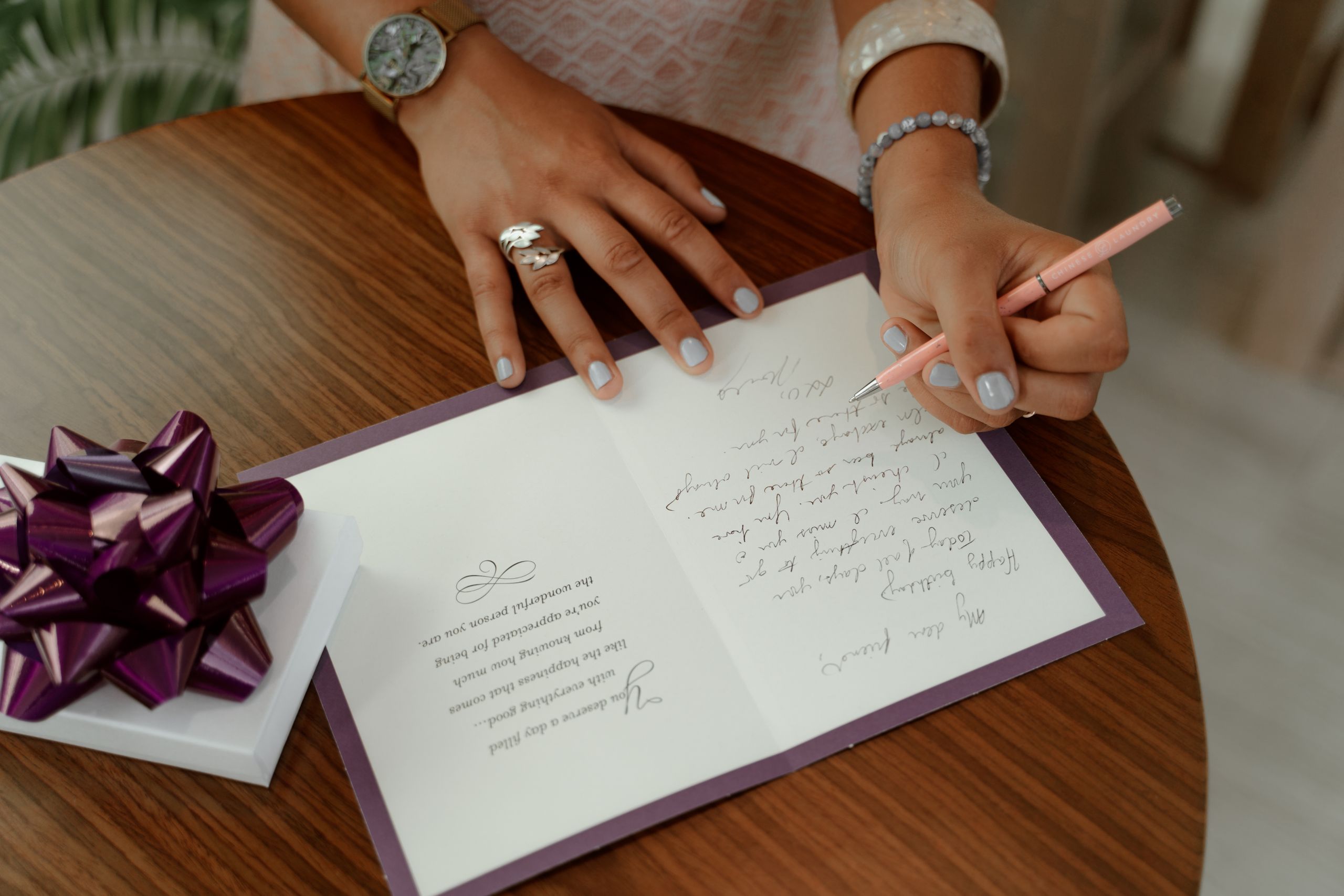
Robert Tett and David Palmer compared handwriting features against self-reported personality measures in a 1997 paper in Personality and Individual Differences. They found little meaningful connection.
Anyone who has watched a hiring manager squint at a candidate’s capital letters should find that result uncomfortable. Judging a livelihood by pen pressure is a gamble with someone else’s career, and the data never supported the odds.
Identity is the one thing handwriting reliably gives up
Roughly 98%. That was the accuracy a University at Buffalo team reported for software deciding whether two handwriting samples came from the same person.
Sargur Srihari led the 2002 study, published in the Journal of Forensic Sciences. It drew on 1,500 writers chosen to mirror the US population by gender, age and ethnicity. Hands differ enough to pick out a writer, even if they say nothing about who that writer is inside.
Courts lean on handwriting experts harder than the science has been measured
American courts routinely admit testimony from forensic document examiners. The National Research Council of the National Academies said in its 2009 forensic science report that the scientific basis for handwriting comparison needed strengthening, while noting that recent studies suggest a scientific basis, at least absent intentional obfuscation or forgery.
Examiners point to training and casework as the foundation of their judgment. The Academy’s concern was how rarely anyone had measured their error rates.
Legibility reflects practice, and practice can be taught
Steve Graham, Karen Harris and Barbara Fink studied first graders who struggled with handwriting for a 2000 paper in the Journal of Educational Psychology. Children who received explicit handwriting instruction went on to write longer and better compositions.
Fluency and neatness respond to teaching. A messy hand says more about hours logged with a pencil than about temperament.
Related Post: 4 Rare Traits of People Who Still Write Everything Down by Hand
The cursive comeback has a counting problem
Fox Local reported on September 17, 2026 that more than half of US states now require some form of cursive instruction. Common Core standards left cursive out, and the number of states mandating it fell sharply afterward. Tracking site mycursive.com counted 14 states in 2016 and 20 by 2019.
Current tallies disagree. The American Handwriting Analysis Foundation says at least 31 states require it, while Fox could independently verify 27. When the counting group has handwriting analysis in its name, round numbers deserve a second look.
A handwritten place card tells you who cared enough to write it
Picture a recipe card spotted with butter or a place card set above a dinner plate. The ink says someone sat down and made the effort, and the hand identifies that person to anyone who knows it.
Whether that hand belongs to an anxious or a generous soul is the part that has never stood up to testing.
Other Posts You May Like
- Why a Recipe Card in a Loved One’s Handwriting Is Worth Preserving and How to Do It
- Super-Recognizers Never Forget a Face: What Scientists Have Learned About Them
If you like what you just read, then subscribe to our newsletter and follow us on social media.


