


The post How the Oldest Living Trees Have Survived for Thousands of Years first appeared on Crafting Your Home.
Some trees have lived longer than most human civilizations. They have survived droughts, freezing temperatures, wildfires, disease, erosion, and dramatic changes in their surrounding environment. Yet the oldest trees don’t survive simply because they are larger or stronger than other trees. Their advantage is more subtle: they are exceptionally good at slowing down, protecting what remains alive, and recovering from damage.
The Great Basin bristlecone pine (Pinus longaeva) provides one of the clearest examples. The U.S. National Park Service identifies bristlecone pines as among the oldest non-clonal organisms on Earth, with individual trees exceeding 5,000 years in age. A bristlecone found in California in 2012 was dated to about 5,065 years old.
So what lets a tree live for thousands of years? The answer is a combination of slow growth, environmental adaptation, biological defenses, and an unusual ability to survive even when large portions of the tree die.
Meet the Trees That Have Been Alive for Millennia
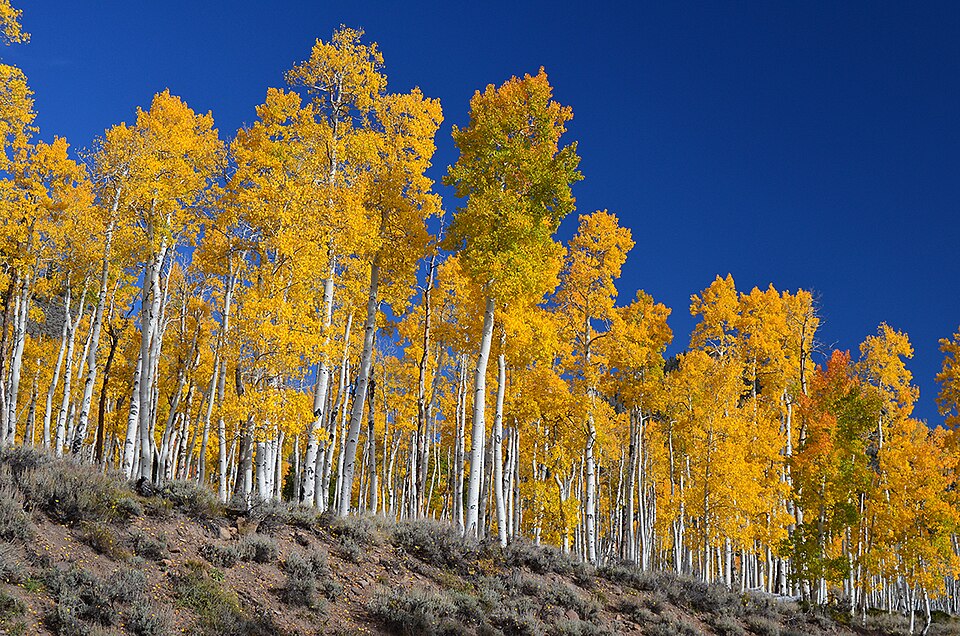
When people talk about the world’s oldest trees, they often overlook an important distinction: an individual tree is not necessarily the same thing as an ancient clonal organism. A clonal organism can reproduce genetically identical stems from an existing root system. The famous Pando aspen colony in Utah, for example, is estimated by the U.S. National Park Service to be around 16,000 years old when you consider its interconnected root system. That does not mean a single above-ground trunk has been growing continuously for 16,000 years.
Bristlecone pines are different. Their extraordinary ages belong to individual trees. The species grows in isolated, high-elevation environments where conditions are cold, dry, windy, and often unfavorable for competing vegetation. The National Park Service describes these harsh conditions as an important part of the species’ longevity. Another long-lived species is the giant sequoia (Sequoiadendron giganteum). Research published in Forest Ecology and Management describes giant sequoias as exceptionally long-lived trees that can survive for more than 3,000 years.
These examples show that extreme longevity doesn’t come from a single biological trick. Different species can arrive at extraordinary lifespans through different combinations of traits and environmental conditions.
Their Secret Isn’t Growing Fast—It’s Surviving Slowly
One of the most interesting characteristics of ancient trees is that longevity often goes hand in hand with conservative growth. A global analysis examined tree-ring data from more than 200,000 tree records across thousands of sites. The researchers found a broad trade-off between tree growth and longevity, with the oldest trees generally occurring in dry temperate and boreal environments. Their analysis also found that tropical tree longevity declined as average temperatures increased beyond a certain range.
More recent research published in Communications Earth & Environment analyzed 219,000 tree-ring measurements from 4,880 sites covering 246 species. The study found that gymnosperms, the group containing conifers such as bristlecone pines, had greater average longevity than angiosperms in the dataset. It also associated greater longevity with arid conditions, slow growth, drought resilience, high elevations, nutrient-poor soils, and relatively low human impact.
This does not mean that growing slowly automatically makes a tree immortal. Rather, slow growth can be part of a broader survival strategy. A tree that invests resources conservatively may be better equipped to withstand long periods of environmental stress.
Bristlecone pines provide a striking example. The National Park Service notes that these trees can experience years when growth is extremely limited because of harsh high-altitude conditions. Their ability to persist through such periods is central to their extraordinary lifespan.
Related: The 6 Worst Trees You Could Possibly Plant on Your Property
Ancient Trees Know How to Lose Parts of Themselves
The most counterintuitive feature of ancient trees is that survival does not necessarily require keeping the entire organism alive. Bristlecone pines can lose individual sections as roots become exposed or die. Because their roots and above-ground sections can function in partially separated sectors, the death of one section does not necessarily kill the entire tree. The National Park Service calls this arrangement “sectored architecture.”
Imagine a computer system designed with isolated modules. If one component fails, the rest of the system can keep operating rather than shutting down completely. Ancient bristlecones have something that resembles this principle at the plant level: damage can remain localized while other living sections keep functioning.
This is one reason an ancient bristlecone may look almost dead while still being alive. A twisted trunk can contain large areas of dead wood, while narrow strips of living tissue continue to support branches and foliage. The apparent deterioration is therefore not necessarily evidence that the tree has failed. In some cases, it is part of how the tree survives.
Their Bark Is a Living Shield
Trees cannot run away from threats. They remain rooted in one location while facing storms, insects, microorganisms, drought, fire, and physical injury. Their defense system therefore centers on protection and isolation. Research on tree defense has established the concept of compartmentalization: when a tree is injured, it can create boundaries that limit the movement of decay and infection through living tissues. Researchers developed the concept through decades of study of tree anatomy, physiology, wounds, and pathogens, and plant pathologist Alex Shigo formally described it in a peer-reviewed article in Annual Review of Phytopathology.
An ancient tree will almost inevitably experience damage during its lifetime. Long-term survival therefore depends less on avoiding every injury and more on preventing each injury from becoming fatal. Bristlecone pines have additional physical advantages. The National Park Service notes that their dense wood and resinous tissues help them resist decay, insects, and harsh conditions.
How Scientists Count Thousands of Years
Determining the age of an ancient tree is more complicated than simply counting visible rings. Tree-ring science, known as dendrochronology, compares patterns of narrow and wide rings between trees and establishes sequences that can be matched against known calendar years. These records can extend far beyond the lifespan of a single living tree.
The relationship between dendrochronology and radiocarbon dating is particularly important. A peer-reviewed review in Radiocarbon explains that accurately dated tree rings have played a major role in calibrating the radiocarbon timescale. At the same time, radiocarbon measurements can also help place tree-ring sequences in time.
Newer techniques can add another layer of verification. A 2023 study in Dendrochronologia demonstrated how a known radiocarbon spike associated with a solar event in 774/775 CE could help confirm tree-ring dating when traditional cross-dating is difficult.
The story of Prometheus, a Great Basin bristlecone pine studied in Nevada, illustrates these challenges. After researchers cut the tree in 1964, they counted 4,862 growth rings. They estimated an age of roughly 4,900 years because the harsh environment meant a ring did not necessarily form every calendar year.
That detail matters: a ring count is powerful evidence, but researchers must understand the species’ biology and environment before translating rings into calendar age.
Related: What an Arborist Does and the Warning Signs Your Trees Need Professional Help
Key Takeaways

The oldest trees don’t survive because of one extraordinary biological feature. Their longevity is better understood as a system.
They grow conservatively. They tolerate harsh environments. They protect living tissue from infection and decay. They can isolate damaged sections. They continue producing new tissue while older portions die. And, in some species, their ecological niche reduces competition and other pressures.
That combination allows an individual organism to persist for thousands of years without remaining physically unchanged.
The most useful way to think about an ancient tree, then, is not as a living monument that escaped aging. It is a biological system that has spent thousands of years managing damage, conserving resources, and repeatedly rebuilding itself.
Other Posts You Might Like
- Why Leaves Change Color: The Science Behind Fall’s Show
- 17 Rapid Growth Shrubs to Transform Your Yard into a Lush, Private Oasis
- 7 Fruit Trees That Thrive on Neglect for Easy, Delicious Harvests Without the Hassle
If you like what you just read, then subscribe to our newsletter and follow us on social media.


