


This article was originally published on Crafting Your Home. A human contributor also wrote and edited the post.
A hearing filled with questions but almost no answers
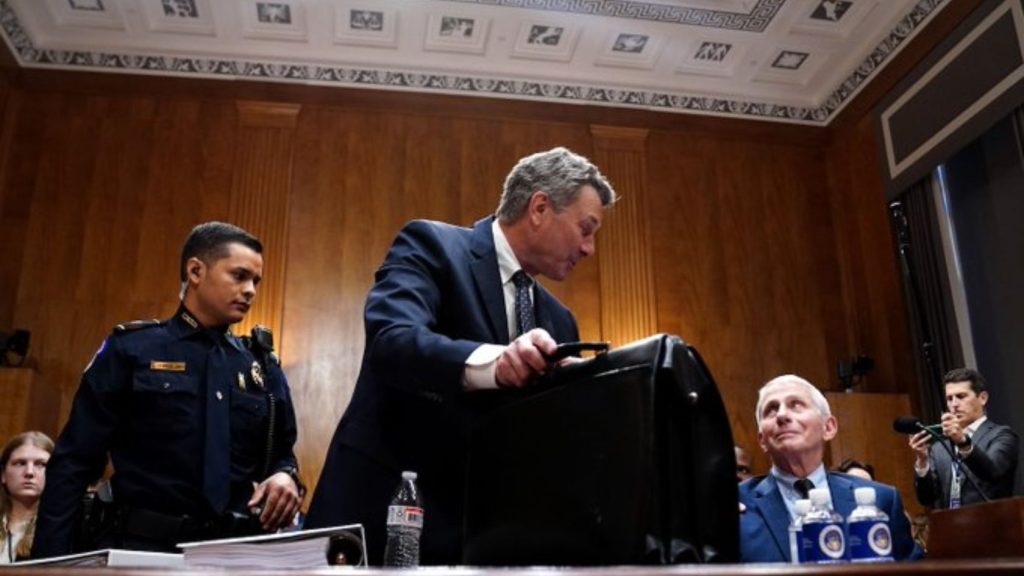
The Senate Homeland Security and Governmental Affairs Committee convened the hearing on July 29, with Chairman Rand Paul leading the questioning. The committee’s official hearing notice identified Fauci as the sole witness and placed his testimony at the center of its continuing investigation into the federal response to COVID-19.
Fauci entered the room facing lawmakers who have spent years examining whether federal agencies supported risky coronavirus research and whether government officials gave Congress and the public a complete account of their actions.
Yet he made clear from the beginning that he would not participate in the kind of detailed exchange Republicans wanted.
In his opening statement, Fauci said invoking the Fifth Amendment was painful because he respected Congress and had testified or briefed lawmakers hundreds of times during his decades in government.
He accused Paul of pursuing a personal campaign to place him “behind bars” and said the hearing appeared intended to provoke a statement that could later be used against him.
Paul focused heavily on more than 1,100 pages of Fauci’s personal journal entries from December 2019 through December 2022.
The documents reportedly contain Fauci’s observations about White House meetings, pandemic policy discussions, media interviews and the debate over how the coronavirus first emerged. Republicans argued that some passages conflicted with his earlier public statements, while Fauci declined to explain the entries.
The confrontation moved beyond Fauci himself.
The tension inside the hearing room intensified when Fauci’s attorney, David Schertler, attempted to respond after Paul’s questioning. Paul told him he was not recognized as a witness and had previously been instructed not to intervene from the committee table.
After the dispute continued, Paul called for security, and Capitol Police escorted Schertler from the room. The dramatic removal turned an already combative hearing into a visible clash over who controlled the proceedings and whether Fauci had been given a fair opportunity to rely on counsel.
Other Republican senators continued questioning Fauci after his attorney’s removal. Wisconsin Sen. Ron Johnson pressed him about a journal entry involving a March 2020 plan for reopening communities. Oklahoma Sen. James Lankford questioned him about the possibility that the coronavirus emerged from a laboratory.
Fauci continued to invoke his constitutional rights. Missouri Sen. Josh Hawley attempted to demonstrate the breadth of Fauci’s refusal by asking simple questions about the day of the week, his tie and the hearing-room carpet. Fauci gave the same response each time. The Associated Press noted that invoking the Fifth Amendment does not legally amount to an admission of guilt, despite political claims suggesting otherwise.
Biden’s pardon now sits at the center of the dispute.
The most important legal question may not concern any single journal entry. Instead, the looming battle revolves around the preemptive pardon former President Joe Biden issued to Fauci during his final hours in office.
Biden said the action was intended to protect Fauci and other public servants from what he described as baseless, politically motivated prosecutions.
He stressed that the pardon should not be interpreted as evidence that Fauci committed wrongdoing or as an admission of guilt.
Paul argues that the pardon weakens Fauci’s ability to invoke the Fifth Amendment because it protects him from prosecution for offenses covered by the pardon. He said he wants the courts to determine whether Fauci can continue refusing to answer questions under those circumstances.
The constitutional issue is more complicated than either side’s political messaging suggests. Supreme Court doctrine has indicated that an accepted pardon can remove a Fifth Amendment objection concerning the pardoned offense because the witness no longer faces prosecution for that conduct. However, the precise language of the pardon, the questions being asked, and possible exposure outside its scope could become critical in any court challenge.
That means a contempt vote would not automatically resolve whether Fauci’s refusal was lawful. It would instead move the dispute into another stage, where lawyers and potentially judges would examine the boundaries of the pardon and the constitutional privilege against self-incrimination.
Democrats call the hearing a political trap.
She described the proceeding as an attempt to entrap someone who had spent decades working in public health.
Michigan Sen. Gary Peters, the committee’s ranking Democrat, warned that targeting Fauci could discourage scientists and public servants from accepting demanding government roles. He said responsibility for the pandemic response extended across hundreds of officials serving during both the Trump and Biden administrations.
Connecticut Sen. Richard Blumenthal went further, characterizing the hearing as part of a wider campaign against science and public-health institutions. He also pointed to the threats Fauci has received since becoming one of the most recognizable figures in America’s pandemic response.
Those arguments did little to change the Republican position. For Paul and his allies, Fauci’s status as a prominent scientist does not exempt him from scrutiny. They maintain that the enormous human, economic, and social costs of the pandemic justify an aggressive examination of what officials knew, what they funded, and what they told the country.
Democrats on the committee defended Fauci’s right to remain silent and portrayed the hearing as an attempt to transform one former official into the symbol of every pandemic failure.
New Hampshire Sen. Maggie Hassan argued that Congress should be addressing current public-health concerns, including measles outbreaks and the affordability of medical care.
A contempt vote would be a beginning, not an ending.
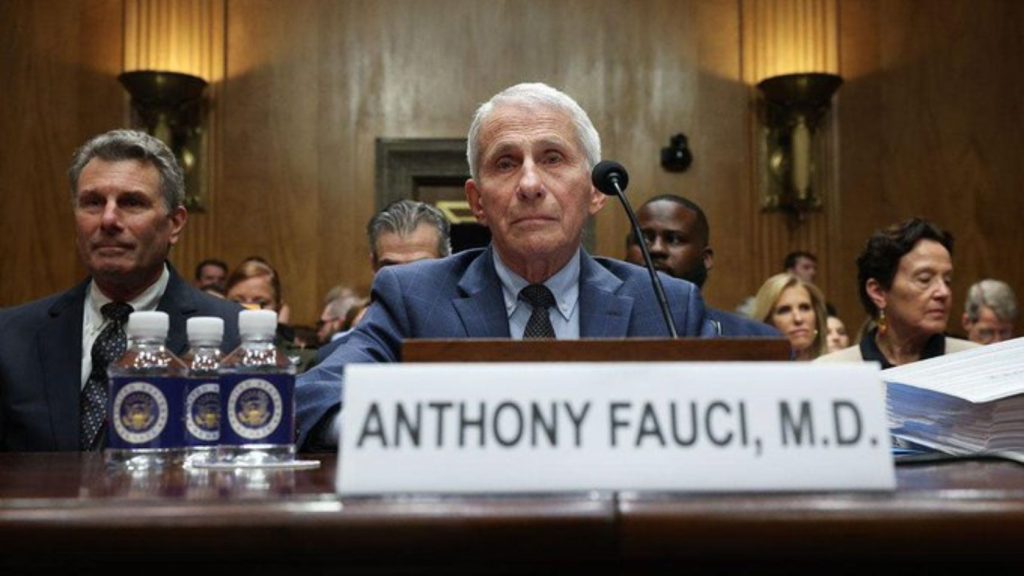
Paul announced that the committee would vote the following week on a resolution to hold Fauci in contempt of Congress. Such a vote would represent a serious escalation, but it would not itself constitute a criminal conviction or prove that Fauci committed misconduct.
Federal law allows Congress to pursue contempt proceedings when a properly summoned witness willfully refuses to answer a pertinent question. A contempt report can ultimately be certified and referred to the appropriate U.S. attorney for presentation to a grand jury. Whether that process succeeds would depend partly on whether Fauci’s Fifth Amendment claim is judged valid.
The confrontation therefore appears headed toward two battles at once. One concerns the unresolved political argument over the origins of COVID-19 and the federal government’s pandemic record. The other concerns a narrower but significant constitutional question: whether a president can pardon someone to protect him from prosecution, only for Congress to argue that the same protection requires him to testify.
For Americans still divided over lockdowns, masking, vaccine policies and the lab-leak debate, the hearing offered little new clarity about what happened during the pandemic. Instead, it revealed how deeply the crisis continues to shape Washington. Five years after the emergency transformed daily life, the struggle over accountability has moved from scientific briefings and public-health rules into pardons, constitutional claims and the possibility of contempt proceedings.
If you like what you just read, then subscribe to our newsletter and follow us on social media.


