
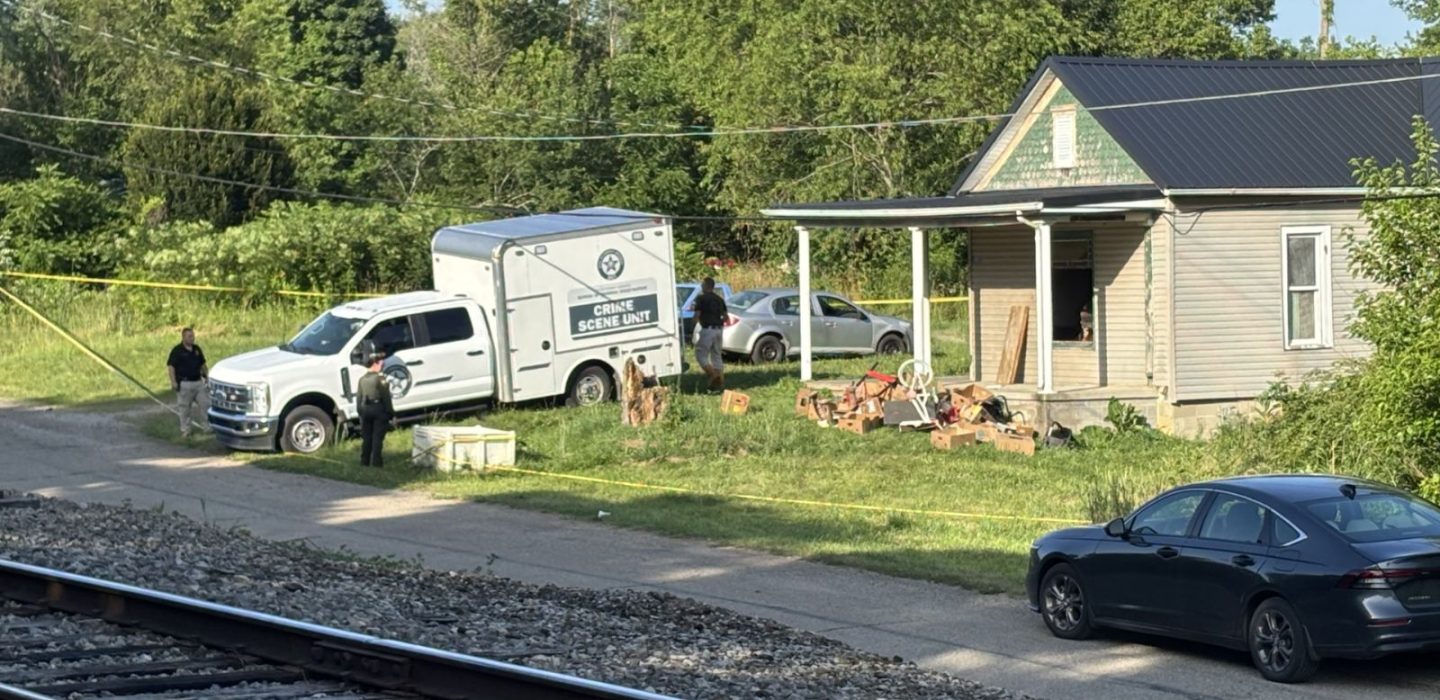

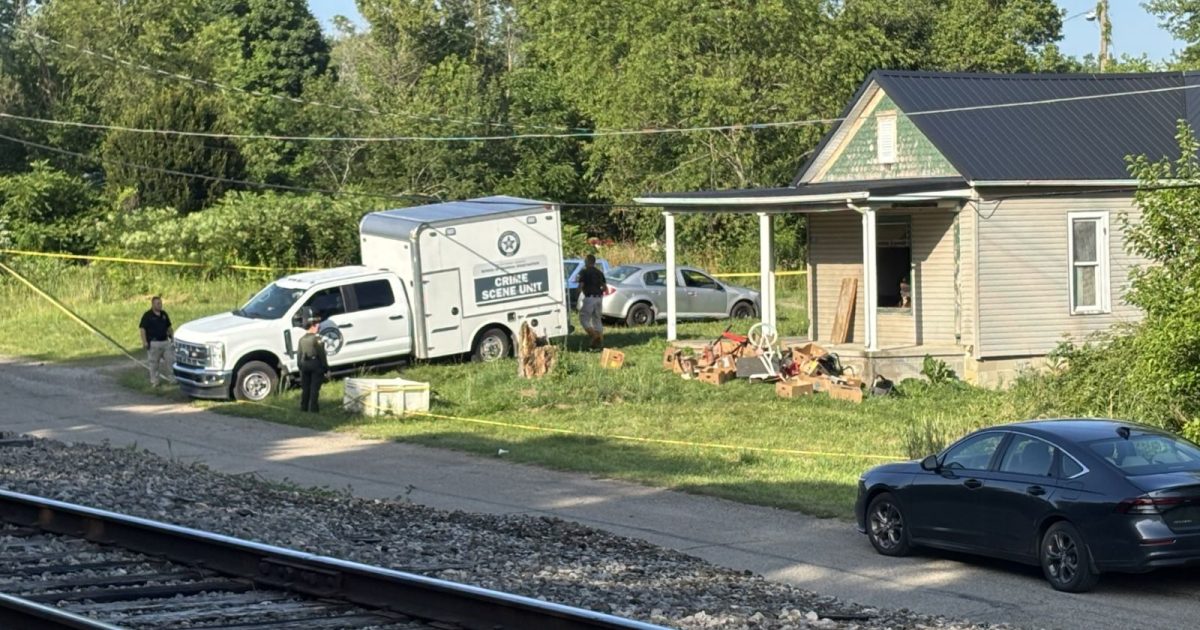
For years, authorities say, 16 children lived in a house that looked ordinary enough from the outside to avoid attention. Neighbors passed by. Trains rumbled nearby. Life moved through the small village of Hamden, Ohio, with the quiet rhythm of a rural community where people often believe they know what is happening around them. But behind that silence, investigators say, a nightmare was unfolding.
Ohio authorities have rescued 16 children from a dilapidated home in Vinton County after officials said they were confined for much of the past four years to a single room in deeply unsafe and unsanitary conditions. The children, ranging in age from about 18 months to 18 years old, were described by officials as being from the same family and living amid severe neglect, including human waste and dangerous bacteria. Some were reportedly unable to speak. One 18-year-old with developmental disabilities could not write her own name, investigators said.
The Deplorable Ohio Home

The discovery has stunned Ohio not only because of the number of children involved, but because of how long officials believe they may have remained unseen. According to authorities, the children were not enrolled in school, and investigators believe the adults had avoided creating medical and government records that might have alerted officials to the children’s existence.
The case began not as a child welfare raid, but as an unrelated investigation. Law enforcement officers were carrying out a search warrant in Hamden when they discovered the children inside the home. Ohio Attorney General Andy Wilson said authorities did not expect to find 16 children there, and officials later described the scene as one of the worst they had encountered.
The details are difficult to absorb. Vinton County Sheriff Ryan Cain said the children appeared to have spent most of their time in a room measuring roughly 12 feet by 12 feet. Officials said no cages were found, but the absence of cages does not soften the horror of what was allegedly happening inside that space. A room that size is barely enough for a small bedroom. Authorities say it became the center of life for 16 children.
Seven of the children were transported to hospitals in Columbus, while two were flown by helicopter for emergency trauma care. One child was reported to be in critical condition on Tuesday, according to officials. The children were later placed in the temporary custody of the Ohio Department of Job and Family Services as the state moved to protect them and determine what comes next.
Four adults have been charged in the case: Gary Siders Jr., Gary Siders Sr., Christina Siders, and Elizabeth Siders. Prosecutors said each faces second-degree felony child endangerment charges tied to serious physical harm. They appeared in court Wednesday, where not guilty pleas were entered on their behalf, and bond was set at $300,000 each.
Officials have been careful to clarify what this case is and what it is not. Vinton County Prosecuting Attorney William Archer said the matter was not being treated as human trafficking, but as an “intra-family situation.” That distinction matters. It means investigators believe the alleged abuse and neglect were rooted inside the family structure itself, making the case even more disturbing for many observers.
The alleged isolation is one of the most haunting parts of the story. Hamden is a village of fewer than 1,000 people, located about 60 miles southeast of Columbus, according to AP. In communities that small, it can feel as if secrets have nowhere to hide. Yet neighbors told reporters they had not seen children at the home. One neighbor said he saw no children at all after the family moved nearby.
That raises a painful question: how can 16 children disappear in plain sight? The answer may lie in a frightening combination of mobility, isolation, and gaps in oversight. Investigators said members of the family had moved around southern Ohio over the past two decades. If children are not in school, not regularly seen by doctors, and not appearing in public, there may be few chances for teachers, nurses, neighbors or caseworkers to raise alarms.
This is what makes the Ohio case more than a shocking crime story. It is also a story about the fragile systems society depends on to notice children in danger. Schools do more than teach. Pediatric appointments do more than check growth charts. Neighbors do more than wave from porches. Each one can become a line of defense when a child is being harmed.
But when a family allegedly avoids all of those contact points, children can become nearly invisible.
The horror in Hamden also exposes a hard truth about rural poverty and isolation. Vinton County is one of Ohio’s poorest counties, and small rural areas often face limited access to services, stretched child welfare resources, transportation challenges and fewer institutional touchpoints. None of that excuses what authorities allege happened inside the home. But it helps explain why neglect can sometimes remain hidden longer in places where help is physically and socially farther away.
The public reaction has been intense because the details feel almost impossible to reconcile with modern American life. Sixteen children. One room. Years of alleged confinement. No school records. No ordinary childhood routines. No visible presence in the neighborhood.
For many readers, the case will bring back memories of other extreme family abuse cases, including the Turpin case in California, where 13 children were found after years of abuse and confinement. AP noted that the Ohio discovery is reminiscent of those past cases, especially because authorities believe the children were kept isolated from the outside world.
Still, this case must now move through the courts. The charges are allegations, and the accused adults are entitled to due process. Prosecutors will have to prove what happened, how long it happened, who knew, and who was responsible for the children’s condition. Investigators will also have to determine whether warning signs were missed earlier and whether any agency had prior contact with the family.
For the rescued children, the legal process is only one part of what lies ahead. The deeper challenge will be recovery. Children who have allegedly lived for years in confinement and neglect may need medical care, developmental support, speech services, trauma therapy, educational assessment, and long-term stability. Rescue is the first door out. Healing is the long road after it.
That road will not be simple. Some of these children may have to learn basic skills that other children absorb naturally through school, play, and daily interaction. Some may need help understanding safety, trust, and routine. Some may carry wounds that are not visible in court documents or press conferences.
That is why the state’s response in the coming weeks and months will matter. Temporary custody protects the children immediately, but long-term care will require patience, funding, and expertise. Cases this severe do not end when the house is emptied or when suspects appear before a judge. They continue in hospitals, foster care systems, therapy rooms, classrooms, and courtrooms.
The most unsettling part of the Hamden case is not only what authorities say they found. It is how long the children may have been waiting to be found. In a quiet Ohio village, inside a deteriorating house, a childhood was allegedly reduced to one room. Now, after years hidden from the world, 16 children have finally been seen.


