Stories

NJ Transit’s SHOCKING 3% Fare Surge Sparks a Deeper Crisis in Commuter Reality.

Prince Iheasi
By Prince Iheasi 7 min read

NJ Transit’s latest 3% fare increase, effective July 1, 2026, arrives with the calm precision of a policy already set in motion years earlier, yet its impact lands with far less calm for the people who depend on it every day.

Trains, buses, light rail, and Access Link services across New Jersey are now more expensive again, continuing a cycle that began after the 2024 decision to embed automatic annual fare increases into the system’s long-term financial structure.

What makes this moment different is not simply the price adjustment itself, but the growing sense that fare changes are no longer events to debate, but expectations to absorb. Riders are not reacting to a surprise increase. They are living within a predictable escalation model in which costs rise steadily while service reliability continues to fluctuate unpredictably.

The Quiet Power of Automatic Fare Escalation

Two business professionals with ID badges use escalator in a contemporary office setting.
Image Credit: Liliana Drew via Pexels

The 3% increase is not a standalone policy decision made in response to current conditions. It is part of an automatic mechanism approved in 2024 that schedules yearly increases as a structural feature of NJ Transit’s funding model. That means fare growth is no longer reactive to crises or public hearings. It is programmed into the system’s financial architecture.

This shifts the entire meaning of the fare hike. Instead of asking why fares rose this year, the more important question becomes what this structure guarantees over the next decade. A 3% annual increase may appear modest in isolation, but when compounded over time, it exerts steady upward pressure on commuting costs that quietly outpace wage growth for many riders.

What the New Fare Reality Looks Like on the Ground

The updated fare structure affects every category of travel, from local bus rides to long rail commutes into New York. While the official numbers may vary by zone and route, the pattern is consistent. Every trip now costs more than it did just days earlier, and every monthly commuter pass carries the weight of that adjustment multiplied across working weeks.

A rider taking five round trips per week is no longer calculating a single fare. They are calculating a lifestyle expense that repeats hundreds of times per year. When layered across housing costs, tolls, parking fees, and inflation in daily goods, the fare increase becomes part of a broader cost-of-living pressure that is already reshaping commuter behavior across the region.

The Compounding Effect That Rarely Gets Talked About

The most overlooked detail in NJ Transit’s pricing structure is not the percentage increase itself, but how it accumulates quietly over time. A 3% annual rise does not reset each year. It compounds. That means today’s fare becomes the baseline for next year’s increase, and the year after that, creating a slow but persistent upward curve.

Over a decade, this pattern transforms what looks like a minor annual adjustment into a meaningful long-term financial shift. For frequent riders, especially those on fixed incomes or wage-pressured jobs, the cumulative effect is far more significant than the headline number suggests.

Reliability Pressure Sitting Beneath the Pricing Debate

The emotional center of this fare increase is not the cost alone, but the context in which it arrives. Riders have been navigating a transportation system that continues to face delays, service disruptions, equipment shortages, and occasional cancellations, all of which can disrupt daily routines without warning.

On high-traffic days and during periods of operational stress, delays can span multiple lines, leaving commuters with little flexibility to recover lost time. The frustration is not simply about inconvenience. It is about predictability. When commuters cannot trust arrival times, every additional dollar spent feels harder to justify.

This creates a structural tension between pricing stability and service instability. Fares are now predictable. Service is not.

The Financial Engine Behind the System

NJ Transit’s funding model depends heavily on a combination of fare revenue, state support, and dedicated funding sources, with fares accounting for roughly a third of operating revenue in recent budget cycles. That dependence creates a constant balancing act between keeping the system solvent and keeping it affordable.

In practical terms, this means fare increases are not optional adjustments. They are embedded tools used to close recurring budget gaps shaped by labor costs, infrastructure maintenance, energy prices, and contracted service expenses. The system operates within a financial framework where pressure rarely disappears; it only shifts among funding sources.

The World Cup Factor and Uneven Service Expectations

The upcoming FIFA World Cup adds another layer of complexity to NJ Transit’s operational environment. With MetLife Stadium hosting major matches, the agency has already outlined enhanced service plans to move large crowds efficiently during event windows, including frequent pre-match trains and extended post-match service.

This type of targeted operational scaling highlights an important contrast. When demand is predictable and concentrated, NJ Transit can design highly structured service flows. But everyday commuter demand is continuous, dispersed, and less flexible, making it more difficult to maintain consistency.

The comparison raises an uncomfortable but persistent question among riders: why does the system appear most responsive when serving global events, while daily commuting still struggles with reliability gaps?

A System Caught Between Two Realities

NJ Transit exists in a dual state. On one hand, it is a massive regional transportation network that must manage complex infrastructure, aging equipment, workforce constraints, and fluctuating demand across one of the most densely populated corridors in the United States. On the other hand, it is a daily utility judged not by complexity, but by arrival times.

This tension defines the commuter experience more than any single fare increase ever could. The system is financially engineered for sustainability, yet operationally judged on immediacy. That mismatch is where much of the frustration originates.

How Commuter Behavior Begins to Shift Under Pressure
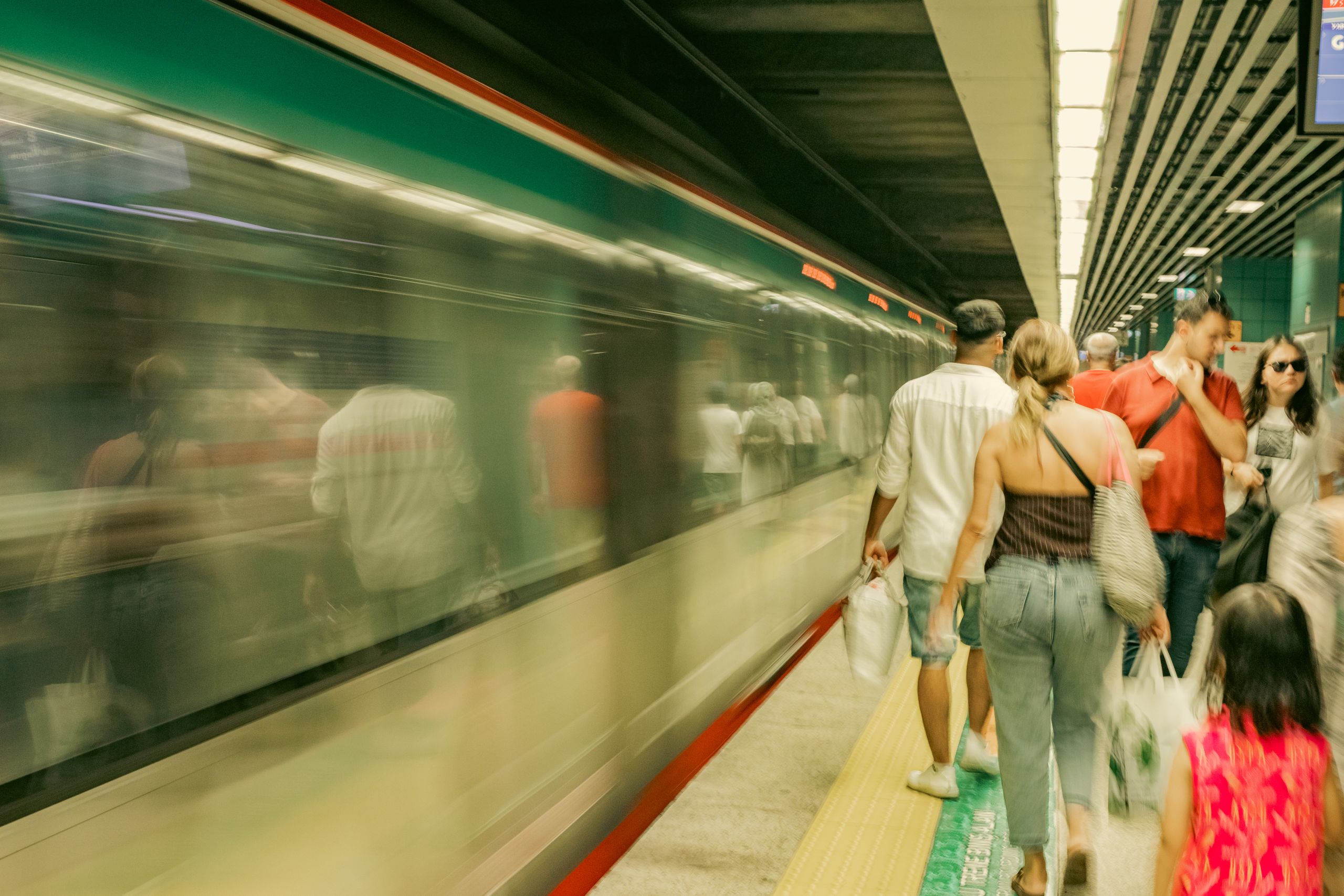
Commuters navigate a bustling subway platform as a train speeds by in İstanbul, Türkiye.
Image Credit: Ercan uğur Yaşar via Pexels

As fares rise and reliability concerns persist, riders do not simply complain. They adapt. Some adjust travel times, leaving earlier to account for delays. Others shift toward hybrid commuting patterns, combining remote work with selective travel days.

In some cases, riders explore alternative transportation entirely, including carpooling or rideshare services, even when they are more expensive per trip.

These adjustments are subtle at first, but over time they reshape demand patterns. A transportation system not only influences movement. It influences decisions about where people live, work, and how they structure their time.

The Structural Loop That Defines NJ Transit’s Future

The deeper challenge facing NJ Transit is not a single fare increase or a single service disruption. It is the interaction between funding pressure and operational performance. Rising costs lead to fare increases. Fare increases affect rider expectations and usage. Service issues affect public trust. Reduced trust affects long-term ridership growth, which in turn creates funding pressure.

What This Moment Really Represents

The 2026 NJ Transit fare increase is not just another adjustment in a long line of transportation updates. It is a reflection of a system trying to stabilize its financial foundation while operating in an environment where commuter expectations continue to rise faster than infrastructure improvements can keep pace.

For riders, the central issue is no longer whether fares will increase. That part is already settled. The real question now is whether the service experience will ever begin to match the price trajectory that has become part of daily life across New Jersey’s transit network.

In that gap between cost and reliability lies the real story of NJ Transit today.

Author
Prince Iheasi

Prince Iheasi is a professional writer and multidisciplinary creative whose work is driven by clarity, innovation, and practical problem-solving. With a background in Agricultural and Bioresources Engineering, he brings a unique analytical perspective to his writing, combining technical knowledge with the ability to communicate complex ideas clearly and engagingly. Whether crafting informative articles, compelling web content, persuasive copy, or insightful guides, Prince focuses on delivering value-driven content that informs, educates, and inspires.

He is dedicated to producing high-quality work that resonates with diverse audiences and meets the highest standards of professionalism. Drawing from his expertise in engineering, technology, artificial intelligence, cryptocurrency, web development, and digital media, Prince creates content that is both impactful and relevant. His work reflects curiosity, continuous learning, and a commitment to excellence as he steadily builds a career founded on authenticity, creativity, and meaningful communication.

Leave a Reply

Your email address will not be published. Required fields are marked *
