
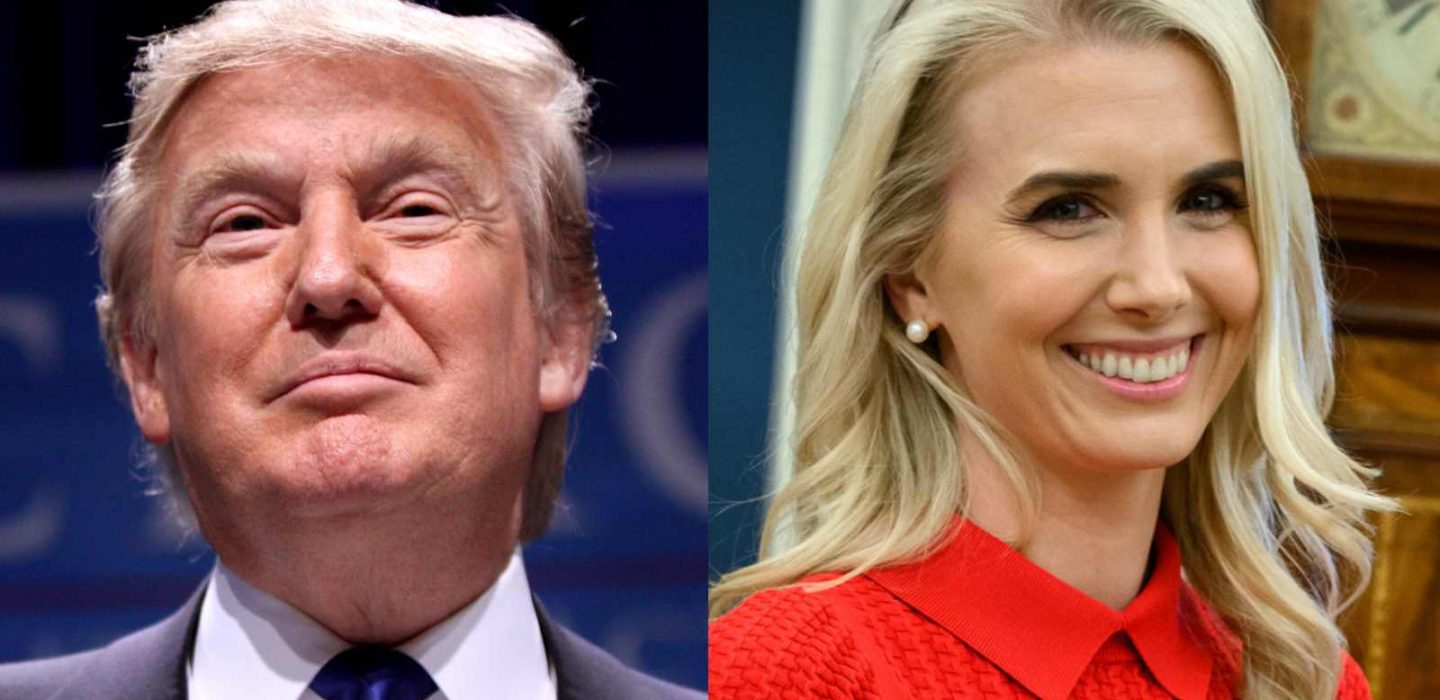


Donald Trump’s relationship with White House aide Natalie Harp is facing fresh scrutiny after claims from a new political book and public criticism from her estranged brother placed their unusually close working bond under a national spotlight.
Harp, who serves as a Special Assistant to the President and Executive Assistant to the President, has become one of the most discussed figures inside Trump’s second-term orbit. She is not a cabinet secretary, campaign chief, or television surrogate. Yet reports describe her as a constant presence around Trump, helping manage printed materials, social media updates, friendly coverage, and the stream of information that reaches him each day.
The controversy intensified after Preston Harp, Natalie Harp’s estranged brother, reportedly called her relationship with Trump “very unhealthy.” His remarks followed renewed attention from Regime Change: Inside the Imperial Presidency of Donald Trump, a book by New York Times reporters Maggie Haberman and Jonathan Swan that describes Harp’s access, loyalty, and alleged private notes to the president.
A White House Aide With Unusual Access

Natalie Harp’s role matters because access is power in any White House. The people closest to a president influence what he sees, what he ignores, and how quickly he reacts to the political world around him. In Trump’s case, that access carries even greater weight because his leadership style depends heavily on media feedback, personal loyalty, and direct communication with supporters.
Harp has often been described as Trump’s “human printer,” a nickname tied to reports that she prints articles, social media posts, and online commentary for him. The phrase may sound light, but it reveals something serious about how Trump’s information world operates. In a presidency shaped by television, social media, and instant reaction, the person who delivers information can become more than an assistant.
She reportedly helps bring the digital conversation into Trump’s hands in physical form. That means praise, criticism, online attacks, political updates, and friendly coverage may all pass through a tight personal channel before reaching the president. For critics, that raises questions about whether Trump is receiving a full picture or a highly curated one.
The “Very Unhealthy” Claim That Sparked Attention
Preston Harp’s comments gave the story a personal edge. Family criticism carries a different force than partisan attacks, especially when the subject is someone working near the most powerful office in the country. His description of the relationship as “very unhealthy” turned the story from a staff profile into a wider conversation about loyalty, boundaries, and power.
There is no verified evidence proving an improper romantic relationship between Trump and Harp. The serious issue is not gossip. The real concern is whether a president’s inner circle becomes too dependent on personal devotion rather than professional judgment.
That distinction matters. Presidents need loyal aides, but they also need people who can challenge them, interrupt bad instincts, and bring uncomfortable facts into the room. Loyalty can steady an administration. Excessive loyalty can narrow it.
Private Notes and Public Questions
The most attention-grabbing claims involve alleged handwritten notes from Harp to Trump. According to reporting tied to Regime Change, one note expressed intense devotion, a detail that reportedly alarmed some people inside Trump’s circle.
That kind of language becomes controversial because the White House is not an ordinary workplace. Staffers operate inside a public institution, not a private fan club. Personal admiration can exist in politics, but when it appears intense and constant, it raises questions about judgment and professional distance.
For Trump, who has long valued personal loyalty, Harp’s devotion may feel reassuring. For critics, it looks like another sign that his political world rewards emotional allegiance over institutional discipline. That tension sits at the center of the controversy.
Trump’s Longtime Loyalty Culture

Trump has built his political brand around loyalty. He praises those who defend him fiercely and attacks those he sees as disloyal. That pattern has shaped his campaigns, his legal battles, his staffing decisions, and his public feuds.
Harp’s rise fits neatly into that culture. She first became known in Trump’s orbit after publicly crediting his Right to Try policy with helping her during her cancer treatment. From there, she became part of his media and political operation, eventually moving into a close role in the White House.
Inside Trump world, loyalty is not quiet. It is performed, repeated, and tested. Harp’s defenders may view her as dedicated and dependable. Her critics see a troubling symbol of a presidency built around personal admiration.
Why the Information Flow Matters
The Harp controversy is most important when viewed through the lens of information control. Trump is a president who reacts quickly to what he reads and watches. His social media posts can pressure lawmakers, attack judges, influence supporters, dominate news cycles, and shift political debate within minutes.
That makes the delivery of information highly consequential. If Harp helps decide what Trump sees, prints, or reviews, then her role is not simply clerical. She becomes part of the machinery that shapes presidential attention.
The question is not whether Harp controls Trump. The question is whether the president’s closest information loop is balanced enough to include dissent, caution, and context. A leader surrounded only by praise can mistake applause for reality.
White House Defenders Push Back
Trump’s allies are likely to reject the controversy as another attempt to sensationalize his inner circle. From their perspective, Harp is being targeted because she is loyal, effective, and close to a president his critics dislike. They may argue that male aides with similar access would receive less personal scrutiny.
That argument deserves consideration. Coverage of women near powerful men can easily slide into insinuation, especially when words like “glamorous,” “obsessed,” or “devoted” dominate the framing. A serious discussion should focus less on Harp’s appearance or age and more on her function inside the administration.
Still, public scrutiny is fair when any aide holds unusual proximity to presidential power. The issue is not who Harp is personally. The issue is what her role reveals about how Trump’s White House operates.
A Larger Warning About Power
This story has lasted because it combines the defining themes of Trump’s political world: loyalty, access, media obsession, family division, and distrust of traditional institutions. It also arrives during a second term in which Trump appears surrounded by fewer internal skeptics than before.
That makes the Harp controversy more than a tabloid-style drama. It is a window into how power can become personal, how information can become filtered, and how devotion can become a political credential.
Every president needs trusted people nearby. But healthy leadership requires more than trust. It requires people willing to bring bad news, challenge flattering narratives, and protect the office from becoming an echo chamber.
The real question is not whether Natalie Harp is loyal to Donald Trump. The real question is whether loyalty has become the main language of power around him. When the person printing the president’s reality is also described as intensely devoted to him, Americans have reason to ask who else is in the room, what they are allowed to say, and whether anyone still has the authority to interrupt the applause.


