


The post 10 Times America Learned a Lesson the Hard Way, Then Repeated the Same Mistake first appeared on Crafting Your Home.
History has a strange way of leaving warning signs behind. After major disasters, financial crashes, public health emergencies, and safety failures, America often responds with investigations, reforms, and promises to do better. But keeping those lessons alive is harder than learning them in the first place.
Across different generations, the same patterns appear again and again: warnings are ignored, prevention is delayed, and urgency fades once the crisis is over. The events are not identical, but they reveal familiar challenges involving preparation, oversight, funding, and public attention. Here are 10 moments when America learned painful lessons, only to face similar problems again.
Financial bubbles that seemed impossible to burst

Few lessons have been repeated more than the danger of believing a booming market can rise forever.
In the late 1920s, Americans watched stock prices climb rapidly. Many investors borrowed money to buy stocks, convinced the good times would continue. When the market crashed in October 1929, the damage spread through banks, businesses, and households, helping trigger the Great Depression.
Decades later, a similar confidence appeared during the housing boom of the 2000s. Home prices soared, risky mortgages expanded, and financial institutions created complicated products that hid growing risks. When housing prices dropped, the effects reached far beyond homeowners and contributed to the Great Recession.
The details changed, but the warning remained the same: debt, overconfidence, and weak risk controls can turn a boom into a disaster.
Preparing for pandemics only after they arrive
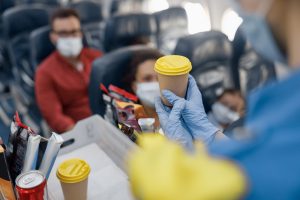
America has faced deadly outbreaks before, yet preparation often becomes a priority only when a crisis is already spreading.
The 1918 influenza pandemic killed an estimated 675,000 people in the United States. Communities relied on measures like isolation, quarantine, hygiene efforts, and restrictions on gatherings, but responses varied widely.
More than a century later, COVID-19 showed how difficult emergency coordination can be even with modern medicine and technology. The country had vaccines, advanced laboratories, and more scientific knowledge, but still faced challenges involving communication, data systems, shortages, and disagreements over authority.
The lesson was clear: preparation cannot begin once the emergency is already here.
Rebuilding in dangerous places after disasters
Floods are not new. Neither are the debates about what should happen afterward.
For decades, some flood-prone properties have repeatedly received federal assistance after damage. In 2004, the Government Accountability Office reported that repetitive-loss properties represented about 1% of insured properties under the National Flood Insurance Program but accounted for about 38% of claim costs.
The challenge remains today. Communities often rebuild because moving homes, changing land use, or strengthening buildings can be expensive and politically difficult. Yet repeated repairs can cost more over time than prevention.
The hardest lesson is often that rebuilding is easier to support after destruction than prevention is before it happens.
Ignoring infrastructure until something collapses
Infrastructure problems are rarely dramatic at first. A bridge ages. A design issue goes unnoticed. Maintenance gets delayed.
Then something fails.
In 1981, the Hyatt Regency walkway collapse in Kansas City killed 113 people and injured 186 others. Investigators found that the walkway connection design could not support the required load.
In 2007, the I-35W bridge collapse in Minneapolis killed 13 people and injured 145. Investigators found that design problems involving bridge components contributed to the disaster.
Both tragedies showed the same problem: systems can appear safe until hidden weaknesses finally become impossible to ignore.
Workplace safety reforms often come after tragedy
Workplace safety has improved dramatically over time, but many protections were created because workers paid the highest price first.
The 1911 Triangle Shirtwaist Factory fire killed 146 workers and exposed dangerous workplace conditions, including problems involving exits, fire protection, and employer responsibility.
More than a century later, the 2013 West Fertilizer Company explosion in Texas killed 15 people and injured hundreds. Investigators identified problems involving hazardous chemical storage and regulatory gaps.
The repeated lesson: safety rules matter most before the accident, not after it.
Environmental warnings that arrive too late
Environmental problems often develop quietly before becoming impossible to ignore. Lead exposure is one example. Lead was used for decades in paint, plumbing, gasoline, and industrial settings, creating long-lasting risks. The Flint water crisis later showed how aging infrastructure and poor decisions could expose communities to lead contamination.
During the crisis, nearly 99,000 residents were exposed after the city changed its water source without proper corrosion control.
The lesson wasn’t about one city. It was about the importance of listening to warnings before problems become emergencies.
Housing problems that become national emergencies
Housing instability often grows slowly before becoming a crisis.
The 2007–09 foreclosure crisis showed what happens when risky lending, rising prices, and household debt collide. Millions of households lost homes during the collapse.
During COVID-19, emergency programs helped prevent another wave of immediate displacement, but the crisis also revealed deeper housing challenges involving affordability and supply.
Short-term solutions can help, but long-term stability requires preparation before disaster strikes.
Underestimating the power of misinformation
False information is not a modern invention, but technology has made it spread faster.
During the 1918 influenza pandemic, communities struggled with resistance to public-health measures and competing claims about risk.
During COVID-19, misinformation spread widely through digital platforms, making communication and public trust more difficult.
The challenge remains the same: people need reliable information they trust before a crisis begins.
Turning fear into suspicion
History also shows how fear can lead to unfair treatment of entire groups. During World War II, the United States forcibly removed and incarcerated people of Japanese descent, including American citizens. Approximately 122,000 people were confined in camps.
During COVID-19, Asian Americans experienced increased harassment and discrimination connected to false associations between ethnicity and disease.
The warning is simple: fear can create pressure to blame groups instead of addressing problems.
Fighting wildfires after destruction begins
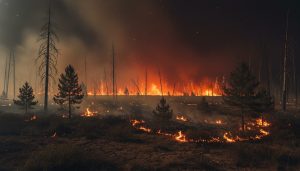
Wildfires continue to challenge communities across the country. California’s devastating fires in 2017 and 2