


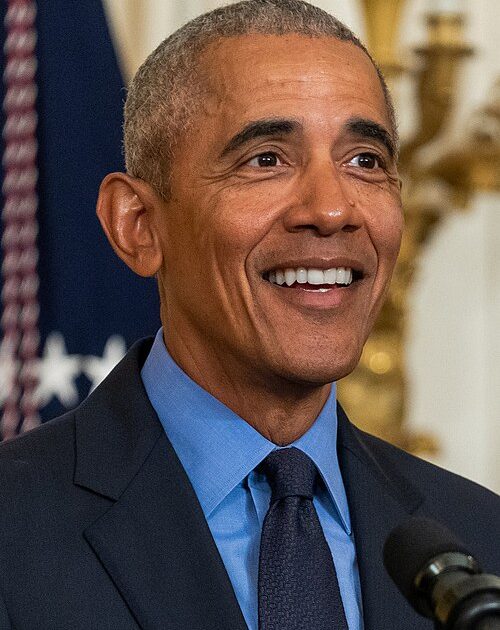
Barack Obama’s recent reflection on his health in his sixties reads less like a celebrity update and more like a quiet recalibration of identity. The former president, long associated with energetic pickup basketball games and visible physical vitality during his White House years, now describes a body that still feels strong but no longer responds to athletic impulse without negotiation.
In a candid conversation alongside Michelle Obama, he acknowledged that he feels good overall, yet his approach to movement has fundamentally changed. The shift is not rooted in limitation alone, but in awareness. He no longer treats physical activity as something to push through at full intensity. Instead, it has become something to manage, measure, and preserve.
That distinction carries weight because it marks a transition many high-activity adults eventually face. Obama is not stepping away from the movement. He is stepping into a more deliberate version of it, one that prioritizes longevity over spectacle and sustainability over speed.
From Presidential Courts to Public Spaces: The Evolving Meaning of Obama’s Athletic Identity

For years, Barack Obama’s basketball presence was part of his public identity. Whether photographed during campaign stops or playing informal games in the White House, he represented a rare blend of leadership and athletic relatability. The image of the “athlete-in-chief” became symbolic of discipline, balance, and approachability in power.
That identity now takes on a different form as the Obama Presidential Center in Chicago introduces a new physical and symbolic space for his post-presidential life. The Home Court gym within the center is designed not only for basketball but for community engagement, youth programming, and shared wellness activities that extend beyond competitive sport.
This transition reframes Obama’s relationship with basketball itself. It is no longer simply a personal pastime played at high intensity. It becomes part of a broader civic ecosystem where movement is accessible to people of all ages and abilities.
When he jokes about avoiding full-court play while still participating in shooting contests, the statement reflects more than humor. It reflects a redefinition of participation. He is not leaving the court. He is changing how he exists on it.
The Science Behind the Shift: Why Aging Athletes Recalibrate Movement
Obama’s concern about his knees and Achilles tendon aligns with well-established patterns in sports medicine. Recreational athletes who continue high-intensity sports into midlife face increased risks of tendon strain and joint injury, particularly in sports that involve sudden lateral movement, jumping, and rapid deceleration.
Basketball, in particular, places sustained stress on connective tissue. The Achilles tendon, which absorbs explosive force during sprinting and jumping, becomes less elastic with age. Recovery time also increases, making what once felt like a minor strain potentially longer-lasting and more disruptive.
Obama’s decision to avoid full-speed court play reflects an intuitive understanding of this biological shift. He is not rejecting athletic identity. He is adapting it to the realities of musculoskeletal aging. This is where his casual phrasing carries deeper meaning.
The concern about “not wanting to be in a boot” captures a very real consequence of overestimating recovery capacity in later adulthood. It is not the sport itself that changes, but the body’s margin for error within it.
Michelle Obama and the Modern Language of Flexibility, Discipline, and Longevity
Michelle Obama’s presence in the conversation adds a layer that moves beyond humor. Her emphasis on stretching, tennis, and structured physical discipline reflects a broader cultural shift in how fitness is understood in midlife and beyond.
Flexibility training, once treated as secondary to cardio or strength work, has become central to sustainable movement. It is now recognized as the major factor in injury prevention, mobility maintenance, and long-term physical independence.
Within the couple’s dynamic, a contrast emerges that feels both personal and symbolic. Michelle Obama represents a structured expansion of physical capability through consistent practice and discipline in new sports like tennis. Barack Obama represents adaptation through moderation and preservation of familiar movement patterns.
The Obama Presidential Center as a Living Model of Community Movement
The opening of the Obama Presidential Center adds institutional context to these personal reflections. Designed as more than a museum or historical archive, the center functions as a civic engagement space where education, culture, and wellness intersect.
The Home Court facility embodies this vision by positioning physical activity as a shared community resource rather than an elite or exclusive pursuit. It accommodates not only basketball but also yoga, gatherings, youth programs, and multipurpose community use.
The Psychology of Controlled Athletic Identity in Later Life
One of the most compelling dimensions of Obama’s remarks lies in the psychological transition they reveal. High performers often experience a shift in identity as they age, moving from a performance-based mindset to a preservation-based one.
In younger years, physical activity is often measured by output, speed, and endurance. In later years, it is measured by consistency, comfort, and stability in recovery.
Obama’s comments clearly reflect this evolution. His language suggests not a loss of capability but a recalibration of priorities. The goal is no longer to dominate the court. The goal is to remain connected to movement without compromising long-term physical integrity.
Aging, Masculinity, and the Rise of Flexibility as Strength
There is also a cultural dimension embedded in Obama’s shift that extends beyond sports. Traditional ideas of masculinity often emphasized endurance, intensity, and physical dominance. However, modern wellness culture increasingly values adaptability, recovery, and mobility as equal indicators of strength.
Obama’s openness about stretching and flexibility signals participation in this evolving definition. Acknowledging that flexible work is now part of his “next stage” places him within a growing group of men who view mobility not as optional maintenance, but as essential infrastructure for continued activity.
The Real Message Behind a Simple Statement
What appears on the surface as a humorous comment about not wanting to “pop nothing” ultimately reflects a sophisticated understanding of physical sustainability. It is an acknowledgment that longevity in sport is not guaranteed by enthusiasm alone.
A Reframed Model of Lifelong Movement
Barack Obama’s health update does not signal retreat. It signals transformation. The athlete who once embodied high-energy political symbolism now represents a different kind of athletic maturity, one defined by choice, restraint, and long-term thinking.
The court remains part of his life, but its role has changed. It is no longer a space for testing limits. It is a space for maintaining connection.
Obama’s approach suggests that the most powerful form of fitness in later life is not intensity. It is continuity. And continuity, more than speed or power, is what keeps the game going.


