

Nobody plans for things to go wrong. That is precisely the problem. The car that dies on a remote highway does not check your calendar first. The storm that knocks out power for four days does not wait until you have stocked up on supplies.
The hiking trail that looked manageable on the map does not care that you only brought half a water bottle and an optimistic attitude.
Survival kits are not about paranoia. They are about the simple, uncomfortable acknowledgment that things occasionally go sideways, and that being prepared for that costs far less in time and money than being caught without anything useful when it does.
The trick is specificity. A single generic “emergency kit” crammed with random items looks reassuring on a shelf and fails you when you actually need it.
Different situations demand different supplies. Here are eight kits worth building, what goes in each one, and why.
The Wilderness Survival Kit

If you spend time hiking, backpacking, hunting, or camping in remote areas, this is the kit that could save your life, and the one most people build incorrectly by prioritizing gear they find exciting over gear that addresses actual causes of wilderness fatalities.
The top three killers in wilderness survival situations are exposure, dehydration, and getting lost. Build your kit around those three threats first.
Fire handles exposure. Pack a ferro rod, waterproof matches, a windproof lighter, and actual tinder; do not assume you will find dry material when you need it most. Fire also purifies water, signals rescuers, and does more for morale than anything else in your pack.
Shelter buys you time. An emergency bivvy sack weighs almost nothing and retains up to 90 percent of body heat.
Add a lightweight thermal blanket and a small tarp with paracord, and you can create protection from wind, rain, and temperature drops with very little weight.
Navigation keeps you found. A compass and a paper topographic map of your area cost almost nothing and work when your phone battery dies, your GPS loses signal, or both. Learn to use them before you need them.
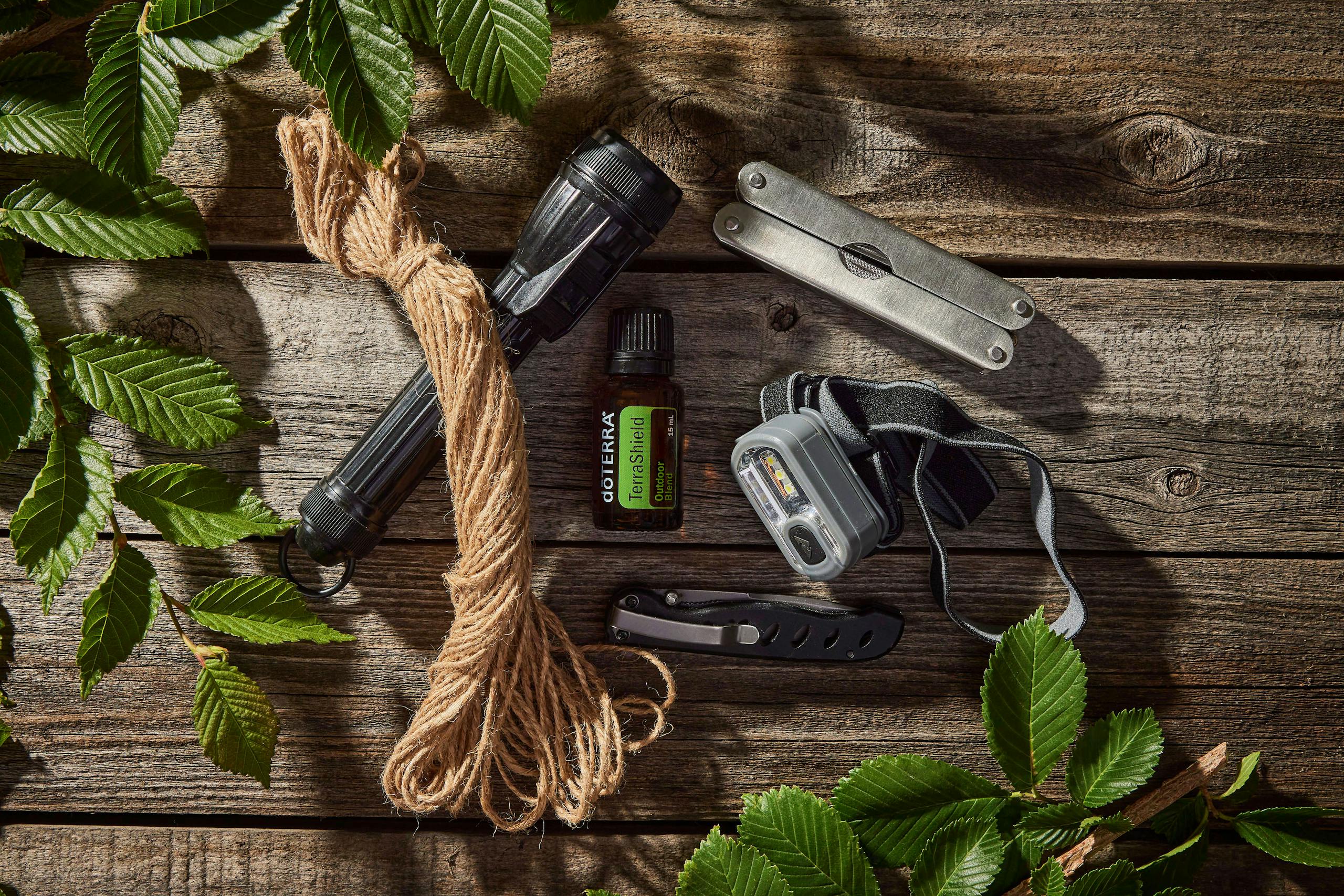
Round it out with a fixed-blade knife, a signal mirror, a whistle, a headlamp with spare batteries, and a water filtration method. That kit addresses the things that actually kill people in the wilderness.
The Car Emergency Kit
Your car is statistically the most likely place you will ever experience an emergency. Breakdowns, accidents, and getting stuck happen to ordinary people on ordinary days, often at night, often in bad weather, often on stretches of road where help is not immediately coming.
The core of a good car kit is visibility and power. Reflective triangles and a safety vest mean that other drivers can see you when you are standing near a broken-down vehicle in the dark.
Jumper cables or a portable jump starter handle the most common cause of breakdowns. A tire repair kit and inflator address the second most common one.
Beyond those: a basic tool set with screwdrivers, pliers, an adjustable wrench, duct tape, and a utility knife. A USB power bank so your phone does not die while you wait for help. Work gloves. A tow strap.
Season-specific additions matter. In winter, add a blanket, hand warmers, and an ice scraper. In summer, add extra water and cooling towels; being stranded in extreme heat without water is genuinely dangerous, not just uncomfortable.
The Home Disaster Kit

Power outages, severe storms, floods, and extended supply disruptions do not require apocalyptic scenarios. They happen in ordinary cities to ordinary families with some regularity.
The standard recommendation from emergency management agencies is a minimum of three days of self-sufficiency, with two weeks as a more realistic buffer.
Water is the priority. Store one gallon per person per day, plus extra for pets. A water filter and purification tablets provide backup if your stored supply runs out or becomes compromised.
Food should be shelf-stable and require minimal preparation: canned goods, rice, beans, freeze-dried meals, peanut butter, energy bars. Rotate stock regularly so nothing expires quietly on a shelf.
Add a battery-powered or hand-crank radio for emergency broadcasts, flashlights with spare batteries, a comprehensive first-aid kit, copies of important documents in a waterproof bag, and enough cash for immediate needs. ATMs and card readers stop working when the power goes out.
If anyone in your household takes prescription medications, maintaining a two-week supply buffer is part of disaster preparedness, not optional.
The Marine Survival Kit
Boating emergencies are different from land-based ones in one critical way: you are almost certainly going to need someone else to find you.
The ocean is large. You are small. Visibility and communication are not conveniences; they are the mechanisms of survival.
Signaling equipment goes first. SOLAS-approved flares, a waterproof strobe light, a signal mirror, and, if at all possible, an emergency position-indicating radio beacon (EPIRB) that transmits your location to satellite rescue systems.
A waterproof VHF radio lets you communicate with the coast guard and nearby vessels.
Thermal protection is second. Hypothermia can kill in water temperatures that feel merely cold rather than dangerous. Emergency thermal blankets, waterproof outer layers, and properly fitted life jackets are non-negotiable.
Freshwater is the unexpected priority for ocean survival; saltwater is undrinkable and accelerates dehydration.
Emergency water packets and a small desalination device or water collection system can extend survival time dramatically if rescue is delayed.
The Pet Emergency Kit
Pets are members of the household, and they depend entirely on you during emergencies. They cannot pack their own bag, communicate their needs to first responders, or navigate a shelter intake process alone. That is your job, and it requires advance preparation.
Start with a minimum of a three-day supply of food and bottled water, along with portable bowls that do not rely on a tap.
Include copies of vaccination records, a recent photograph of your pet in case you are separated, and your veterinarian’s contact information.
A leash, harness, and carrier sized appropriately for your animal are essential. In an evacuation, an animal without a carrier may not be permitted into emergency shelters or vehicles.
Include any regular medications, a small pet first-aid kit, and something familiar, a blanket or favorite toy, that reduces stress in an unfamiliar environment.
Update the food and medication stock regularly. A pet emergency kit built for a puppy does not serve a three-year-old dog particularly well.
The Roadside Breakdown Kit for Long-Distance Travel

This is distinct from the everyday car kit. If you regularly drive long distances, through remote areas, or across state and country lines, the calculus changes.
Help may be hours away instead of minutes. Cell service may be nonexistent. The gap between inconvenience and genuine danger gets wider.
Expand your standard car kit with a high-quality portable jump starter, powerful enough for your engine size.
Add a fuller first-aid kit than you would keep for urban driving. Include a detailed paper atlas, GPS fails in dead zones, and paper does not.
Pack food and water sufficient for at least 24 hours. Emergency blankets and warm layers belong in the kit year-round, not just in winter, because a breakdown in an unexpected cold snap is not a theoretical risk.
A satellite communicator, the kind that works without cell service and can send an SOS with your GPS coordinates, is worth serious consideration for anyone who regularly travels remote routes alone.
The Wedding Day Emergency Kit
This one belongs on the list not because weddings are survival situations in the technical sense, but because they are high-stakes, high-stress events where minor disasters compound rapidly and access to ordinary resources disappears at the worst possible moment.
The kit that actually gets used on a wedding day handles four categories of problems: clothing repairs, beauty emergencies, physical comfort, and the unexpected.
Fashion tape, safety pins, a small sewing kit, and stain-remover pens cover the clothing category. Bobby pins, clear nail polish for stocking runs, hair spray, and a compact mirror handle the beauty emergencies that no amount of preparation fully prevents.
Pain relievers, blister plasters, and antacids handle the physical reality of a very long day in formal shoes with an unusual amount of emotional intensity.
Snacks and water handle the fact that the bride and groom often go most of the day without eating. Tissues handle everything else.
The Newborn Baby Emergency Kit

Infants in emergency situations create a specific and urgent problem: almost nothing can be improvised or substituted. An adult can eat a variety of foods, sleep on the floor, and manage discomfort.
A newborn cannot, and the window between discomfort and medical crisis is much shorter. Formula, bottles, and sterilization equipment need to be stocked beyond immediate daily needs.
Diapers and wipes in quantities that account for the reality that supply chains become unreliable in disaster situations. Any medications your infant requires should be kept current and up to date.
Thermal regulation matters more for infants than for adults; extra blankets and weather-appropriate layers are not optional.
Include a thermometer, a nasal aspirator, an infant pain reliever appropriate for your child’s age and weight, and your pediatrician’s emergency contact information.
Review and update this kit every few months. An infant’s needs change faster than any other household member, and a kit that was correct at two months is inadequate at six.
Conclusion
The common thread running through every kit on this list is the same: the time to think about what you need is not when you need it.
None of these kits requires significant expense or elaborate preparation. They require the specific discipline of doing something slightly inconvenient now so that a future version of you, stressed, possibly in the dark, possibly in the middle of nowhere, has what they need without having to improvise.
Build the kit that matches your actual life. Store it somewhere accessible. Check it once a year. Update it when circumstances change.
The best emergency kit is the one that already exists when the emergency arrives.


