


The post Your Houseplant Looks Perfectly Fine, But It Might Already Be in Trouble first appeared on Crafting Your Home.
Your fiddle leaf fig is green. Your pathos is trailing beautifully off the shelf. Nothing looks wrong. So why does it feel like something is off?
Here’s the uncomfortable truth about houseplants: by the time a problem shows up in the leaves, it’s often already been brewing for weeks. Leaves are the last thing to react, not the first. That means a plant can look completely fine on the surface while something underneath literally underneath, in the roots is quietly falling apart.
This isn’t about panic checking every plant in your house every day. It’s about knowing where to actually look when something feels a little off, even if you can’t put your finger on why. According to extension experts at the University of Georgia’s College of Agricultural and Environmental Sciences, the real story of a plant’s health is rarely told by its leaves alone. It’s told by what’s happening below the soil line, on the undersides of leaves, and by how the plant reacts to water over time.
Here’s what pros actually check and why your plant’s calm exterior might be hiding a much messier situation.
The Check Most People Skip Completely: The Roots
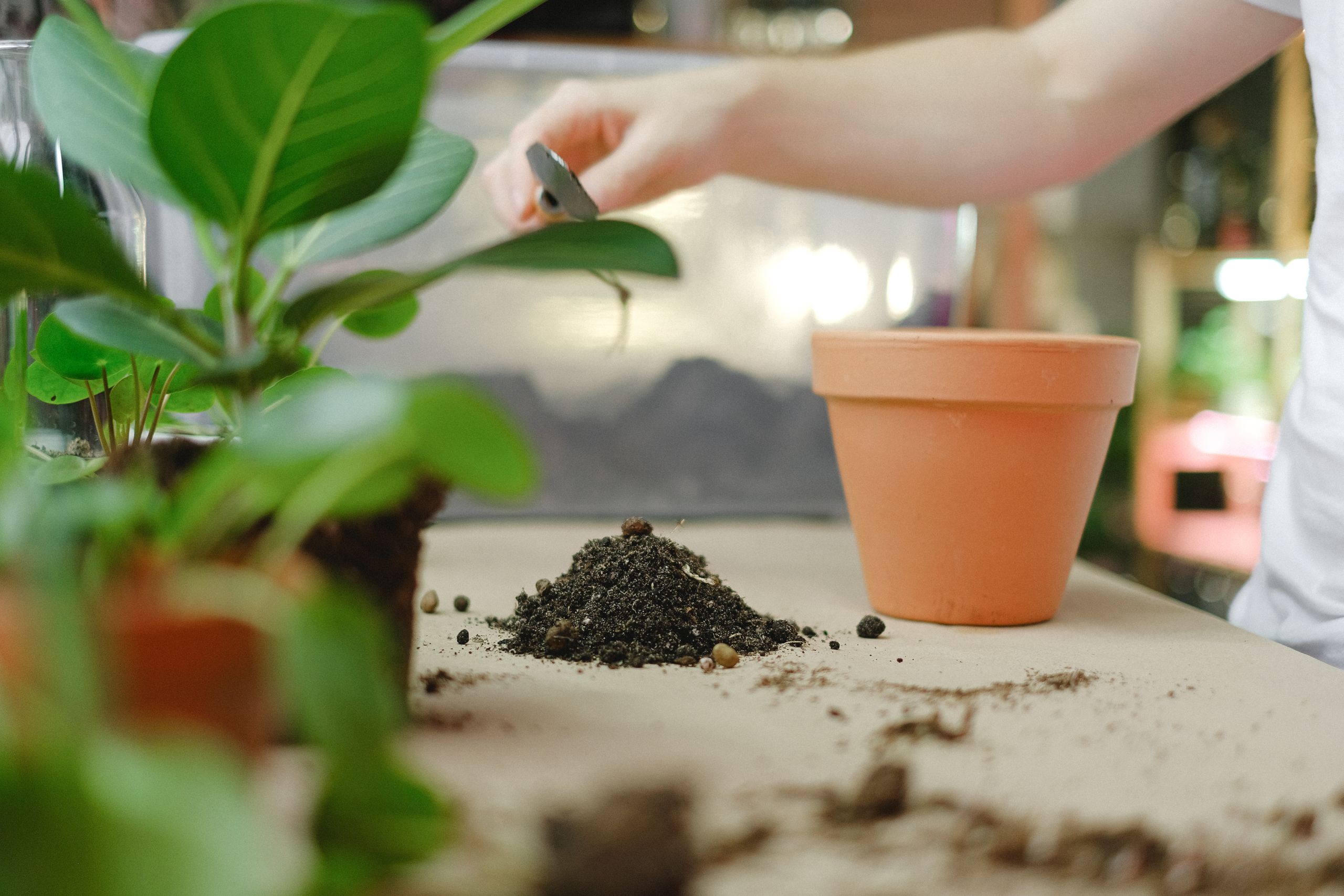
If there’s one habit that separates casual plant owners from people who keep their plants alive for years, it’s this: they check the roots before anything looks wrong, not after.
“The most important thing is to check the roots,” said Paul Thomas, an extension horticulturist with the University of Georgia’s College of Agricultural and Environmental Sciences. According to Thomas, the easiest way to judge root health isn’t color; some plants naturally have tan roots, others white it’s texture. Healthy roots typically have fine, fuzzy root hairs at their tips, a detail most people never think to look for.
There is one notable exception. “Orchids are the exception,” Thomas said, noting that they don’t grow root hairs the way most other houseplants do.
The simplest way to check is to ease the plant out of its pot gently. If it slides out easily and you can see soil mixed in with the roots, that’s a good sign. If the pot won’t budge, or the shape that comes out is a dense, circular mass with barely any visible soil, the plant is likely root-bound a problem that can develop long before leaves start dropping or growth slows down.
The fix, according to Thomas, doesn’t have to be complicated. “If the root ball looks good, you can usually just put the plant in a pot that’s one inch bigger all around,” he said, adding that fresh soil at repotting time helps cut down on disease. Even for a root-bound plant, there’s usually a path forward. Thomas described gently trimming the top and bottom of the root ball and making a few careful vertical cuts along the sides to encourage new growth once it’s repotted, while cautioning against being too aggressive. “Most plants have delicate roots,” he said. “Too many broken roots can be fatal. Work carefully and slowly.”
It’s a good reminder that the roots are essentially the plant’s life-support system. As Thomas put it, “Healthy roots are really the key to healthy plants.”
Related: 10 Best Plants for Rain Gardens to Combat Runoff and Erosion
Bugs and Disease Can Hide in Plain Sight
Even if the roots check out, plants can be dealing with problems that haven’t become visible yet because pests and diseases are surprisingly good at staying out of sight until they’ve already gotten comfortable.
Beverly Sparks, a UGA extension entomologist, points to two of the most common offenders in houseplants: whiteflies and aphids. Both are easy to miss during a casual glance, especially since they don’t always show up where you’d expect.
“To avoid problems, inspect the plants closely for all stages of the insect,” Sparks said. She noted that immature whiteflies tend to live on the underside of leaves, which means they can go completely unnoticed until the adult insects are numerous enough to fly around the plant when it’s disturbed. Aphids present a similar challenge. They’re small enough to overlook until a colony has grown large and the plant’s new growth starts to curl, twist, or die back. “With heavy populations,” Sparks added, “you may also notice an accumulation of honeydew, a sticky secretion,” which is often the first obvious clue something’s wrong.
By the time those visible signs appear, Sparks said the situation can already be difficult to reverse. “Most of these type problems take persistence, time and knowledge of the pest biology and control options to eliminate the pest,” she said, adding that in some cases, it’s simply more practical to remove a heavily infested plant than to keep fighting the infestation.
Disease can be just as sneaky. Jean Williams-Woodward, a UGA plant pathologist, said some of the more common culprits fungal leaf spots, powdery mildew, and rust are identifiable once you know what to look for. Still, they tend to show up gradually rather than all at once. Her advice on that front is blunt: once a plant is showing symptoms like off-color or weak growth, it may already be dealing with a root disease that’s tough to reverse. “You can’t ‘cure’ it,” she said of an established leaf disease, which is part of why catching problems