
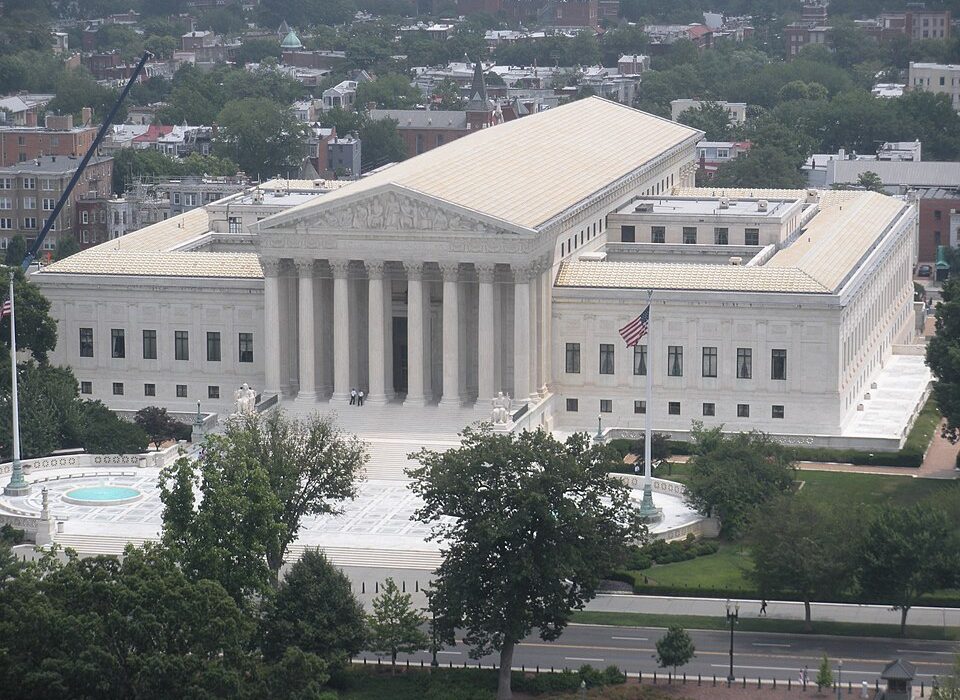

In a ruling that could reshape the balance of power in Washington for years to come, the U.S. Supreme Court has expanded presidential authority over federal agencies while drawing a firm line at the Federal Reserve.
The decision gives President Donald Trump significantly broader power to remove leaders of independent federal agencies, marking one of the most consequential shifts in executive authority in modern history.
However, the Court stopped short of allowing the immediate removal of Federal Reserve Governor Lisa Cook, preserving a key boundary around central bank independence.
At the heart of the ruling is a long-standing constitutional tension that has defined American governance for nearly a century: how independent are “independent agencies” when their leaders still serve under a president with expanding executive power?
In a sweeping ruling involving former Federal Trade Commission member Rebecca Slaughter, the Court’s conservative majority rejected long-standing limits on a president’s ability to fire agency officials without cause. That ruling weakens statutory protections that Congress built into several federal agencies to shield regulators from direct political pressure.
Yet in a separate decision, the Court treated the Federal Reserve differently. Cook, who was nominated by President Joe Biden and later targeted by Trump over disputed mortgage-related allegations dating back to before she joined the Fed, can remain in her role while her legal fight continues.
The result is a divided constitutional map. For many independent agencies, presidential control has just become far stronger. For the Federal Reserve, the Court signaled that central bank independence still carries special weight.
Trump v. Slaughter Rewrites the Rules for Independent Agencies

The central executive-power ruling came in Trump v. Slaughter, a case involving Rebecca Slaughter, a Democratic member of the Federal Trade Commission whom Trump removed after returning to office. Federal law had long allowed FTC commissioners to be removed only for specific reasons, including inefficiency, neglect of duty, or malfeasance in office.
The Court concluded that the restriction could not stand. Chief Justice John Roberts, writing for the majority, framed the issue as a question of accountability. In the majority’s view, officials who exercise executive power must remain answerable to the president because the Constitution vests executive power in a single president.
If agency leaders enforce federal law, regulate private conduct, bring cases, or administer statutes, the Court reasoned, they cannot be insulated from presidential removal in a way that blocks the president’s ability to supervise the executive branch.
That reasoning strikes at the foundation of the independent-agency model that has shaped Washington since the New Deal era. For decades, Congress created agencies with multi-member boards, staggered terms, bipartisan structures, and removal protections.
The idea was to reduce political whiplash and allow technical regulators to make decisions with some distance from daily White House pressure.
The Court’s ruling sharply narrows that model. The FTC was not treated as a neutral expert body standing outside executive authority. The majority emphasized that the modern FTC writes rules, investigates companies, enforces federal statutes, conducts administrative proceedings, and brings civil actions.
Those are not merely advisory or ceremonial functions. They are exercises of government power. Under the Court’s view, that power must ultimately answer to the president.
Humphrey’s Executor Falls After Nearly 90 Years
The ruling marks a direct break from Humphrey’s Executor, the 1935 Supreme Court decision that upheld removal protections for FTC commissioners and became a cornerstone of independent-agency law.
That precedent had long stood for the idea that Congress could create certain regulatory agencies whose leaders were not fully subject to at-will presidential firing. The 1935 Court described the FTC of that era as performing quasi-legislative and quasi-judicial functions, rather than purely executive ones.
The new ruling rejects that old distinction as outdated and unworkable. The majority treated the modern administrative state as fundamentally different from the agency structure considered in 1935.
The FTC today has broad enforcement power across major areas of the economy. Its work affects competition policy, consumer protection, business practices, corporate conduct, digital markets, advertising, mergers, data privacy, and more.
In practical terms, the Court said that when an agency executes the law, it exercises executive power. Labels such as “quasi-legislative” or “quasi-judicial” no longer do the constitutional work that earlier generations of judges assigned to them.
That move could ripple far beyond the FTC. Agencies with similar removal protections may now face new legal vulnerability, especially those whose leaders enforce laws, issue rules, adjudicate disputes, or regulate private actors.
The National Labor Relations Board, Consumer Product Safety Commission, Merit Systems Protection Board, and other multi-member bodies could feel the pressure of this decision.
Lisa Cook Survives Trump’s Immediate Removal Effort
The Court’s other ruling produced a different outcome. Lisa Cook, a member of the Federal Reserve Board of Governors, can remain in office while she challenges Trump’s effort to remove her. The administration sought to fire Cook over allegations tied to mortgage documents from before she became a Fed governor. Cook has denied wrongdoing and has not been charged with a crime.
The Court refused to let the administration remove her immediately. Chief Justice Roberts wrote that Cook could not be stripped of her position without notice, an opportunity to respond, and meaningful judicial review. The Court did not declare that Cook is permanently protected from removal.
It did not settle every question about what counts as “cause” under the Federal Reserve Act. But it did make clear that the president could not simply remove a Fed governor instantly, without process, while the dispute remains unresolved.
That distinction matters. The Court’s ruling keeps Cook in place for now, but it leaves the door open for Trump to try again if proper procedures are followed. That means Cook’s case is not over. It remains a live battle over whether disputed pre-office conduct can justify removal from one of the most economically sensitive positions in the federal government.
Why the Federal Reserve Was Treated Differently
The Federal Reserve occupies a special place in American government. It is not just another regulator. It sets monetary policy, influences interest rates, supervises banks, and plays a central role in managing inflation, employment conditions, credit availability, and financial stability.
The Court recognized that difference. The Federal Reserve’s structure is built around insulation from short-term political pressure.
Governors serve long terms. The central bank is designed to make decisions based on economic conditions rather than election cycles. Its independence is not absolute, but it has historically been treated as critical to market confidence.
That is why Cook’s case carries consequences far beyond one official’s job. If a president could quickly remove a Fed governor over contested allegations, critics argue that the central bank could become vulnerable to political pressure whenever interest-rate decisions frustrate the White House.
A president seeking lower borrowing costs, faster growth, or a more favorable political economy could try to reshape the board by targeting governors who resist. The Court did not embrace that result.
By allowing Cook to remain for now, the justices preserved a barrier between presidential frustration and direct control of monetary policy. The ruling signals that even after the major expansion of presidential removal authority in the Slaughter-House Cases, the Federal Reserve remains in a more protected constitutional category.
The Bigger Fight Over Interest Rates and Political Control
The Cook case unfolded against a larger clash between Trump and the Federal Reserve. Trump has repeatedly pushed for lower interest rates, arguing that cheaper borrowing would help households, businesses, and the federal government.
Lower rates can reduce costs for mortgages, car loans, business expansion, and public debt service. But cutting rates too quickly can also increase inflation pressure, weaken confidence in the central bank, and unsettle financial markets. That tension sits at the heart of the Fed’s independence.
Central bankers are expected to make unpopular decisions when inflation remains a threat. They may keep rates higher than politicians prefer. They may slow economic demand even when the White House wants faster growth. They may warn against short-term stimulus if they believe price stability is at risk.
Cook’s defenders argue that Trump’s move was not really about old mortgage documents. They see it as part of a broader attempt to influence interest-rate policy by changing the composition of the Fed Board.
Trump’s allies reject that framing and argue that serious allegations against a public official should be treated seriously, regardless of the political stakes. The Supreme Court did not resolve that factual dispute. Instead, it focused on process, statutory protection, and the special nature of the Federal Reserve.
What This Means for Federal Agencies
The immediate message to most independent agencies is blunt: insulation from presidential removal is now far weaker when agency leaders exercise executive power. That could change how agencies operate.
Officials who once relied on fixed terms and for-cause protections may now face stronger pressure to align with the president’s policy agenda. Enforcement priorities could shift faster after elections.
Regulatory agencies may become more directly responsive to White House preferences. Businesses, unions, consumer groups, and regulated industries may see sharper swings between administrations.
Supporters of the ruling see that as democratic accountability. They argue that voters elect a president to govern, and agency leaders should not be able to frustrate an elected administration’s agenda while wielding federal power.
Critics see a dangerous concentration of authority. They warn that agencies designed to protect consumers, workers, investors, and public safety could become more partisan, more unstable, and more vulnerable to retaliation when their decisions anger the president.
Both sides understand the stakes. This ruling is not only about personnel. It is about who controls the machinery of federal regulation.


