


The post Touching a Baby Bird Won’t Make Its Mother Abandon It, Bird Experts Say first appeared on Crafting Your Home.
Finding a tiny bird on the ground can create an instant dilemma. You may want to pick it up, check whether it is hurt, or return it to a nearby nest. Then an old warning comes to mind: Don’t touch it. Its mother will smell you and abandon it. Fortunately, bird experts don’t support that familiar warning.
The Cornell Lab of Ornithology says parent birds will not abandon their young simply because a human has handled them. The U.S. Fish and Wildlife Service (USFWS) gives similar advice, explaining that human scent will not deter parents when a nestling is returned to its nest.
That does not mean every baby bird should be picked up. In fact, many young birds seen sitting or hopping on the ground are exactly where they are supposed to be. Understanding the difference between a bird that needs help and one that is simply growing up is far more important than worrying about leaving a human scent behind.
Bird Experts Say Human Touch Is Usually Not the Problem
The basic answer is reassuring: touching a baby bird does not normally cause its parents to reject it. The Cornell Lab calls the abandonment idea a myth. According to its guidance, nesting birds have already invested considerable time and energy in producing and caring for their offspring. A brief encounter with a person does not suddenly erase that parental investment.
USFWS makes the practical point even clearer. If you find a young nestling on the ground and can safely locate its nest, the agency recommends placing the bird back inside. It specifically notes that your scent will not keep the parents away.
There are still good reasons to avoid unnecessary handling. Holding a wild bird can add stress, and frequent activity near a nest may interfere with normal parental behavior. The goal should therefore be limited intervention: help when necessary, then give the family space. Human touch is not automatically harmful, but unnecessary interference is still best avoided.
Why Most Birds Will Still Care for Their Young
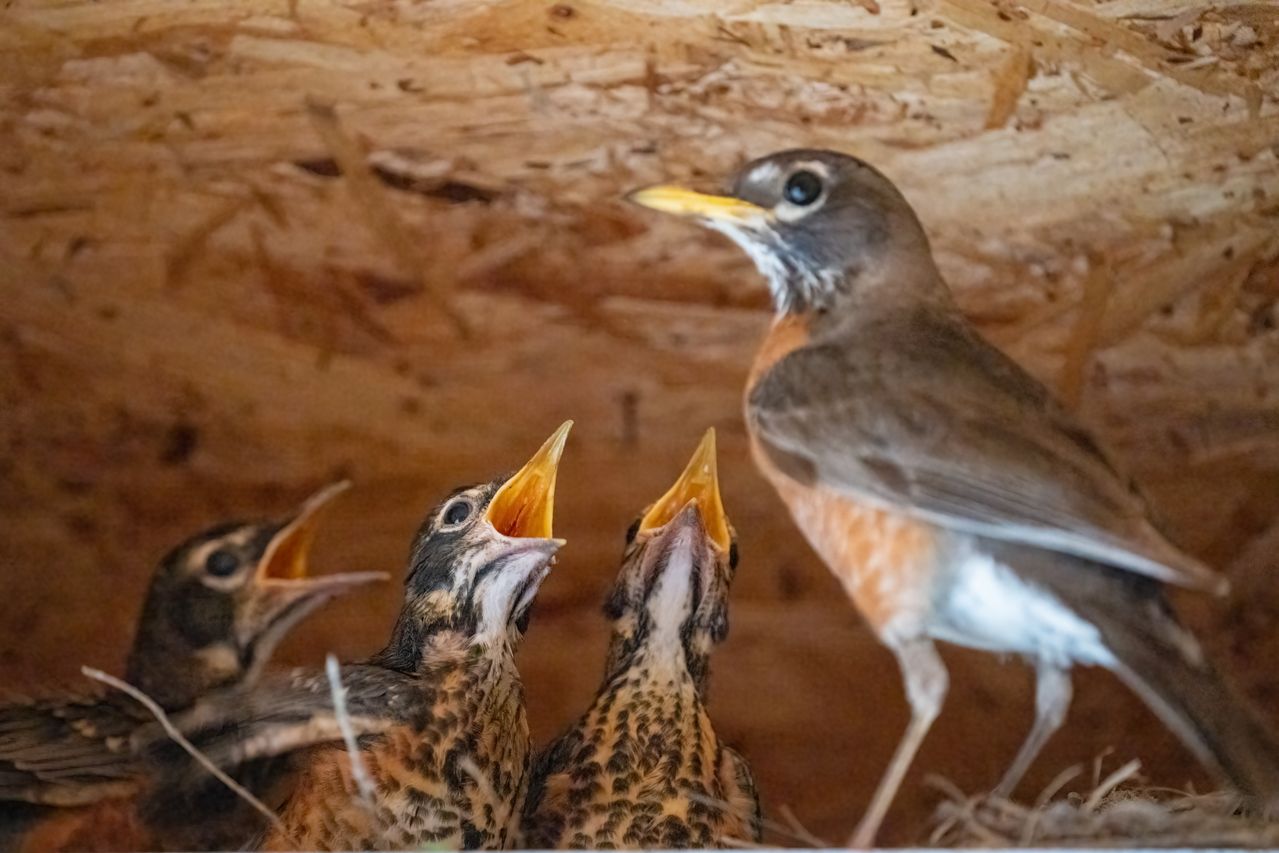
Raising young is a major biological investment for parent birds. Nest building, egg incubation, and repeated feeding all require time and energy. By the time a chick has hatched, its parents may already have devoted weeks to reproduction. That helps explain why the idea that one unfamiliar smell would cause immediate abandonment makes little biological sense for most situations involving common backyard birds.
Cornell’s bird experts explain that parents do not simply abandon their offspring because the chicks smell different after being handled. If a nestling has fallen and is otherwise healthy, returning it can reunite it with the adults already caring for it. However, it is important not to turn that statement into another myth. Birds can abandon nests under some circumstances. Persistent disturbance, predators, and other environmental pressures can affect nesting behavior. The key point is narrower: briefly touching a chick does not make its parents reject it simply because it carries a person’s scent.
So if you return a fallen nestling and do not immediately see an adult appear, that does not necessarily mean the chick has been abandoned. Your presence itself may make the adults reluctant to approach. Move away and observe at a distance.
Related: 10 Common Bird Myths You Should Stop Believing
Do Birds Have a Strong Sense of Smell?
This is where the science becomes especially interesting. For many years, birds were commonly described as having a poor or almost nonexistent sense of smell. Scientists now know that this broad assumption was incorrect. A peer-reviewed study published in Proceedings of the Royal Society B examined olfactory receptor genes in nine bird species representing seven orders. The researchers found evidence that avian smell may be considerably more developed than traditionally believed. They also reported a relationship between the estimated number of olfactory receptor genes and the relative size of the olfactory bulb, a brain structure involved in processing smell.
A later scientific review published in Biological Reviews in 2022 concluded that evidence increasingly shows olfaction plays meaningful roles in bird behavior and ecology. Researchers have investigated scents involved in communication, reproduction, and interactions with predators.
So saying, “The mother won’t abandon the chick because birds can’t smell,” is not scientifically accurate.
A better statement is:
Many birds can smell, but human scent on a chick doesn’t normally signal to parents that they should abandon their young.
Why Baby Birds Sometimes End Up Outside the Nest
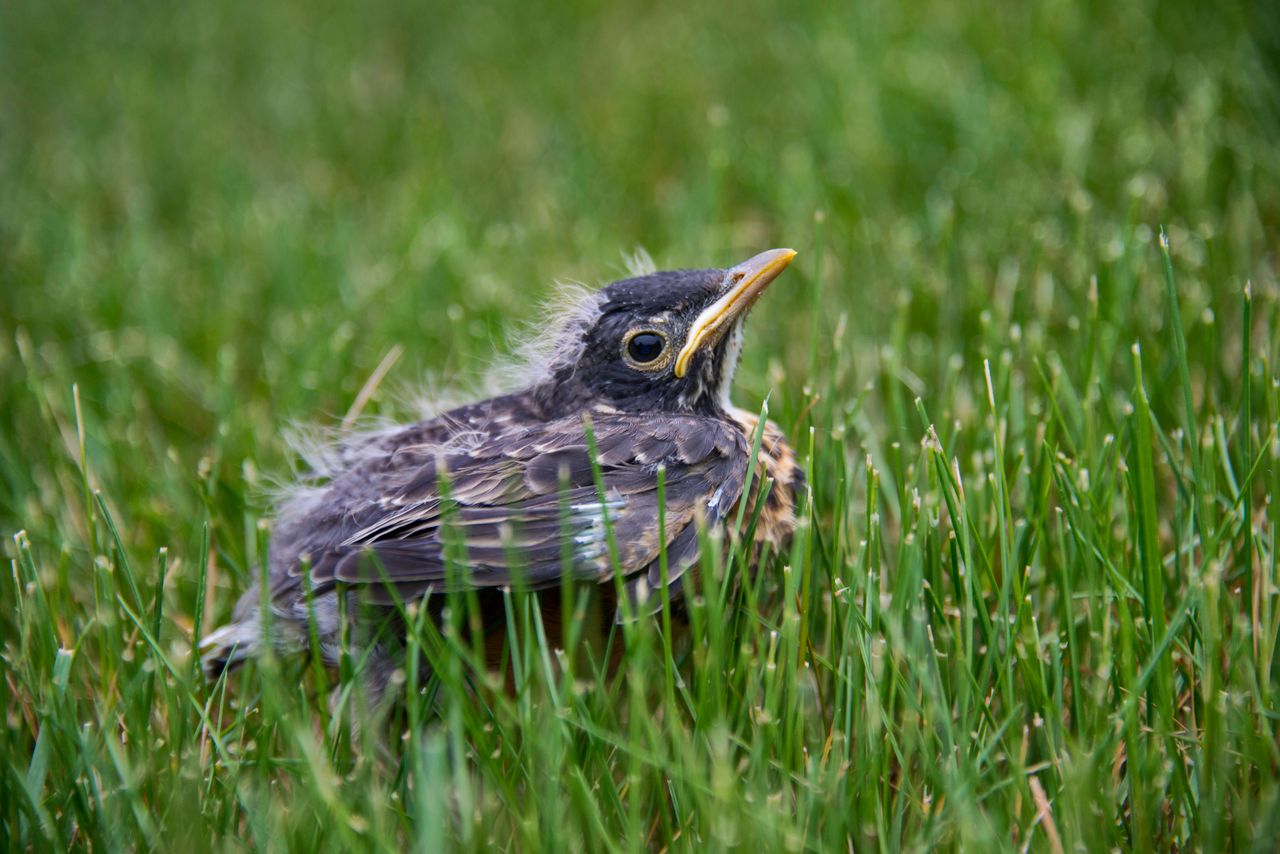
Seeing a small bird on the ground does not automatically mean something has gone wrong. Young birds pass through different stages of development. During one of those stages, leaving the nest is normal. The USFWS explains that as young birds grow, they need room to move, flap their wings, and learn to fly. These more developed youngsters are called fledglings. They may hop or flutter before they become strong flyers, and their parents generally remain nearby and continue caring for them.
Cornell gives similar advice. A fledgling may look vulnerable because it has only recently left the nest, but returning it to the nest is usually unnecessary. It may simply hop straight out again because leaving is part of its normal development.
This stage often creates confusion. A young bird sitting quietly under a tree can look helpless to a person even though its parents know exactly where it is. Sometimes the best rescue is no rescue at all.
How to Tell a Nestling From a Fledgling
Before doing anything, look closely at the bird. A nestling is a very young bird that is still dependent on the nest. According to the USFWS, nestlings may have few feathers or may still have closed eyes. They are not yet ready to live outside the nest. Cornell adds several useful clues. A nestling may be sparsely feathered and unable to hop, walk, flutter, or hold tightly onto a perch. If you find such a bird, its nest is probably nearby.
A fledgling, in contrast, is farther along in development. It generally has noticeable feathers and can hop, perch, or flutter. It may still have a short tail and a somewhat fluffy appearance. A fledgling may look awkward, and its flying skills may be unimpressive, but that does not mean it has been abandoned.
Audubon explains that parents continue caring for young birds after they leave the nest and before they become skilled flyers. Learning this single distinction can prevent many unnecessary “rescues.”
Related: 8 Weirdest and Most Frightening Beaks in the Bird World
Why Leaving the Bird Alone Can Sometimes Be the Best Choice
Human instinct often equates helping with taking action. Wildlife care sometimes works differently. A fledgling sitting beneath a shrub may look lost. In reality, it could be spending one of its first days outside the nest under the watch of its parents. USFWS notes that fledglings can hop and flutter before becoming capable flyers, and that parents remain nearby to care for them. The agency generally recommends giving these young birds space.
Cornell similarly emphasizes that most apparently “abandoned” young birds people encounter are healthy fledglings with parents nearby. That turns the familiar baby-bird story on its head. The real danger is usually not the smell of your hands. It is misunderstanding what normal young-bird behavior looks like.
Key Takeaways
