

The post The Rudest Things You Can Do at a Wedding first appeared on Crafting Your Home.
Weddings come with plenty of moving parts, and most guests do not need to know all of them to be good guests. In fact, some of the best wedding etiquette is remarkably simple: respond when you are supposed to, follow the couple’s instructions and try not to create extra problems for the people who spent months planning the celebration.
The Emily Post Institute’s current wedding guidance emphasizes those basic principles, including respecting invitations, responding properly, following ceremony instructions and participating without becoming a distraction.
There is no scientific ranking of the “rudest” wedding behaviors, so the label is an editorial judgment rather than a measured fact. But these 10 behaviors stand out because they can create avoidable work, disrupt meaningful moments or assume permission that was never given.
Bringing Someone Who Wasn’t Invited
An invitation is not automatically an open invitation for whoever happens to be available that weekend. If the invitation names one person, that does not necessarily mean they can bring a partner, friend or child.
Emily Post explains that wording matters. “And guest,” “and family” and specifically named invitees can communicate different guest-list arrangements.
Showing up with an additional person without checking first can create a problem with the arrangements the couple has already made. If the invitation is unclear, asking for clarification in advance is completely different from simply adding someone to the guest list yourself.
Related: ‘Stop the Wedding’: 11 Regrets Married People Are Confessing in the Viral TikTok Trend
Making the Couple Chase Your RSVP
An RSVP is more than a polite indication that you might attend. The response helps the hosts organize important details such as seating and catering.
Emily Post’s current guidance recommends responding by the stated deadline and using the method provided by the couple.
That means telling a relative that you plan to attend is not necessarily enough if the invitation specifically asks you to respond online or through another system.
Of course, circumstances change. An illness, emergency or unexpected situation can make an RSVP impossible or require a cancellation, and that is very different from simply ignoring the deadline.
Walking Into the Ceremony and Interrupting It
Running late happens. Turning your late arrival into part of the ceremony is another matter.
Emily Post’s June 2026 guidance specifically advises against walking in after the ceremony has begun or entering during an entrance by one of the couple.
Imagine a guest arriving while vows are underway and crossing the front of the room to find a seat. Even without bad intentions, the movement can draw attention away from the ceremony.
If you arrive late, follow the venue’s or usher’s directions. An unexpected delay or accessibility issue should not be treated the same way as deliberately ignoring the ceremony schedule.
Ignoring Phone and Photography Instructions
Some couples want guests to photograph everything. Others specifically ask for an unplugged ceremony.
The important part is following the request that was actually made.
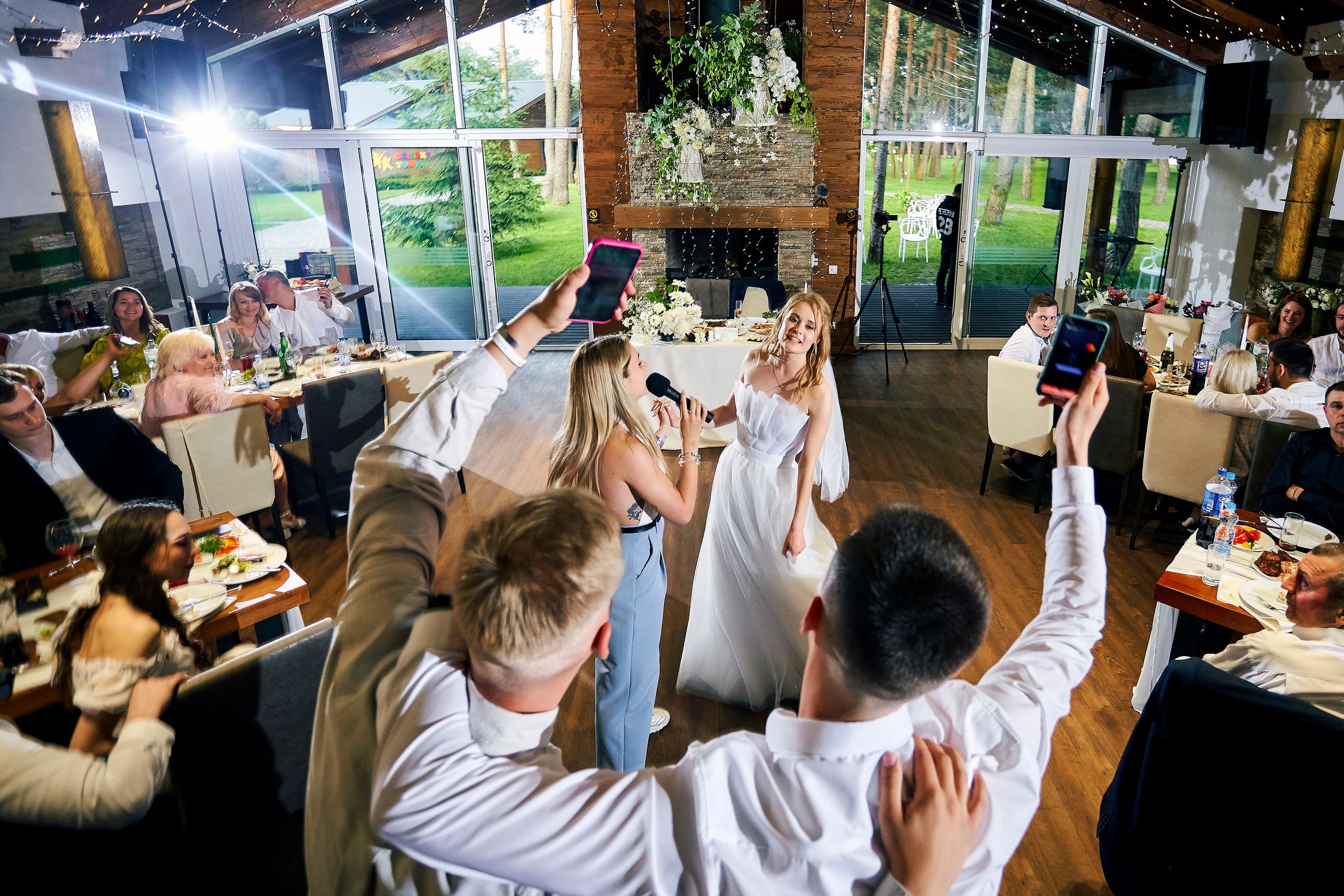
Emily Post advises guests to respect posted instructions and be mindful about photographs and video. Its guidance also warns against holding a phone up throughout the ceremony or using flash in a way that interferes with the occasion.
A guest who raises a tablet directly in front of another person’s view after being asked to put phones away is not simply documenting a happy moment. They are disregarding a clear request.
That said, not every wedding bans photography. And a phone used as an accessibility aid should not be treated as though it were simply a distraction.
Moving the Place Cards Around
Assigned seating is generally not an invitation to redesign the seating plan. Emily Post specifically advises against switching place cards or moving table assignments.
Maybe you would rather sit with your friends. Maybe another table looks more fun. Maybe you think you can improve the arrangement. Unless there is a genuine issue, leave the cards where the couple or venue placed them.
There is an important exception for accessibility, safety or another serious concern. If a seat creates a legitimate problem, speak with the coordinator or hosts rather than quietly rearranging several people’s places.
Asking the Couple Questions That Are Already Answered
Wedding planning can involve an enormous number of details, and the couple may already have provided answers through the invitation or wedding website.
Emily Post recommends checking the wedding website before contacting the hosts directly, and Lizzie Post has offered the same practical advice.
A guest who repeatedly messages the couple about information that is clearly printed on the invitation may be creating work that could have been avoided.
But this does not mean guests should never ask questions. If information is missing, contradictory or inaccessible, or if you need to communicate an important accessibility requirement, asking is entirely reasonable.
The goal is consideration, not silence.
Ignoring a Clearly Communicated Dress Code
Wedding attire depends on the event. The venue, time, level of formality, religious setting, cultural expectations and instructions from the couple can all matter.
Emily Post advises guests to use those details when deciding what to wear and specifically recommends against wearing a white dress or wedding-gown-like outfit unless the couple requests white.
That does not mean every garment containing white is automatically inappropriate. Nor does it create a universal rule about black, red or any other color.
The real etiquette issue is deliberately disregarding a clearly communicated request. And if the requested outfit creates a genuine financial problem, that is different from simply deciding that the dress code does not apply to you.
Drinking Until You Become the Problem
There is nothing inherently rude about accepting a drink at a wedding. The problem begins when someone’s behavior becomes disruptive.
Emily Post’s guidance warns against over-imbibing and becoming “the guest who becomes a problem.”
That could mean repeatedly interrupting speeches, starting arguments, demanding attention or requiring other guests or staff to manage the situation.
The etiquette issue is the behavior, not whether someone drinks alcohol. The same principle applies at celebrations where alcohol is not being served at all: guests are expected to participate without turning themselves into an additional responsibility for everyone else.
Turning Someone Else’s Wedding Into Your Stage
A wedding is a celebration, so there is nothing wrong with enjoying yourself. But there is a difference between participating enthusiastically and trying to become the main attraction.
Emily Post encourages guests to participate while cautioning them not to “steal the show.” Its guidance includes avoiding disruptive behavior during the ceremony and overly forceful conduct during activities such as the bouquet toss.
That does not mean every loud laugh or energetic dance makes someone rude.
The problem is repeated behavior that deliberately pulls attention away from the couple or tries to take control of an event that is not yours.
Follow the couple’s cues. If they have invited a spontaneous toast, announcement or other activity, that is different from deciding for yourself that the spotlight belongs to you.
Taking the Flowers or Décor Without Asking
A beautiful centerpiece can look like an obvious souvenir. It may not be.
Lizzie Post explains that wedding arrangements can be rentals, reserved for particular people, retained by the couple or designated for donation.
So taking a vase, centerpiece, candleholder or flower arrangement because it happens to be sitting on your table is an assumption of permission. The simplest solution is also the easiest: ask.
Some couples actively invite guests to take arrangements home, in which case there is no etiquette problem. The issue is not that wedding flowers can never leave the venue. It is that guests should not decide they own something simply because nobody has stopped them yet.
Related: