Our attachment to that one specific spot on the couch actually reveals these 11 things
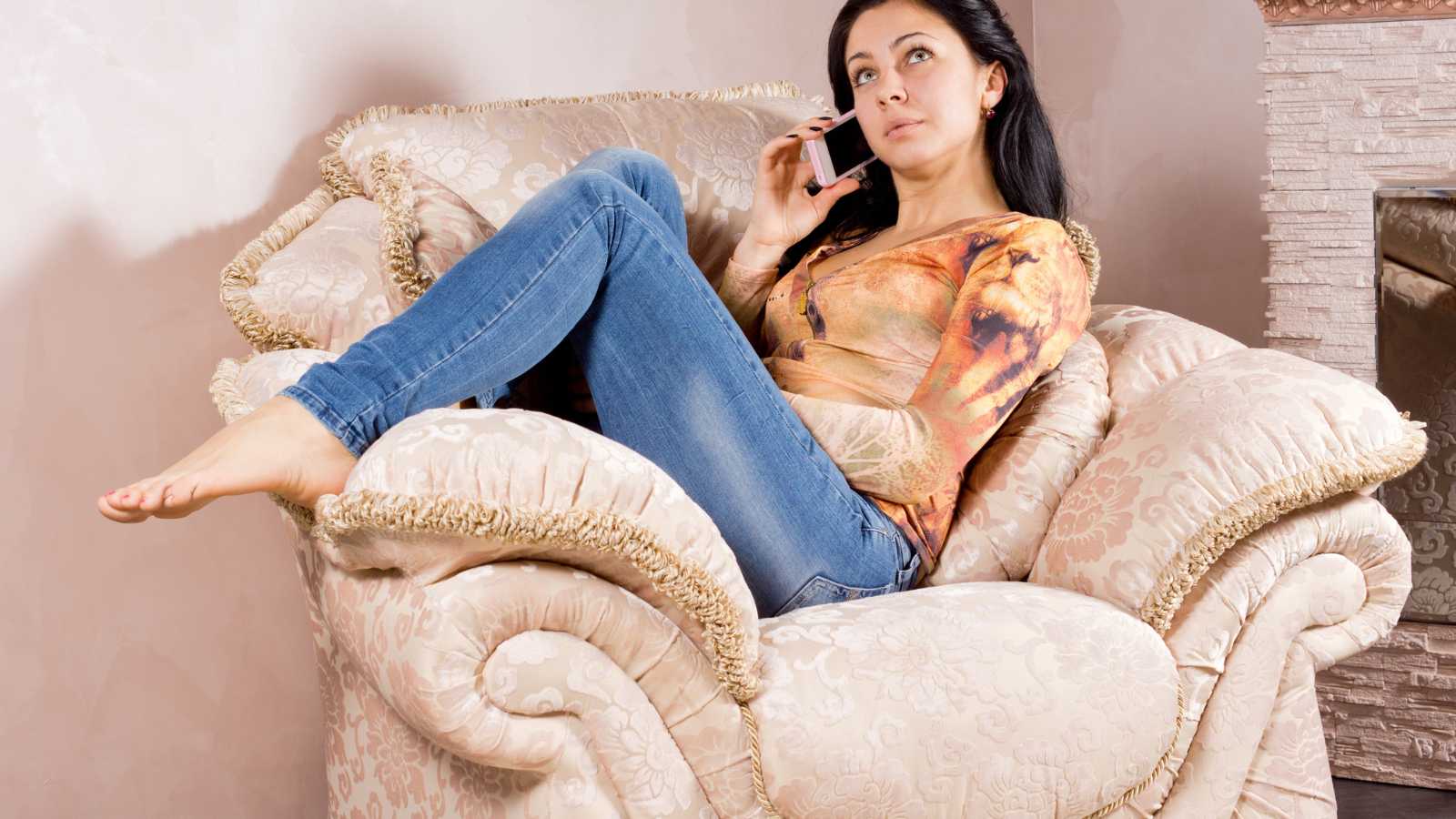
You might think you just like the view of the TV, but your “assigned” seat is actually a map of your subconscious. Walk into almost any American living room, and you’ll witness an invisible game of musical chairs where the music stopped years ago. We claim our territory with the ferocity of a wolf marking a tree, and heaven help the guest who unknowingly plops down in “Dad’s spot.” IMO, it’s one of the funniest quirks of human nature, but psychology tells us it’s no accident.
A recent survey by OnePoll found that 66% of Americans admit to having “unofficial assigned seating” in their homes, and over half of us would feel genuinely uncomfortable if forced to sit somewhere else. We aren’t just creatures of habit; we are creatures of deep biological and psychological needs. Whether you’re a corner-curler or a middle-sprawler, your location on the upholstery offers a fascinating glimpse into your personality, your neurotype, and even your relationship status. Let’s break down what your spot says about you.
You have a high need for control and predictability

If you get genuinely annoyed when a guest sits in your spot, you aren’t just being petty; you are managing your environment. This behavior is a classic example of territoriality, a spatial organizing mechanism that humans use to regulate social interaction and reduce conflict. By claiming a “primary territory,” you eliminate the need to negotiate space daily, reducing your cognitive load.
You likely value routine and order in other areas of your life as well. The “mere exposure effect” suggests we develop a preference for things simply because they are familiar, and disrupting that familiarity forces your brain to work harder than it wants to. Basically, you want your living room to be a predictable sanctuary where you don’t have to think, and “your spot” is the anchor of that stability.
You prioritize safety (the “prospect-refuge” theory)
Do you instinctively choose the seat with its back to the wall and a clear view of the front door? You are acting out an ancient evolutionary drive known as Prospect-Refuge Theory. Humans are hardwired to seek environments where we can see potential threats (prospect) without being seen or attacked from behind (refuge).
If you gravitate toward the corner of a sectional or a high-backed armchair, you are likely threat-sensitive or prone to anxiety. You can’t fully relax unless your amygdala—the brain’s fear center—knows that no one can sneak up on you. You aren’t just watching Netflix; you are guarding the cave.
You are the “social glue” (the middle sitter)
Choosing the middle seat on a sofa is a bold move; you have no armrests, you’re squished between people, and you have zero escape route. If this is your go-to spot, you are likely an extrovert who prioritizes connection over physical comfort. You are the “Sofa Sandwicher,” a person who thrives in the thick of the action and serves as the emotional hub of the family.
This position reveals a high tolerance for sensory input and a deep need for proximity. While others retreat to their corners to recharge, you recharge by literally rubbing shoulders with your tribe. This trait often correlates with being the peacemaker or the mediator in family conflicts.
You are introverted and self-soothing (the “cushion cuddler”)

On the flip side, if you always tuck your legs under you and hug a throw pillow in the corner, you are displaying classic introverted body language. Psychologist Dr. Rebekah Wanic notes that “cushion cuddlers” often use pillows as a physical barrier to create a sense of security and separation from the rest of the room.
You likely use your spot as a cocoon to dampen sensory input after a loud day. By making your body smaller and covering your vital organs (the chest and stomach area), you are signaling a need for protection and comfort rather than dominance. You aren’t antisocial; you’re just preserving your energy.
You have a dominant personality (the sprawler)
We all know the person who takes up three cushions on a two-cushion couch. If you sit with your arms spread wide along the back of the sofa and your legs stretched out, you are displaying high confidence and territorial dominance. In the animal kingdom, expanding your physical footprint is a primary way to assert status, and the living room is no different.
This “manspreading” equivalent reveals that you feel entitled to the space and are unconcerned about others’ judgment. You likely take charge in other areas of life, making decisions quickly and expecting others to accommodate your needs.
You might be neurodivergent (seeking “object constancy”)
For individuals with ADHD or Autism, the “assigned spot” is less about comfort and more about executive function. If you have ADHD, you might rely on “object constancy”—knowing exactly where your remote, drink, and phone are located relative to your body. Moving seats breaks this spatial map and can cause genuine distress or “autistic meltdown” due to the disruption of sameness.
Sitting in the same spot minimizes sensory surprises. You know exactly how the fabric feels, where the lumps are, and how the light hits your eyes. This predictability regulates your nervous system, allowing you to unmask and actually rest.
You are battling “nomophobia” (the outlet hugger)
Let’s be real: some of you strictly choose your seat based on where the iPhone charger is. This behavior points to nomophobia, the irrational fear of being without your mobile phone or being disconnected. You prioritize digital connectivity over physical ergonomics, often contorting your body into weird shapes just to keep that battery icon green.
This reveals a high level of digital attachment and anxiety about missing out (FOMO). You likely feel a spike of cortisol when your battery drops below 20%, and your “spot” is the only place you feel safe from the digital void.
You need “grounding” (the floor sitter)

Ever notice that despite having a perfectly good $2,000 sofa, some people prefer to sit on the rug leaning against it? This “floor sitting” habit often reveals a subconscious need for grounding. In therapy, feeling the solid ground beneath you is a technique used to manage anxiety and feel more “present” in your body.
People who choose the floor often score high in humility and playfulness. It’s a non-competitive position that signals you are relaxed, flexible, and literally “down to earth.” You might find the softness of a couch unmooring, preferring the tactile feedback of a hard surface to help you center your thoughts.
Your relationship needs a check-up (proxemics)
The distance between you and your partner on the couch is a loud metric of your relationship health. Proxemics, the study of personal space, defines the “intimate zone” as 0 to 18 inches. If you consistently sit at opposite ends of the couch (“The Bookends”), it can indicate emotional detachment or a “drift” in intimacy.
However, context is key here. If you sit apart but mirror each other’s body language, you likely have a secure attachment that doesn’t require constant physical reassurance. But if you turn your backs on each other (stonewalling), that electric bill isn’t the only thing getting high—your stress levels are, too.
You are suffering from decision fatigue
Sometimes, the reason you sit in the same spot is simply that you cannot make one more choice today. We suffer from decision fatigue—the deterioration in decision quality after a long session of decision-making. By the time you get home, your brain is toast.
Having a default spot automates the relaxation process. You don’t have to evaluate the lighting, the angle, or the cushion density. You just sit. It’s a coping mechanism to preserve what little willpower you have left for deciding what to order for dinner (which, let’s be honest, is the hardest choice of the day).
You are a creature of nostalgia
Finally, your attachment to a specific spot—especially an old, worn-out armchair—might stem from nostalgia. Objects and spaces hold emotional residue. Sitting in “Dad’s chair” or the corner where you nursed your baby creates a tangible link to the past, triggering a release of dopamine and oxytocin associated with those memories.
We often “nest” in these spots to self-soothe during times of transition or stress. Your refusal to get rid of that ugly recliner isn’t about bad taste; it’s about maintaining a physical connection to a version of your life that felt safe and happy.
Key Takeaway

Your behavior in the living room is rarely random. Whether you are fighting for the corner spot to soothe your amygdala, hugging the floor to feel grounded, or sitting in the middle to be the social glue, you are actively regulating your emotional state.
So, next time someone tells you to move over, tell them you’re just managing your cognitive load. It’s not just a seat; it’s your sanctuary. Own it.
Read the Original Article on Crafting Your Home.