



The post Never Do These 11 Things With a Loved One’s Clothes After They Pass first appeared on Crafting Your Home.
A loved one’s clothes can hold scent, memory, identity, and family history. That is why sorting through a closet after a death can feel like far more than cleaning out a room.
No universal timetable exists for deciding what to keep, donate, sell, or discard. People handle these belongings in different ways and at different speeds. But a few rushed decisions can create lasting regret, family conflict, or practical problems.
The goal is not to preserve everything.
It is to make the decisions deliberately, while leaving room for grief, family relationships, and the possibility that an ordinary-looking garment may mean much more than it appears to.
Don’t empty the closet in the first wave of shock.

The first impulse may be to make the room look normal again.
That does not mean every decision needs to happen immediately.
Grief guidance emphasizes that there is no universal deadline for dealing with someone’s possessions. Creating a “not now” pile can permit people to postpone difficult choices until they feel ready to make them.
You can sort without deciding.
A box marked “later” can be just as useful as a donation bag.
Don’t give everything away before close family has a chance to choose
A jacket may look ordinary to one person and irreplaceable to another.
A spouse may want the scarf. A child may want the old sweatshirt. A grandchild may only care about one baseball cap.
Before donating, selling, or discarding clothing, let immediate family know what is happening and give them an opportunity to identify sentimental pieces.
Sorting possessions can sometimes revive difficult family dynamics, but doing it together can also create space for memories and shared stories.
A simple conversation before anything leaves the house can prevent a painful misunderstanding later.
Don’t mistake “ordinary” for “meaningless”
The most important garment may not be the expensive one.
It could be a worn cardigan, gardening hat, apron, team shirt or housecoat.
Clothing can become a memory cue and help maintain a continuing connection with someone who has died. That is one reason an apparently unremarkable object can suddenly carry enormous emotional meaning.
The things people value most are not necessarily the things that looked valuable when they were alive.
Sometimes it is simply the thing you remember them wearing.
Related: Never throw away these 4 things after a loved one dies
Don’t wash everything immediately
This one deserves a pause.
A familiar scent can be meaningful to some mourners and painful to others. Before laundering, dry-cleaning, or using strong odor removers on everything, consider whether anyone wants a small number of pieces preserved as they are.
This is not about declaring one response correct.
It is about giving people the opportunity to decide before something that cannot easily be recreated is changed.
Don’t throw away pockets, bags or garment linings without checking
Before clothing leaves the house, check it carefully.
Look inside pockets, purses, wallets, coat linings, travel bags, jewelry pouches and jackets.
There could be cash, jewelry, photographs, keys, medications, receipts, notes or family keepsakes. There could also be identification, insurance cards, bank information, tax papers, or other sensitive records.
Some discoveries may be practical. Others may be deeply personal.
The Federal Trade Commission advises protecting financial and personal information and shredding sensitive records before disposal.
A few extra minutes of checking can matter.
Don’t put clothing with personal information straight into a donation bin
Checking pockets is only part of the job.
Clothing itself can contain identifying information, including name tags, address labels, prescription information, employee badges, medical alerts, or personalized details.
Remove identifying labels and paperwork before donating items when appropriate.
Records containing Social Security, Medicare, account, or other financial information should be handled securely rather than simply tossed into the trash. The FTC recommends securing or shredding records containing personal or financial information.
It is a small practical step with an important purpose: protecting the person’s information even after they are gone.
Related: 8 Items You Should Never Donate to a Children’s Home
Don’t sell a potentially valuable item for a few dollars without checking
Not every old garment is valuable.
But some pieces deserve a second look before they are bundled into a garage-sale lot or posted online for a few dollars.
Think about vintage designer clothing, military uniforms, handmade garments, wedding attire, furs, collectible concert shirts, signed apparel, traditional clothing, or pieces with distinctive buttons and embellishments.
Check the label, condition, and history.
And if a relative knows the story behind the garment, ask before selling it.
Grief can make a closet look like clutter. A second look can reveal family history.
Don’t turn a loved one’s wardrobe into a family battleground
Not every family will disagree over belongings, but the possibility is worth acknowledging.
When several people are grieving, establish some basic ground rules before sorting begins: no secret removals, no first-come-first-served grabbing, no pressure to decide immediately, and no selling major items without agreement.
The objective is not to make everyone agree about every shirt.
It is to avoid turning sentimental possessions into another source of hurt.
A shared sorting session may even create opportunities to tell stories about the person whose clothes are being sorted.
Don’t pressure yourself to keep every single thing
There is another mistake on the opposite end of the spectrum: believing that throwing something away means throwing away part of the person.
It does not have to.
Keeping a few meaningful pieces is not the same as keeping an entire wardrobe. A practical approach is to create four categories: keep, donate, discuss, and not now.
That fourth category can be especially useful. If you cannot decide, you do not have to decide yet.
Love does not have to be measured by how many hangers remain in the closet.
Don’t throw wearable clothes into the trash by default.
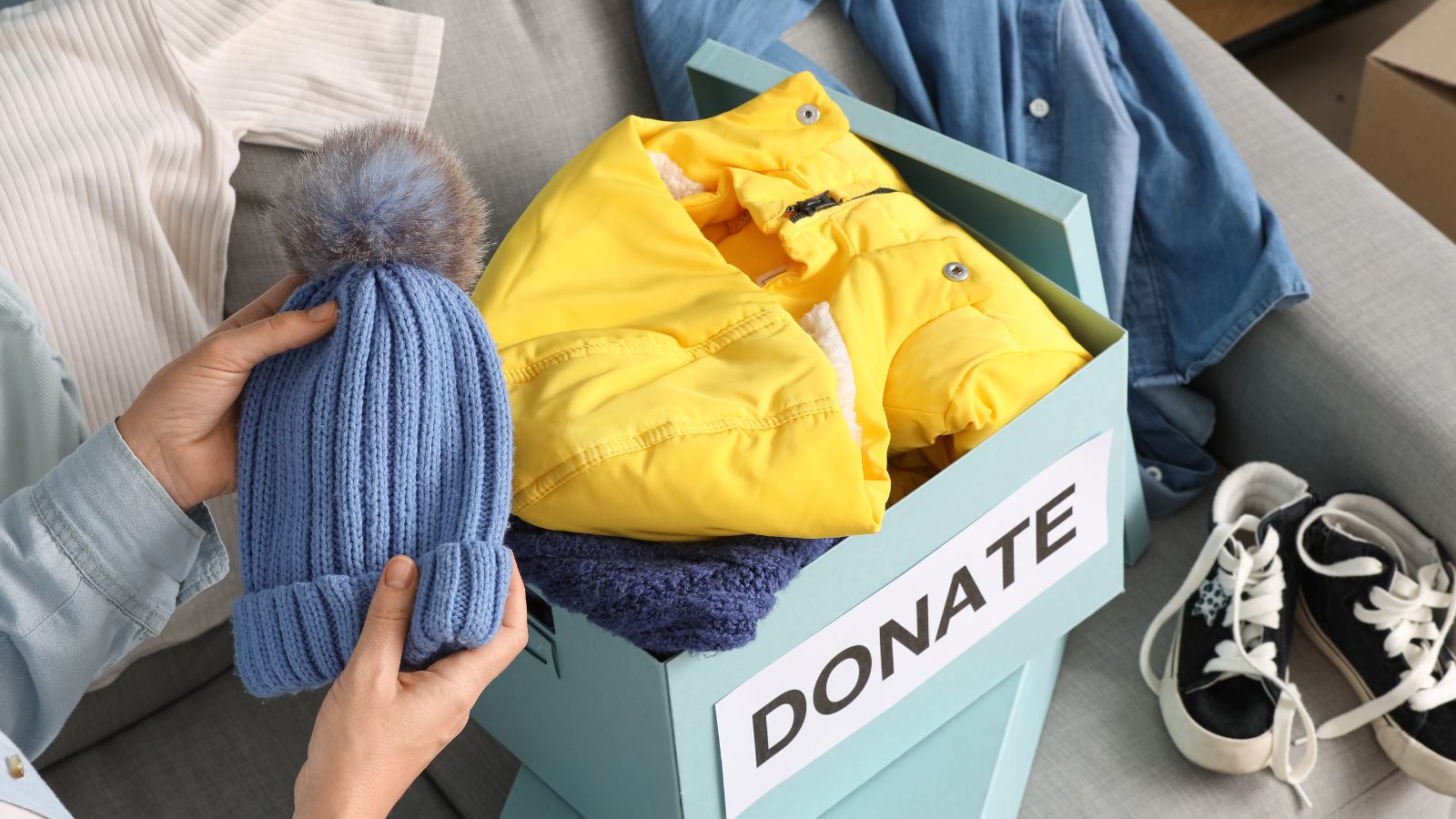
Once family members have had an opportunity to choose sentimental items, consider what can still be useful.
The EPA says gently worn clothing and shoes can often be donated and recommends checking whether local charities accept damaged items or whether retailers offer textile-recycling programs. It also says textiles generally do not belong in curbside recycling bins.
That could mean a local charity, mutual-aid group, shelter, clothing closet, veterans’ organization, school program, or community group, provided you have checked what the organization accepts.
The important point is not to assume every organization takes every type of clothing.
A wearable garment may still have another chapter.
Don’t let anyone force a timeline on your grief
This may be the most important rule of all.
Some people need to pack away clothing quickly. Others need weeks, months, or longer.
Neither response automatically says anything about how much someone loved the person who died.
There is no single timetable or universally correct method for dealing with someone’s possessions. People may sort alone, with support, quickly or gradually.
The goal is not to find the “right” speed.
It is to make choices deliberately rather than because someone else says you should be finished.
What to do when you simply cannot decide
Start small.
Set aside the pieces that immediately feel meaningful. Check every pocket and bag. Give close family a chance to identify what matters to them. Separate items that need discussion from those you are ready to donate.
And remember that “not now” is a legitimate category.
A loved one’s wardrobe does not have to become a test of how well you are grieving. Sometimes the most thoughtful thing you can do is pause long enough to notice what deserves to be kept, what can be shared, and what you are simply not ready to decide.
A thoughtful donation, a small collection of keepsakes, or a conversation among family members can turn a difficult task into an act of care.
Other Posts You Might Like
If you like what you just read, then subscribe to our newsletter and follow us on social media.
