


This article was originally published on Crafting Your Home. A human contributor also wrote and edited the post.
A new poll showing that nearly half of Americans believe Israeli Prime Minister Benjamin Netanyahu should be arrested if he enters the United States has highlighted a dramatic shift in public opinion and intensified debate over America’s relationship with Israel.
The survey comes amid growing disagreements over Israel’s military campaign in Gaza, the role of international law, and whether the United States should continue its traditional support for the Israeli government. The findings reveal a widening political divide, with Democrats and Republicans holding sharply different views on Netanyahu’s leadership and the future of U.S. policy toward Israel.
The issue has moved beyond foreign policy circles and into mainstream American politics, where voters are increasingly debating questions about accountability, alliances, and the limits of international institutions.
Poll Shows Strong Support for Possible Netanyahu Arrest

A recent Economist/YouGov poll found that 49% of Americans believe the United States should arrest Netanyahu if he enters the country based on an International Criminal Court arrest warrant, while 27% said the U.S. should not take that action.
The results reveal a significant shift in how some Americans view the Israeli prime minister, who has long been a major figure in U.S. foreign policy discussions. Netanyahu has maintained strong support among many American conservatives, while criticism of his government has increased among Democrats and younger voters.
The poll also showed a sharp partisan divide. Around 68% of Democrats supported arresting Netanyahu, compared with 24% of Republicans.
The numbers reflect a broader change in political attitudes surrounding Israel. While support for the U.S. relationship with Israel has historically been bipartisan, recent events have created deeper disagreements within the Democratic Party and among younger Americans.
Netanyahu Faces International Legal Controversy Over Gaza War
The debate centers on an International Criminal Court warrant issued against Netanyahu related to allegations connected to Israel’s conduct during the Gaza war. Netanyahu and Israeli officials have rejected the allegations, calling the accusations politically motivated and disputing the ICC’s authority.
The United States and Israel are not members of the ICC, creating additional legal and diplomatic questions over whether such a warrant could be enforced on American soil.
The controversy has placed American officials in a difficult position. The U.S. has historically maintained a close alliance with Israel, providing diplomatic support and military assistance while also facing pressure from voters who want stronger criticism of Israeli policies.
President Donald Trump has defended Netanyahu and said the Israeli leader would not be arrested during a visit to the United States.
The disagreement highlights a growing tension between America’s longstanding alliance with Israel and changing public attitudes toward the Israeli government.
Democratic Support for Israel Faces Growing Internal Division
For decades, support for Israel has been a major point of agreement between both political parties in Washington. However, that consensus has weakened in recent years, especially among Democratic voters.
Many progressive Democrats have become increasingly critical of Netanyahu’s government, citing concerns about civilian casualties, humanitarian conditions in Gaza, and the future of Palestinian statehood.
The shift has become particularly visible among younger voters, who have shown greater support for Palestinian rights and more skepticism toward traditional U.S. policy toward Israel.
At the same time, many Republicans continue to strongly support Israel and view Netanyahu as an important ally in confronting threats from groups such as Hamas and regional adversaries including Iran.
The result is a growing political divide where Israel policy has become increasingly connected to domestic American politics.
Netanyahu’s Supporters Reject Calls for Arrest

Supporters of Netanyahu argue that arresting an elected leader of a close U.S. ally would damage diplomatic relationships and undermine Israel’s ability to defend itself.
They argue that the ICC has unfairly targeted Israel while failing to properly address threats faced by the country. Israeli officials have repeatedly rejected the court’s authority and defended the government’s military decisions.
Many Republican lawmakers and pro-Israel organizations have echoed that position, arguing that the United States should continue supporting Israel despite international criticism.
They also warn that accepting the ICC’s authority over Israeli leaders could create broader consequences for American officials and military personnel involved in international conflicts.
For supporters, the issue is not only about Netanyahu but also about defending national sovereignty and longstanding alliances.
Critics Say Public Opinion Is Changing
Those calling for Netanyahu’s arrest argue that the poll reflects growing frustration with Israel’s actions during the Gaza conflict.
Critics say the United States should not provide unconditional support to foreign leaders facing serious international allegations. They argue that accountability should apply regardless of political alliances.
The poll also found that 47% of Americans believe Netanyahu’s actions have damaged U.S. relations with Israel, including 61% of Democrats and 30% of Republicans.
These numbers suggest that concerns about Israel’s leadership are no longer limited to activist groups or foreign policy experts. They have become part of broader conversations among American voters.
The debate has also influenced local politics, including controversy surrounding New York Mayor Zohran Mamdani’s statements about Netanyahu and the possibility of enforcing an ICC warrant. Legal experts have noted significant challenges because local governments generally lack authority to arrest foreign leaders in such circumstances.
U.S. Israel Relationship Enters a New Political Era
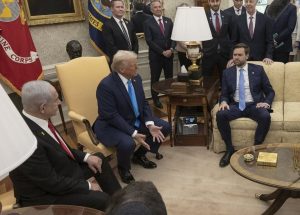
The poll reflects a larger transformation in American politics.
For decades, U.S. support for Israel remained one of the strongest bipartisan foreign policy positions in Washington. Today, that relationship faces new questions as voters debate military aid, diplomacy, and accountability.
The changing public mood does not mean Americans have reached a consensus on Israel or Netanyahu. Instead, it shows that the issue has become more complicated, with voters weighing security concerns against humanitarian and legal questions.
The future of U.S. policy toward Israel may depend increasingly on how political leaders respond to these changing views.
A Debate That Could Shape Future Elections
The controversy surrounding Netanyahu’s possible arrest is likely to remain part of American political discussions.
Candidates from both parties may face increasing pressure to explain their positions on Israel, Gaza, international law, and America’s role in global conflicts.
For Republicans, the challenge will be maintaining strong support for Israel while addressing voters who question foreign commitments. For Democrats, the challenge will be balancing traditional alliances with a growing progressive movement demanding policy changes.
The latest polling shows that the conversation around Netanyahu is about more than one leader. It represents a larger debate about America’s place in the world and how voters define justice, diplomacy, and national interest.
If you like what you just read, then subscribe to our newsletter and follow us on social media.


