

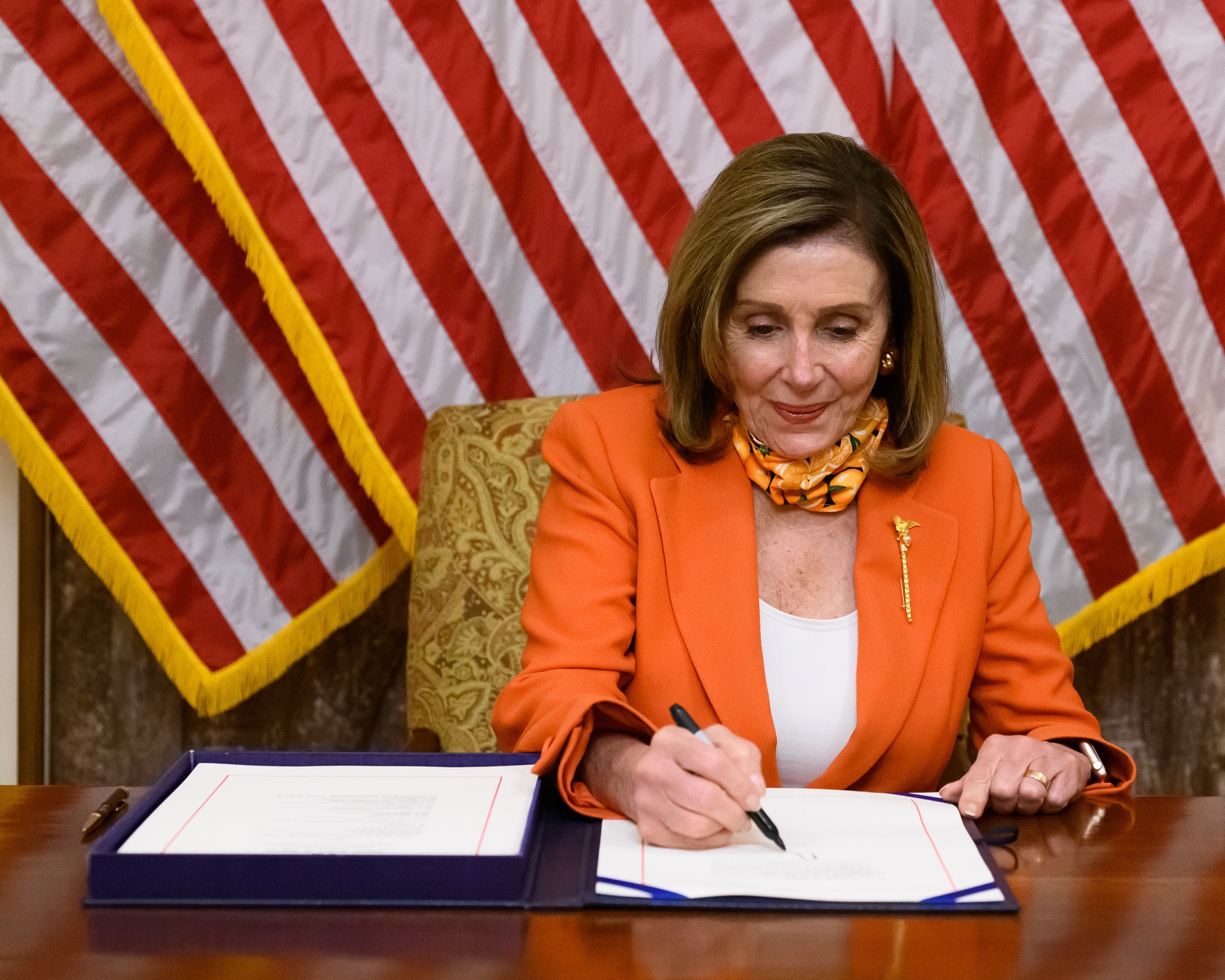
UC Berkeley announced Monday that former House Speaker Nancy Pelosi will help launch a new academic institute focused on representative democracy, civic engagement and public leadership after she leaves Congress.
Berkeley sets launch date.
The institute will be housed in Berkeley’s political science department and will focus on research, teaching and civic engagement. Its work will center on democratic institutions, political leadership, civil rights, human rights, climate issues, economic inequality, and new pressures from technology.
University leaders described the project as nonpartisan. The goal is to create a public university hub where students, scholars, and visiting leaders can study democracy and prepare for public service.
Pelosi said the institute gives her a way to use her experience outside the partisan pressure of elected office. She said public servants who have the opportunity should help train future leaders.
Pelosi shifts from the House to the classroom.
Pelosi will leave Congress after a career that made her one of the most powerful lawmakers in modern American politics. She was first elected in 1987 and later became the first woman to serve as Speaker of the House in 2007.
She served as speaker twice. Her second term began in 2019, when she regained the gavel after Democrats won back the House. At Berkeley, Pelosi is expected to co-teach with Eric Schickler, a professor known for his work on Congress and American political development. The course will focus on Congress and the practical work of governing.
Fundraising campaign moves ahead.
The institute has already secured more than $35 million in philanthropic commitments. Berkeley has set a $50 million fundraising goal to support long-term programs, faculty work, research, and student opportunities. Pelosi agreed to raise $25 million before the public announcement. The early total reflects her continued fundraising power, even as she prepares to leave elected office.
The institute will study democracy under pressure.

The institute’s work will focus on several areas facing democratic systems. Those include polarization, public trust, election systems, political institutions, artificial intelligence, climate change, income inequality, and rights protections. Berkeley officials have also discussed possible future initiatives. They include a Center for the U.S. House of Representatives, a Global Dignity Lab, an AI and Democratic Innovation Initiative, and a Center for the Study of Gender and Politics.
Public exhibit planned for 2027
The institute will include a public exhibit connected to Pelosi’s career. Her official speaker papers are held at the Library of Congress, but Berkeley plans to display selected awards, legislation, personal items, and other materials. The first public exhibit is expected in spring 2027 through the Bancroft Library. A longer-term display connected to the institute is also expected later.
Bipartisan promise faces scrutiny.
Pelosi has said she wants to bring leaders from both parties to Berkeley for lectures and discussions. That goal will be closely watched because she remains one of the country’s most recognizable Democratic figures. The institute’s nonpartisan mission will depend on how it operates. Its credibility will rest on speaker choices, research standards, faculty independence, and whether students hear from a wide range of political voices.
Students placed at the center
Berkeley officials said the institute will serve students from many backgrounds. The university has emphasized its public mission and its large population of first-generation and lower-income students. That focus could distinguish the institute from elite leadership programs at private universities. A public university model could give more students access to civic training, policy research, and political mentorship.
Pelosi remains politically active.
Pelosi is stepping away from Congress, but not from public life. She continues to follow the 2026 midterm elections and has said Democrats can win the House. Her move to Berkeley gives her a new platform after Washington. It also gives the university a nationally known figure to anchor a democracy institute at a time of deep political division.
The institute is scheduled to launch in January 2027. Its first public exhibit is expected this spring, while fundraising continues toward the $50 million goal. Pelosi’s congressional career is nearing its end. Her next role will test whether one of America’s most powerful political figures can help train the next generation from outside elected office.


